Bernardo O'Higgins: The Founding Father of Chilean Independence
Bernardo O'Higgins Riquelme (1778–1842) stands as one of the most pivotal figures in South American history. A military officer and statesman, O'Higgins was a primary leader in Chile's successful struggle for independence from the Spanish Empire. As the second Supreme Director of Chile, he became the first person to lead a fully independent Chilean state, earning his place as one of the nation's founding fathers.
His tenure was marked by a drive for modernization, the establishment of national institutions, and a vision for a liberated Latin America. However, his radical reforms often clashed with the established aristocracy and the church, leading to a dramatic exit from power and a long exile in Peru.
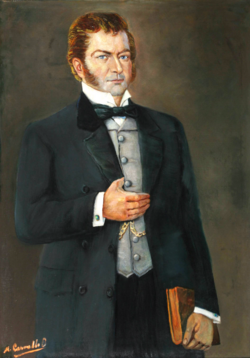
Key Facts
- Role: Second Supreme Director of Chile (1817–1823).
- Military Rank: Captain General of the Chilean Army.
- Key Achievement: Founded the modern Chilean Navy.
- Major Allies: José de San Martín and Juan Mackenna.
- Major Rival: José Miguel Carrera.
- Death: Died in exile in Lima, Peru, in 1842.
Early Life and Education
![Bernardo O'Higgins, erroneously depicted attending the declaration of Chilean independence.[19]](/images/eb/bb/ebbb639b9d7ce3336be53d2051325964e5c25b3a464e76fbbc81d558d0df0894.jpg)
Born on August 20, 1778, in Chillán, O'Higgins was the son of Ambrosio O'Higgins, the 1st Marquess of Osorno, and Isabel Riquelme. His early years were shaped by a complex family dynamic, as he never met his father.
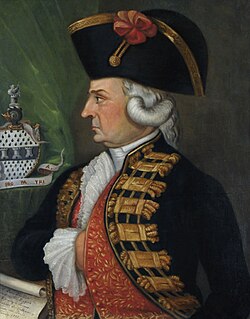
O'Higgins traveled to Great Britain and later Spain in 1798, though his return to the Americas was delayed by the French Revolutionary Wars. Following his father's death in 1801, he inherited the Hacienda Las Canteras near Los Ángeles. Returning to Chile in 1802, he established himself as a gentleman farmer and entered local politics in 1806 when he was appointed to the cabildo (municipal council) as the representative of Laja.
The Struggle for Independence
The Napoleonic invasion of Spain in 1808 created a power vacuum in South America, prompting Chilean elites to form an autonomous government in the name of the imprisoned King Ferdinand VII. On September 18, 1810—a date now celebrated as Chile's Independence Day—O'Higgins joined the revolt against the French-dominated Spanish government.
O'Higgins was an early advocate for a national congress and was elected as a deputy in 1811. During this period, he entered a long-standing and bitter rivalry with José Miguel Carrera, another prominent independence leader.
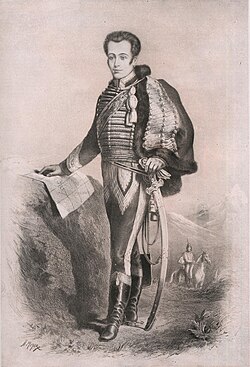
Initially lacking formal military training, O'Higgins relied on the mentorship of Juan Mackenna, an immigrant of Irish descent who specialized in cavalry tactics. O'Higgins' military prominence grew during the Patria Vieja (Old Fatherland) campaign. Despite injuries, his persistence in pursuing royalist forces led the Junta in Santiago to grant him command of the army over Carrera in 1813.
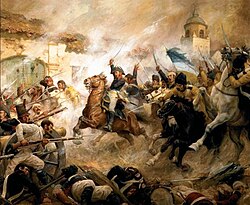
The Path to Victory: Patria Nueva
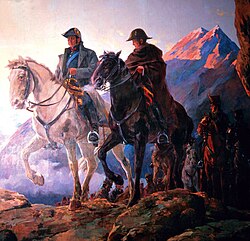
After a period of exile, O'Higgins partnered with the Argentine General José de San Martín and the Lautaro Lodge. Together, they launched a campaign to liberate Chile, achieving a critical victory at the Battle of Chacabuco in 1817. This battle was characterized by O'Higgins' passionate, though unplanned, charge with 1,500 troops, which was eventually supported by San Martín's strategic flank maneuvers.
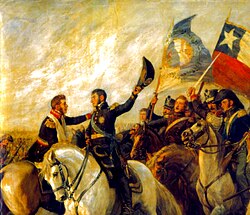
While the Royalists saw a temporary victory at the Second Battle of Cancha Rayada, the Battle of Maipú in 1818 secured ultimate victory for the independence forces.
Leadership as Supreme Director
On February 16, 1817, O'Higgins was granted dictatorial powers as Supreme Director. On February 12, 1818, Chile officially proclaimed itself an independent republic. While San Martín declined the leadership to continue liberating other parts of South America, O'Higgins accepted the mantle.
During his six-year administration, O'Higgins focused on building the infrastructure of a modern state. He established:
- Education and Health: Founded colleges, libraries, and hospitals.
- Civic Order: Created new markets, courts, and cemeteries.
- Military Professionalism: Established the Chilean Military Academy in 1817.
- Naval Power: Founded the modern Chilean Navy under Scottish officer Lord Cochrane, creating the First Chilean Navy Squadron and the Chilean Marine Corps.
O'Higgins' ambitions extended beyond Chile's borders. He supported the liberation of Peru and even drafted plans to conquer Guayaquil, the Galapagos Islands, and the Philippines to expand Chilean influence.
The Fall from Power
O'Higgins' push for radical reforms eventually alienated the church, the business community, and the aristocracy. His relationship with his closest ally, Ramón Freire, deteriorated, and Freire became a symbol for the opposition.
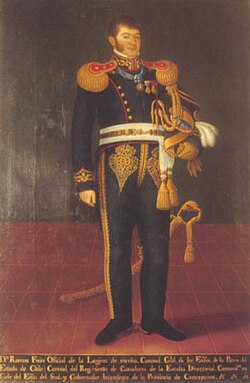
On January 28, 1823, a conservative coup forced O'Higgins to abdicate. In a dramatic gesture, he offered his life to his accusers to avoid further civil strife. Instead, he was allowed to leave the country.
Final Years and Legacy
O'Higgins departed Valparaíso in July 1823. While traveling toward Ireland, he was persuaded by Simón Bolívar to stay in Peru and assist in the nationalist efforts there. He spent the remainder of his life in exile in Peru, accompanied by his family.
Although the Chilean National Congress voted to allow his return in 1842, O'Higgins suffered from cardiac problems and died in Lima on October 24, 1842, at the age of 64.
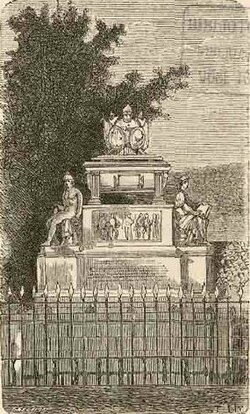
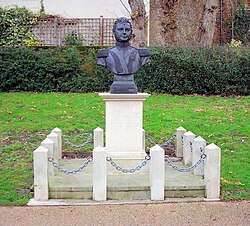
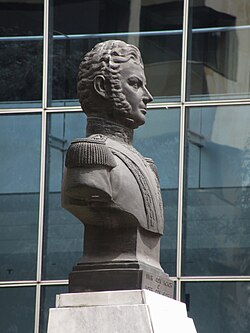
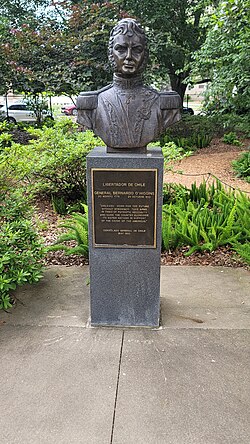
Today, O'Higgins is honored globally with statues and busts in cities such as Dublin, Sligo, Sydney, Buenos Aires, Lisbon, and Houston. The Chilean Navy continues to name vessels in his honor, reflecting his enduring status as a liberator.
| Category | Details |
|---|---|
| Tenure as Supreme Director | February 17, 1817 – January 27, 1823 |
| Key Military Victories | Battle of Chacabuco, Battle of Maipú |
| Major Institutions Founded | Chilean Navy, Chilean Military Academy |
| Political Predecessor | José Miguel Carrera |
| Political Successor | Ramón Freire |
Frequently Asked Questions
Who was Bernardo O'Higgins' main rival?
His main rival was José Miguel Carrera, a fellow independence leader with whom O'Higgins had an ongoing political and military feud throughout the struggle for liberation.
What was O'Higgins' contribution to the Chilean Navy?
O'Higgins founded the modern Chilean Navy, appointing Lord Cochrane to lead it. He established the First Chilean Navy Squadron, the Chilean Marine Corps, and the Academy for Young Midshipmen.
Why did Bernardo O'Higgins go into exile?
He was deposed by a conservative coup in 1823 after his radical reforms antagonized the church, the aristocracy, and the business community.
Where is Bernardo O'Higgins buried?
After being repatriated from Peru in 1869, his remains were eventually placed in the underground Crypt of the Liberator in front of the Palacio de La Moneda in Santiago.
What was the significance of the Battle of Maipú?
The Battle of Maipú was the decisive engagement that assured the ultimate victory of the independence forces over the Spanish Royalists in Chile.