South American Dreadnought Race: The Naval Arms Race of Brazil, Argentina, and Chile
At the dawn of the twentieth century, a fierce naval arms race ignited between the three most powerful nations in South America: Brazil, Argentina, and Chile. This competition was not merely about coastal defense, but about international prestige and the pursuit of global power. The catalyst was the emergence of the dreadnought—a revolutionary type of battleship characterized by "all-big-gun" armament and superior speed, which rendered all previous warships obsolete.
Brazil sparked this race when it sought to modernize its fleet to counter the naval expansions of its neighbors. By investing in the most advanced technology of the era, Brazil aimed to transform itself into a recognized international power, leading to the construction of ships that were, for a time, the most powerful in the world.
![The gun trials of the Brazilian dreadnought Minas Geraes, the ship that began the dreadnought race.[A] Here, all guns capable of training to the port side were fired, forming what was at that time the heaviest broadside ever fired off a warship.](/images/40/4d/404de0508fc0aa4502b2dc0a77c347e61076821b24f82ede294d6264a4037460.jpg)
Key Facts
- The Catalyst: The 1906 launch of the British HMS Dreadnought prompted Brazil to shift its naval strategy toward these massive warships.
- Brazilian Ambition: Brazil ordered three Minas Geraes-class dreadnoughts to establish naval supremacy in South America.
- Regional Tension: The race involved Brazil, Argentina, and Chile, with each nation attempting to outclass the others in tonnage and firepower.
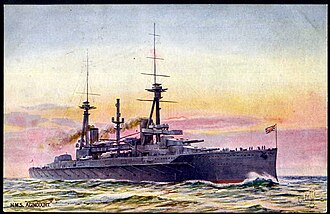
- Global Impact: The sale of the incomplete Rio de Janeiro to the Ottoman Empire eventually led to the ship serving in the British Royal Navy as HMS Agincourt.
- Tonnage Gap: By 1906, Brazil lagged behind Chile (36,896 long tons) and Argentina (34,425 long tons) with only 27,661 long tons.
The Rise of the Brazilian Navy
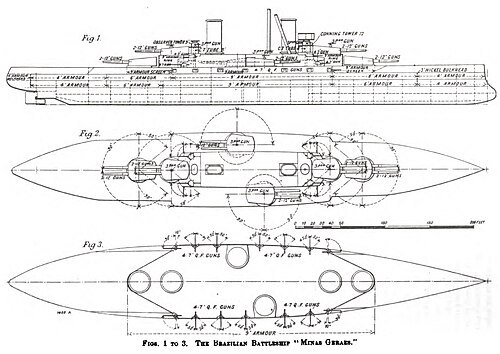
In 1904, the Brazilian legislature allocated significant funds to overhaul its naval forces. Initially, the government favored a fleet of smaller warships. Following Law no. 1452 in December 1905, Brazil authorized £4,214,550 for a diverse array of vessels, including small battleships, destroyers, torpedo boats, and submarines.
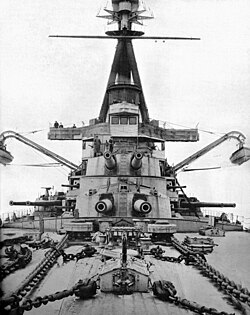
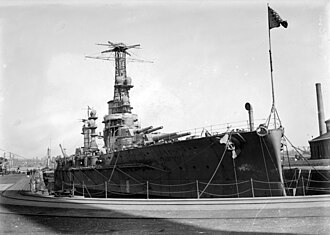
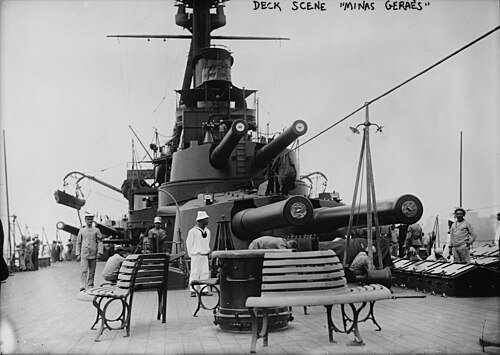
However, the arrival of the HMS Dreadnought in 1906 changed everything. Recognizing that smaller battleships were now antiquated, the Brazilian government, supported by President Afonso Pena and Admiral Júlio César de Noronha, redirected its funds toward three massive Minas Geraes-class dreadnoughts. These ships were intended to replace aging vessels, including the battleship Aquidabã, which had suffered a catastrophic explosion earlier that year.
The Expanded Naval Program
The redirected funding didn't just cover the dreadnoughts. Brazil's expanded naval vision included:
- Three dreadnoughts (the third to be laid down after the first launch).
- Two scout cruisers of the Bahia class.
- Ten destroyers of the Pará class.
- Three submarines of the Foca class.
- One submarine tender, the Ceará.
Regional Responses and the Arms Spiral
Brazil's sudden leap in naval capability sent shockwaves through South America. Argentina and Chile, unwilling to be eclipsed, responded with their own shipbuilding programs. This created a cycle of escalation where each nation sought to build ships that could outmatch the latest acquisitions of their rivals.
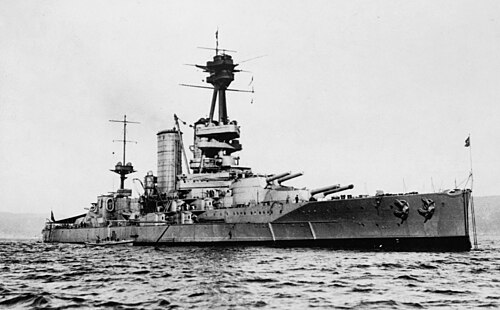
Argentina responded by commissioning the ARA Rivadavia and ARA Moreno, while Chile pursued the Almirante Latorre. This competition turned the South Atlantic and Pacific coasts into a showcase for the era's most advanced naval engineering.
The Fate of the Rio de Janeiro
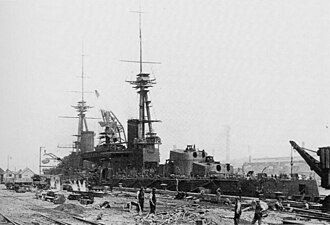
While the first two Brazilian dreadnoughts were completed, the third, named Rio de Janeiro, became a victim of shifting fortunes. A slowing economy, political instability following the 1910 naval revolt, and the emergence of even larger "super-dreadnoughts" made the ship a liability for Brazil.
In 1913, the incomplete vessel was sold to the Ottoman Empire for £1,200,000, with an additional £2,340,000 spent on its completion. Renamed the Sultân Osmân-ı Evvel, the ship's journey did not end there. Shortly after the outbreak of World War I, the British seized the vessel, and it entered service with the Royal Navy as HMS Agincourt.
Summary of Naval Assets and Transitions
| Ship Name (Original) | Country of Origin | Final Designation/Fate | Key Note |
|---|---|---|---|
| Minas Geraes | Brazil | Brazilian Navy | Started the South American race |
| Rio de Janeiro | Brazil | HMS Agincourt (UK) | Sold to Ottomans, then seized by UK |
| Almirante Latorre | Chile | Chilean Navy | Major Chilean response to Brazil |
| ARA Rivadavia | Argentina | Argentine Navy | Part of Argentina's counter-expansion |
Frequently Asked Questions
What is a dreadnought?
A dreadnought is a type of battleship that emerged in the early 20th century, characterized by a heavy battery of large-caliber guns and high speed, which made previous battleship designs obsolete.
Why did Brazil start the naval arms race?
Brazil wanted to increase its international prestige and counter the naval expansions of Argentina and Chile, believing a strong navy was essential to becoming a global power.
What happened to the Brazilian ship Rio de Janeiro?
Due to economic and political issues, Brazil sold the incomplete ship to the Ottoman Empire, where it was renamed Sultân Osmân-ı Evvel. It was later seized by the British and renamed HMS Agincourt.
How did Argentina and Chile react to Brazil's new ships?
Both nations responded by ordering their own dreadnoughts, such as the ARA Rivadavia (Argentina) and the Almirante Latorre (Chile), to maintain a balance of power in the region.
What caused the decline of Brazil's naval ambitions?
A combination of a slowing economy, political opposition following a 1910 naval revolt, and the rapid evolution of naval technology (super-dreadnoughts) led to the scaling back of their program.