Kim Jong Il: The Life and Leadership of North Korea's Former Supreme Leader
Kim Jong Il was the central figure in the political landscape of North Korea for decades, serving as the nation's leader from the mid-1990s until his death in 2011. As the son of the nation's founder, Kim Il Sung, his tenure was defined by a complex blend of military-first policies, intense domestic cult of personality, and significant shifts in international relations.
Throughout his rule, he held numerous high-ranking positions, including General Secretary of the Workers' Party of Korea and Chairman of the National Defence Commission. His leadership style and the systems he reinforced shaped the modern identity of the Democratic People's Republic of Korea (DPRK).
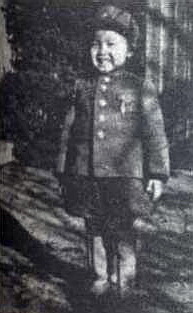
Kim Jong Il in 1947, at the age of six
Key Facts
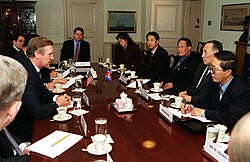
- Tenure: Served as General Secretary of the Workers' Party of Korea from 1997 to 2011.
- Succession: Succeeded by his son, Kim Jong Un.
- Military Rank: Held the rank of Taewonsu and served as Supreme Commander of the Korean People's Army.
- Birth: Born in the Soviet Union (Khabarovsk Krai or Primorsky Krai) in 1941 or 1942.
- Death: Passed away on 17 December 2011, in Pyongyang.
- Posthumous Titles: Honored as the "Eternal Leader" and "Eternal General Secretary."
Early Life and Education
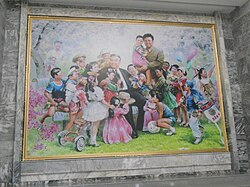
Born to Kim Il Sung and Kim Jong-suk, Kim Jong Il's early years were spent in the Soviet Union. His upbringing and education were deeply rooted in the revolutionary traditions of his family. He attended the Mangyongdae Revolutionary School and later Kim Il Sung University, institutions central to the North Korean political elite.
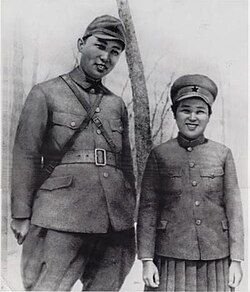
Kim Il-sung and Kim Jong-suk, the parents of Kim Jong Il, 1941
As he ascended through the ranks of the Workers' Party of Korea, he was increasingly identified as the heir apparent. By the 1970s, he held significant influence within the party's Secretariat and eventually became a member of the Presidium of the Political Bureau.
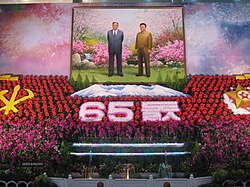
Kim Jong Il and his father Kim Il Sung
Leadership and Governance
Kim Jong Il's leadership was characterized by several key pillars of governance. Following the death of his father, he assumed formal leadership roles, eventually becoming the Chairman of the National Defence Commission in 1993. This period saw the implementation of Songun, or "military-first" politics, which prioritized the Korean People's Army in state affairs and resource allocation.
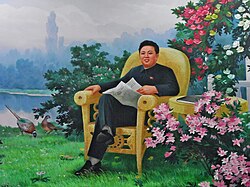
Idealized portrait of Kim Jong Il
Political and Military Roles
His official titles were extensive, reflecting his absolute authority over both the party and the military. Key roles included:
- General Secretary of the Workers' Party of Korea: The highest position within the ruling party.
- Chairman of the National Defence Commission: A central role in the country's military administration.
- Supreme Commander: The head of the Korean People's Army.
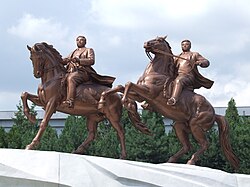
Equestrian statues of younger versions of Kim Jong Il (right) and Kim Il Sung, Pyongyang
Foreign Relations and Diplomacy
On the international stage, Kim Jong Il engaged in high-stakes diplomacy. He met with various world leaders, including Russian President Vladimir Putin and Dmitry Medvedev, to navigate the complex geopolitical landscape of East Asia and maintain North Korea's standing.
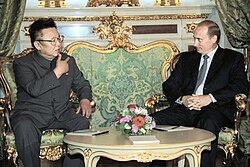
Kim talking with Russian president Vladimir Putin during his 2001 meeting in Moscow
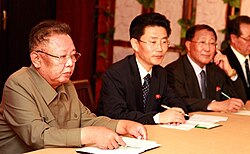
Kim at a meeting during his visit with Dmitry Medvedev in August 2011
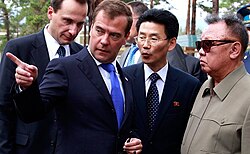
Kim with Russian president Dmitry Medvedev in Sosnovy-Bor Military garrison, Zaigrayevsky District Buriatya on 24 August 2011
Cult of Personality and Legacy
A defining feature of Kim Jong Il's rule was the cult of personality. His image was ubiquitous throughout North Korea, appearing in homes, schools, and public monuments. This reverence was reinforced through state media and the promotion of his published works, which included hundreds of titles on various subjects.
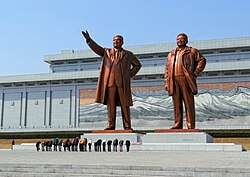
North Koreans bowing to the statues of Kim Jong Il and his father, Kim Il Sung, at the Mansu Hill Grand Monument
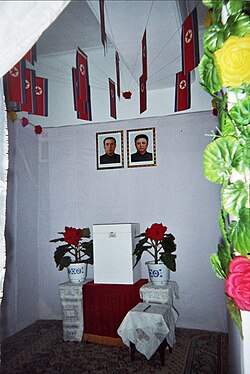
A North Korean voting booth containing portraits of Kim Il Sung and Kim Jong Il under the national flag (below the portraits is the ballot box)
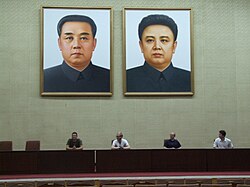
Portraits of Kim Jong Il and his father in the Grand People's Study House in Pyongyang
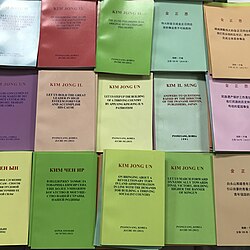
Books written by Kim Jong Il
Upon his death in 2011, the North Korean government bestowed several posthumous titles upon him, including "Eternal Leader" and "Eternal General Secretary," ensuring his continued symbolic presence in the nation's political life.
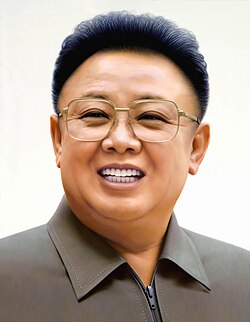
The official posthumous portrait of Kim Jong Il, issued after his death
Summary of Leadership Roles
| Office | Period of Service | Organization |
|---|---|---|
| General Secretary | 1997–2011 | Workers' Party of Korea |
| Chairman | 1993–2011 | National Defence Commission |
| Chairman | 1997–2011 | Central Military Commission |
| Supreme Commander | 1991–2011 | Korean People's Army |
Frequently Asked Questions
Who succeeded Kim Jong Il?
Kim Jong Il was succeeded by his son, Kim Jong Un.
What was the "military-first" policy?
Known as Songun, this policy prioritized the Korean People's Army in the country's political and economic decision-making processes.
Where is Kim Jong Il buried?
He is resting at the Kumsusan Palace of the Sun in Pyongyang.
What were his posthumous titles?
He was granted several eternal titles, including Eternal Leader of the Workers' Party of Korea and Eternal Generalissimo of the DPRK.
How many children did Kim Jong Il have?
He had six children, including Kim Jong Un and Kim Yo Jong.