Khusrawiyya Mosque: The Lost Ottoman Masterpiece of Aleppo
The Khusrawiyya Mosque (Arabic: جَامِع الْخُسْرَوِيَّة), also known as the Khusraw Mosque, was a distinguished Islamic complex located in the heart of Aleppo, Syria. Situated southeast of the historic Citadel within the Ancient City of Aleppo—a recognized UNESCO World Heritage Site—this architectural gem served as a center of faith and learning for nearly five centuries.
Commissioned by Husrev Pasha during his tenure as the governor of Aleppo under the reign of Sultan Suleiman I, the mosque was a testament to the grandeur of the Ottoman Empire in the Levant. However, the site's long history came to a tragic end during the Syrian Civil War.
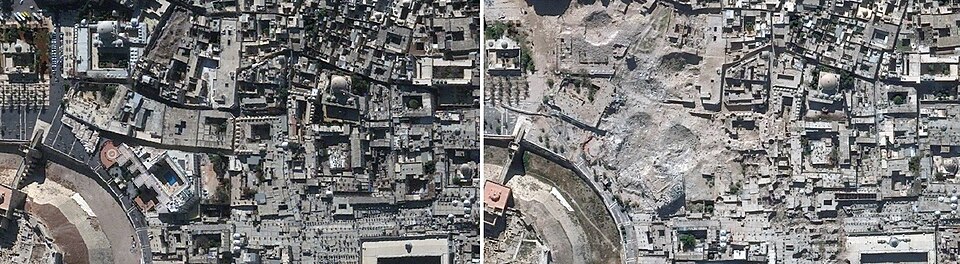
Key Facts
- Architect: Designed by the legendary imperial architect Mimar Sinan.
- Completion Date: 1547 CE.
- Location: Ancient City of Aleppo, Syria (UNESCO World Heritage Site).
- Founder: Deli Husrev Pasha.
- Fate: Completely destroyed in August 2014 using dynamites during the Battle of Aleppo.
- Style: Classical Ottoman Islamic architecture.
Architectural Grandeur and Design
The Khusrawiyya Mosque was not merely a place of prayer but a comprehensive külliye (a complex of buildings centered around a mosque). The design was entrusted to Mimar Sinan, the most celebrated court architect of the Ottoman era, known for his mastery of space and structural engineering.
Complex Components
The complex was designed to serve both the spiritual and social needs of the community. It included:
- A central mosque featuring a single dome and one minaret.
- A madrasa (an Islamic educational institution).
- A mausoleum.
- Dedicated rooms for travelers.
- A public kitchen and various shops.
Materials and Style
Constructed primarily from stone, the mosque exemplified the Ottoman style, blending symmetry and monumental scale. Its position within the Ancient City of Aleppo placed it among some of the most significant cultural landmarks in the region, including the Al-Madina Souq and the Citadel of Aleppo.
Destruction and Legacy
For centuries, the Khusrawiyya Mosque stood as a landmark of Aleppo's skyline. However, the onset of the Syrian Civil War left the complex neglected. In August 2014, during the intense fighting of the Battle of Aleppo, the mosque was completely destroyed by dynamites.
The loss of the mosque was a significant blow to global cultural heritage, as the Ancient City of Aleppo had been listed as a UNESCO World Heritage Site since 1986 and was placed on the endangered list from 2013 to 2020.
Summary of the Khusrawiyya Mosque
| Feature | Details |
|---|---|
| Founder | Husrev Pasha |
| Architect | Mimar Sinan |
| Year Completed | 1547 CE |
| Architectural Style | Ottoman |
| Key Structures | Mosque, Madrasa, Mausoleum, Public Kitchen |
| Date of Destruction | August 2014 |
| UNESCO Status | Part of Ancient City of Aleppo (Inscribed 1986) |
Frequently Asked Questions
Who designed the Khusrawiyya Mosque?
The mosque was designed by Mimar Sinan, the renowned chief architect for the Ottoman Empire.
When was the mosque built?
The construction of the Khusrawiyya Mosque was completed in 1547 CE.
What happened to the mosque in 2014?
The mosque was completely destroyed by dynamites in August 2014 during the Battle of Aleppo.
What facilities were included in the mosque complex?
Beyond the mosque itself, the complex included a madrasa, a mausoleum, rooms for travelers, a public kitchen, and shops.
Where was the mosque located?
It was located southeast of the Citadel in the Ancient City of Aleppo, Syria, which is a UNESCO World Heritage Site.