Judicial Review: Balancing Power Across Legal Systems
Judicial review is a critical legal process that allows the judiciary to examine the actions of a government's executive, legislative, or administrative branches. By reviewing these actions, courts can invalidate laws, acts, or governmental decisions that are found to be incompatible with higher laws or constitutional mandates. This mechanism serves as a fundamental check and balance within the separation of powers, ensuring that no single branch of government exceeds its legal authority.
While the core purpose of judicial review is to maintain legal consistency and prevent the abuse of power, its application varies significantly across different global jurisdictions. Some countries grant their courts expansive powers to strike down primary legislation, while others adhere to a stricter model of legislative supremacy.
Key Facts
- Core Function: Allows courts to invalidate government actions or laws that conflict with higher legal authorities.
- Separation of Powers: Acts as a regulatory balance to prevent any one branch of government from exerting unchecked power.
- Legal Traditions: Common law systems often view judges as sources of law, whereas civil law systems traditionally view judges as applicators of the law.
- Global Variation: Some nations use general courts for review (e.g., USA, Canada), while others use specialized Constitutional Courts (e.g., Austria, Czech Republic).
- Ultra Vires: A key principle used in review to ensure public bodies do not act beyond their legally granted powers.
Foundational Principles of Judicial Review
To understand how judicial review operates, it is necessary to examine it through the lens of two distinct legal systems and two competing theories of democratic organization.
Common Law vs. Civil Law
In common law traditions, judges are often seen as sources of law who can create new legal principles or reject those that are no longer valid. Conversely, in civil law traditions, the role of the judge is primarily to apply existing law, without the inherent power to create or destroy legal principles.
Separation of Powers vs. Legislative Supremacy
The theory of separation of powers, introduced by Montesquieu, posits that government branches should check one another to maintain a regulative balance. This is contrasted with legislative supremacy, where the legislature is the supreme legal authority. While some common-law countries like the United Kingdom have historically maintained a strong attachment to legislative supremacy—meaning judges cannot strike down primary legislation—many nations are gradually expanding the scope of judicial review regardless of their legal tradition.
Mechanisms and Types of Review
When conducting a review, courts often focus on the principle of ultra vires (acting beyond one's legal power) to ensure public bodies stay within their legislative mandates. Additionally, courts enforce procedural fairness to ensure that administrative decisions are made justly.
Review of Primary Legislation
Primary legislation refers to laws passed directly by an elected legislature. There are three primary approaches to reviewing these laws:
- No Review: Some countries forbid courts from ruling on the constitutionality of primary legislation. For example, the Netherlands constitution expressly forbids such reviews, and the UK follows the doctrine of parliamentary sovereignty.
- Review by General Courts: In countries like the United States, Canada, and Australia, courts of general jurisdiction handle judicial review. In the U.S., this was institutionalized by the landmark 1803 Supreme Court case Marbury v. Madison.
- Review by Specialized Courts: Some nations utilize a specialized Constitutional Court. This "Austrian System," authored by jurist Hans Kelsen, was adopted by Austria and Czechoslovakia in 1920. In these systems, only the specialized court can question the constitutionality of primary legislation.
Russia employs a mixed model where both general courts and a specialized constitutional court can review legislation, though the binding nature of the decisions differs between the two.
Regional Examples of Judicial Review
In India, the Supreme Court and High Courts possess explicit powers to invalidate legislation that contravenes constitutional provisions, particularly those infringing on Fundamental Rights. A notable development is the 1973 Kesavananda Bharati v. State of Kerala decision, which established the basic structure doctrine, allowing courts to strike down constitutional amendments that violate the constitution's core framework.
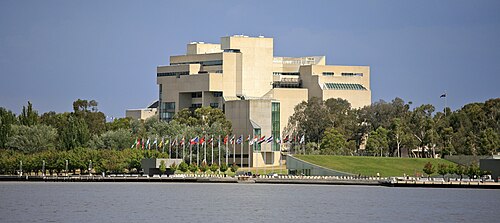
In Australia and Canada, judicial review predates their formal establishment as nations, originating from the British Colonial Laws Validity Act 1865. Today, these powers flow from supremacy clauses within their respective constitutions.
Summary of Judicial Review Models
| Model Type | Primary Authority | Key Examples | Core Characteristic |
|---|---|---|---|
| General Court Review | Trial and Appellate Courts | USA, Canada, Australia | Integrated into the standard court hierarchy. |
| Specialized Court Review | Constitutional Court | Austria, Czech Republic | Centralized authority for constitutional validity. |
| Mixed Model | General & Specialized Courts | Russia | Dual-layer review with varying binding effects. |
| Legislative Supremacy | The Legislature | UK, Netherlands | Courts generally cannot overturn primary legislation. |
Frequently Asked Questions
What is the difference between judicial review and appellate review?
Judicial review focuses on the power of the court over non-judicial branches (executive, legislative, or administrative), whereas appellate review concerns the power of higher courts over lower courts.
What is the significance of Marbury v. Madison?
This 1803 U.S. Supreme Court case established the principle that the judiciary has the power to review the constitutionality of statutes to enforce the separation of powers.
What does the term "ultra vires" mean in a legal context?
Ultra vires is a Latin term meaning "beyond the powers." In judicial review, it refers to actions taken by a public body that exceed the legal authority granted to them by legislation.
Can the UK courts strike down primary legislation?
Generally, no. Due to the doctrine of parliamentary sovereignty, UK judges do not have the power to strike down primary legislation (Acts of Parliament), though they can review other types of primary legislation like Orders in Council.
What is the basic structure doctrine in India?
Established in 1973, this doctrine allows the Indian Supreme Court and High Courts to review and potentially strike down constitutional amendments if they are found to violate the basic structure of the constitution.