Separation of Powers: The Architecture of Democratic Governance
The separation of powers is a fundamental political principle designed to prevent the centralization of authority and protect against tyrannical government and democratic backsliding. By functionally differentiating state power into distinct operations—typically legislation, adjudication, and execution—this system ensures that government functions are conceptually and institutionally separate, thereby maintaining the integrity of each branch.
This principle is closely intertwined with the concept of checks and balances, which provides the mechanisms necessary for different branches to limit one another's power, ensuring that no single entity gains absolute control over the state.
Key Facts
- Primary Goal: To prevent the concentration of power and avoid tyranny.
- Core Branches: Traditionally divided into the Legislative (law-making), Executive (law-enforcing), and Judicial (law-interpreting) branches.
- Key Philosophers: John Locke and Montesquieu provided the foundational theoretical frameworks for the modern tripartite system.
- Checks and Balances: A complementary system where branches have the constitutional means to hinder or oversee one another.
- Historical Roots: Traces back to the Roman Republic's mixed government as described by Polybius.
Historical Evolution of State Power
Antiquity and the Roman Republic
The roots of separated power can be found in antiquity. Polybius, in his Histories, described the Roman Republic as a mixed government. This system was ruled by the Roman Senate, Consuls, and the Assemblies, creating an early form of checks and balances. Polybius credited Lycurgus of Sparta with establishing the first government of this nature.
The English Tripartite Experiments
During the English Civil War, parliamentarians conceptualized a government split between the King (executive) and the House of Lords and House of Commons (legislative). In 1653, General John Lambert authored the Instrument of Government, which served as England's constitution during The Protectorate. This system featured a legislative branch (Parliament) and two executive branches (the English Council of State and the Lord Protector), all of whom were elected and exercised checks upon one another.
Later, in the 1680s, the use of the legal system by the Crown to prosecute opposition leaders during the reigns of Charles II and James II led to the growing belief that judicial powers must be entirely separate from the executive branch.
Philosophical Foundations
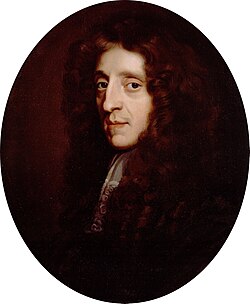
John Locke's Framework
In his 1690 work, Two Treatises of Government, John Locke proposed a distinction between three types of power: legislative, executive, and federative.
- Legislative Power: The right to direct how the force of the commonwealth is employed.
- Executive Power: The execution of laws that are currently in force.
- Federative Power: The management of foreign policy, including war, peace, leagues, and alliances.
Locke argued that the legislative power is supreme because it derives its authority from the people. However, he maintained that this power is not absolute; it cannot govern arbitrarily, levy taxes without consent, or transfer its law-making authority to another body (the nondelegation doctrine).
Montesquieu and the Distribution of Power
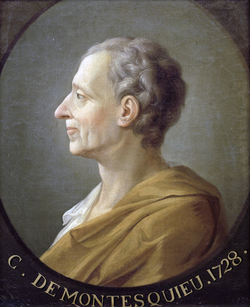
While John Locke focused on powers, the French philosopher Montesquieu focused on the distribution of those powers among separate institutions. In The Spirit of Law (1748), he defended a system where the legislature, executive, and judiciary were distinct to prevent the rise of aristocracy or absolute monarchy.
Montesquieu argued that if a single person or body held both legislative and executive powers, liberty would be lost because tyrannical laws could be both enacted and executed by the same entity. He believed the executive should be held by a single monarch for efficiency, while the legislative should be managed by many for better regulation.
Checks and Balances
While the separation of powers focuses on the division of functions, checks and balances focus on interdependence. This system allows one institution to "check" another—for example, by declaring an action a legal nullity or removing an officer from position—to ensure that no branch dominates the others.
This concept was pivotal in the 1787 United States Constitution. In Federalist No. 78, Alexander Hamilton redefined the judiciary as a distinct branch, moving away from the British view of judges as appendages of the executive. In Federalist No. 51, James Madison argued that because men are not angels, the government must be structured so that rival interests check each other, effectively using private interests to defend public rights.
The Functions of State Power
| Branch/Function | Primary Responsibility | Core Action |
|---|---|---|
| Legislation | Rule-making | Issuing binding rules authoritatively. |
| Execution | Implementation | Carrying out legal decisions and taking initiative in the real world. |
| Adjudication | Legal Application | Applying legal rules to specific cases through interpretation. |
| Electoral | Oversight | Managing election processes and boundary delimitation. |
Frequently Asked Questions
What is the difference between separation of powers and checks and balances?
Separation of powers is the act of dividing government functions into distinct branches to prevent centralization. Checks and balances are the specific mechanisms that allow those branches to interact and limit each other's power to ensure independence and accountability.
How did John Locke's view of power differ from Montesquieu's?
Locke distinguished between different types of power (legislative, executive, and federative) but did not insist they be held by separate institutions. Montesquieu emphasized the institutional distribution of these powers, arguing that the legislature, executive, and judiciary must be held by different bodies to preserve liberty.
What is the "nondelegation doctrine" mentioned by Locke?
The nondelegation doctrine is the principle that the legislative power, having been granted authority by the people, cannot transfer its law-making powers to another body.
Which countries treat the electoral process as a separate branch of government?
Some governments, including those of Bolivia, Costa Rica, Panama, Nicaragua, and Venezuela, establish the electoral function as its own distinct branch of government.
Why did James Madison believe checks and balances were necessary?
Madison argued that since humans are not inherently perfect ("if men were angels"), a government must be designed to control both the governed and itself. By creating rival interests within the government, each branch is incentivized to defend public rights by checking the others.