José Félix Uriburu and the 1930 Argentine Coup
The political landscape of 20th-century Argentina was irrevocably altered on September 6, 1930. On this day, General José Félix Uriburu led a military coup that ousted President Hipólito Yrigoyen, marking the first of several successful coups d'état that would plague the nation throughout the century. Uriburu's ascent to power was not merely a change in leadership but an attempt to fundamentally restructure the Argentine state along corporatist and fascist lines.
As the President of the Provisional Government from 1930 to 1932, Uriburu wielded absolute control over both the Executive and Legislative branches. His regime set a dangerous precedent for unconstitutional governments, paving the way for subsequent military takeovers in 1943, 1955, 1962, 1966, and 1976.
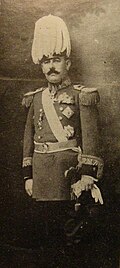
Key Facts
- Role: 22nd President of Argentina (Provisional Government).
- Term: September 6, 1930 – February 20, 1932.
- Ideology: Catholic neo-corporatist nationalism.
- Predecessor: Hipólito Yrigoyen.
- Successor: Agustín P. Justo.
- Legacy: Initiated the "Infamous Decade" and the first military dictatorship of the modern era in Argentina.
Early Life and Military Career
Born on July 20, 1868, in Salta, José Félix Uriburu came from a prominent family. He was the nephew of President José Evaristo Uriburu and a descendant of General Juan Antonio Álvarez de Arenales. Uriburu's military journey began in 1885 at the Colegio Militar de la Nación. Early in his career, he was involved in the Revolution of the Park in 1890.
Uriburu's career was marked by international exposure and high-ranking appointments. He spent three years in Germany perfecting training programs and later served as a military attaché to both Germany and the United Kingdom. By 1921, he had reached the rank of Division General and served as the inspector general of the army. However, his formal military career was interrupted in 1926 when President Yrigoyen forced him into retirement due to age.
The Path to the 1930 Coup
The catalyst for Uriburu's return to power was the Great Depression of 1929. Because 80% of Argentina's revenue relied on foreign trade, the global economic collapse led to soaring unemployment and plummeting salaries. This instability created a fertile ground for social tension and political unrest.
During this time, a far-right movement known as the Nacionalistas gained traction. This group sought a return to a more "organic" social order, influenced by the social teachings of the Catholic Church—specifically the 1891 encyclical Rerum novarum—and the rise of Benito Mussolini's fascism in Italy. These ideologies promoted corporatism, a socioeconomic system where society is organized into corporate chambers representing different sectors (such as unions and businesses) rather than through traditional political parties.
The Uprising and the Provisional Government
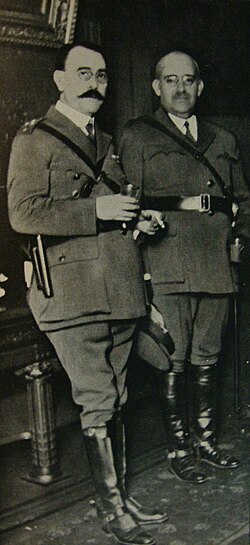
On September 6, 1930, Uriburu executed his coup, overthrowing the constitutional government. To justify the takeover, he commissioned poet Leopoldo Lugones to write a revolutionary proclamation, though it was modified to soften its overtly fascist tone to appease conservative liberals like General Agustín P. Justo.
The Supreme Court later legitimized Uriburu's rule through the de facto government doctrine, which argued that a government is legal as long as it possesses the force necessary to guarantee order. Once in power, Uriburu suspended the 1853 Constitution, banned political parties, and dissolved the National Congress.
Repression and Control
Uriburu's regime was characterized by severe repression. He implemented the systematic use of torture against political opponents, including communists, anarchists, and Yrigoyenists. Martial law was declared, leading to the execution of several anarchist militants and the imprisonment of former president Hipólito Yrigoyen. Additionally, he stripped universities of the autonomy they had gained during the University Reform of 1918.
The Failure of Corporatism
Despite his ambitions to establish a fascist-style corporate state, Uriburu lacked popular support. His opposition to universal suffrage was explicit; he argued that a high illiteracy rate made democracy impractical, claiming that the "unfit" were governing the country. When he attempted to hold elections in the Province of Buenos Aires in 1931, he annulled the results after the Radical Civic Union (UCR) won.
Ultimately, Uriburu organized fraudulent elections in November 1931. This ushered in General Agustín P. Justo as president and began the Infamous Decade, a period defined by electoral fraud and conservative dominance.
Summary of Uriburu's Administration
| Feature | Detail |
|---|---|
| Political System | Military Dictatorship / De Facto Government |
| Key Ideology | Neo-Corporatism and Catholic Nationalism |
| Major Actions | Suspension of Constitution, banning of political parties |
| Human Rights | Systematic torture and execution of political dissidents |
| Economic Context | Great Depression (high unemployment, trade decline) |
Death and Later Memory
After handing power to Agustín P. Justo in February 1932, Uriburu traveled to France for medical treatment. He died in Paris on April 29, 1932, following surgery for stomach cancer. His remains were returned to Argentina and interred in the Recoleta Cemetery.
In recent decades, Argentina has sought to distance itself from Uriburu's legacy. Throughout the 21st century, various city councils—including those in San Carlos de Bolívar and Olavarría—have voted to remove busts and memorials dedicated to the dictator and rename streets that previously bore his name.
Frequently Asked Questions
What was the "de facto government doctrine"?
It was a controversial ruling by the Argentine Supreme Court in 1930 that legitimized Uriburu's government based on its actual possession of power and its ability to maintain social order, regardless of whether it came to power constitutionally.
How did the Great Depression contribute to the 1930 coup?
The economic crisis caused a massive drop in foreign trade revenue, leading to widespread unemployment and salary cuts. This social instability weakened the democratic government of Hipólito Yrigoyen and provided the political opening for military intervention.
What is corporatism in the context of Uriburu's government?
Corporatism was a political system inspired by Italian Fascism and Catholic social teaching. It proposed replacing traditional political parties with corporate chambers representing different social and economic sectors, such as labor unions and business owners.
What was the "Infamous Decade"?
The Infamous Decade refers to the period following Uriburu's coup, starting with the fraudulent elections of 1931. It was characterized by systemic electoral fraud and the return of conservative elites to power.
Who succeeded José Félix Uriburu?
General Agustín P. Justo succeeded Uriburu after the fraudulent elections of 1931.