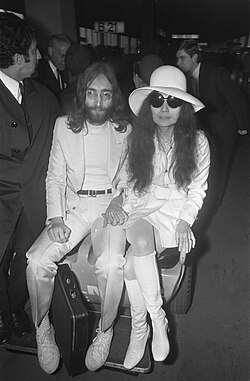
John LennonThe BeatlesImaginepeace activismPlastic Ono Band

John Lennon: The Life, Music, and Legacy of a Global Icon

John Lennon: The Life, Music, and Legacy of a Global Icon John Lennon was more than just a musician; he was a cultural catalyst whose influence spanned music, art, and global politics. Fr...

John Lennon: The Life, Music, and Legacy of a Global Icon

John Lennon was more than just a musician; he was a cultural catalyst whose influence spanned music, art, and global politics. From his early days in Liverpool to his ascent as a member of the most successful band in history and his later years as a solo artist and peace advocate, Lennon's journey was marked by constant evolution and a relentless pursuit of truth.

Born in Liverpool, England, Lennon's early life was shaped by a complex family dynamic and a burgeoning passion for music. His artistic spirit was evident early on, though his formal education at the Liverpool College of Art ended in expulsion.
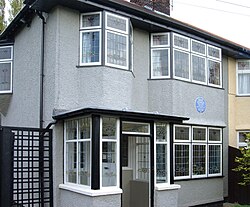
A grey two-storey building, with numerous windows visible on both levels
Lennon's home at 251 Menlove Avenue
: Lennon's home at 251 Menlove Avenue

Key Facts

ภาพประกอบบทความ
ภาพประกอบจากบทความต้นฉบับ
  • Full Name: John Winston Lennon
  • Born: Liverpool, England
  • Died: December 8, 1980 (Aged 40) in New York City, US
  • Primary Roles: Singer, songwriter, musician, author, artist, and peace activist
  • Major Groups: The Quarrymen, The Beatles, The Dirty Mac, and Plastic Ono Band
  • Key Instruments: Vocals, guitar, keyboards, and harmonica

The Journey from The Quarrymen to The Beatles
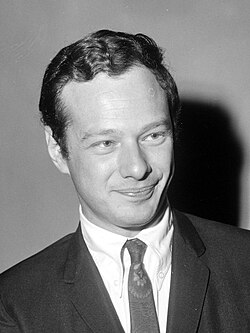
Brian Epstein in 1965

Lennon's musical trajectory began in 1956 with The Quarrymen, a skiffle group that laid the groundwork for what would become a global phenomenon. By the time he joined forces with Paul McCartney, George Harrison, and Ringo Starr, the seeds of a musical revolution had been sown.
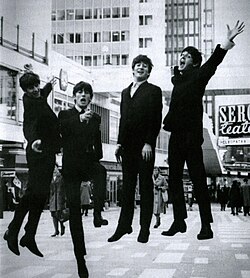
Ringo Starr, George Harrison, Lennon and Paul McCartney in 1963
: Ringo Starr, George Harrison, Lennon and Paul McCartney in 1963

Fame and Global Touring (1956–1966)

The early 1960s saw the rise of "Beatlemania," a period of unprecedented fame and touring. During this era, Lennon's songwriting partnership with McCartney became one of the most influential in history, blending rock, pop, and skiffle elements.
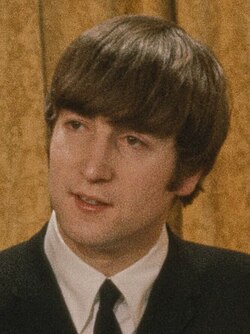
Lennon in 1964
Lennon in 1964
: Lennon in 1964

Studio Innovation and the Break-up (1966–1970)

As the band transitioned from live performances to the studio, Lennon pushed the boundaries of music into experimental territory. However, internal tensions and evolving personal philosophies eventually led to the band's dissolution in 1970.
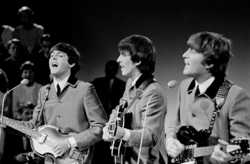
McCartney, Harrison and Lennon, 1964
: McCartney, Harrison and Lennon, 1964

Solo Career and Political Activism

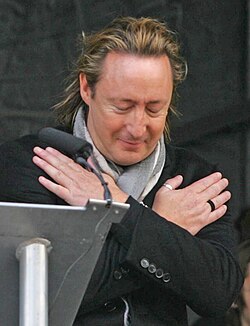
Julian Lennon at the unveiling of the John Lennon Peace Monument

Following the break-up of The Beatles, Lennon embarked on a solo career that was as much about political statement as it was about music. He formed the Plastic Ono Band and released a series of raw, honest albums.
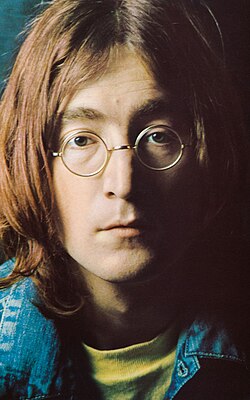
Lennon in 1968
Lennon in 1968
: Lennon in 1968

Activism and Initial Success (1970–1972)

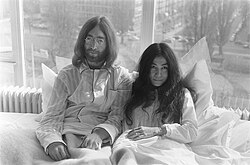
Lennon became a prominent peace activist, often collaborating with his wife, Yoko Ono. Their "bed-ins for peace" and the release of the anthem "Imagine" in 1971 solidified his role as a voice for global harmony.
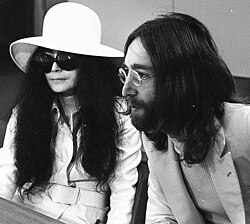
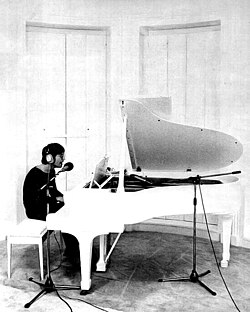
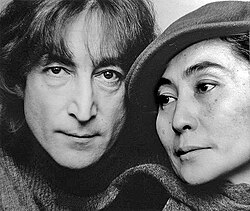
Yoko Ono and Lennon in March 1969
: Yoko Ono and Lennon in March 1969

Advertisement for "Imagine" from Billboard, 18 September 1971
: Advertisement for "Imagine" from Billboard, 18 September 1971

The "Lost Weekend" and Return (1973–1980)

Between 1973 and 1975, Lennon experienced a period known as the "Lost Weekend," characterized by personal turmoil and a separation from Ono. He later returned to a more private life in New York City, focusing on family and a return to recording.
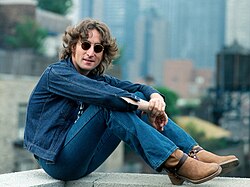
Lennon in a 1974 photograph by Bob Gruen
: Lennon in a 1974 photograph by Bob Gruen

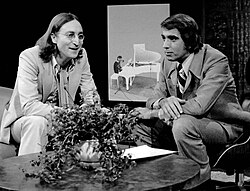
Publicity photo of Lennon and host Tom Snyder from the television programme Tomorrow. Aired in 1975, this was the last television interview Lennon gave before his death in 1980.
: Publicity photo of Lennon and host Tom Snyder from the television programme Tomorrow. Aired in 1975, this was the last television interview Lennon gave before his death in 1980.

Personal Life and Relationships

Lennon and Ono in 1980 by Jack Mitchell

Lennon's personal life was often as publicized as his music. He was married first to Cynthia Powell, with whom he had a son, Julian. He later married Yoko Ono, with whom he had a son, Sean. He also had a significant relationship with May Pang during his mid-1970s hiatus.
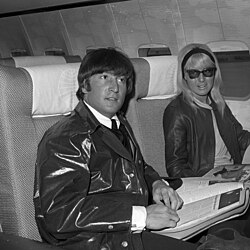
John and Cynthia Lennon sitting in an airplane on a stopover in Los Angeles in 1964
: John and Cynthia Lennon sitting in an airplane on a stopover in Los Angeles in 1964

Lennon with Ono in 1969
: Lennon with Ono in 1969

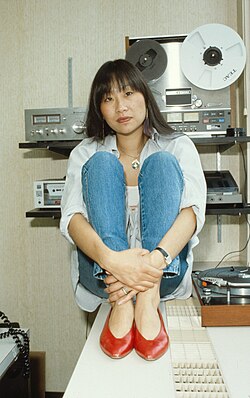
Picture of an Asian woman in her thirties sitting on a table
May Pang in 1983
: May Pang in 1983

Political Struggles and Surveillance
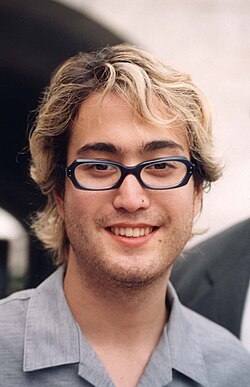
Sean Lennon at a Free Tibet event in 1998

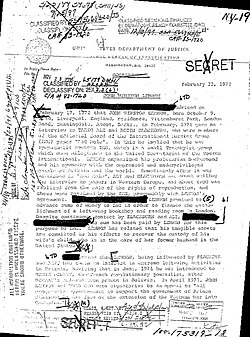
Lennon's activism made him a target of government scrutiny. He faced attempts at deportation from the United States and was subject to FBI surveillance, as revealed in declassified documents from J. Edgar Hoover's office.
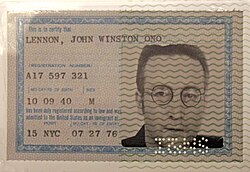
Lennon's green card, which allowed him to live and work in the United States
: Lennon's green card, which allowed him to live and work in the United States

Document with portions of text blacked out, dated 1972.
Confidential (here declassified and censored) letter by J. Edgar Hoover about FBI surveillance of John Lennon
: Confidential (here declassified and censored) letter by J. Edgar Hoover about FBI surveillance of John Lennon

Artistic Contributions and Musicianship
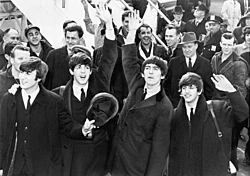
Black-and-white picture of four young men outdoors in front of a staircase, surrounded by a large assembled crowd. All four are waving to the crowd.
Lennon (left) and the rest of the Beatles arriving in New York City in 1964

Beyond the guitar and vocals, Lennon was a prolific artist and author. He published books such as In His Own Write (1964) and A Spaniard in the Works (1965), showcasing his wit and experimental approach to language.
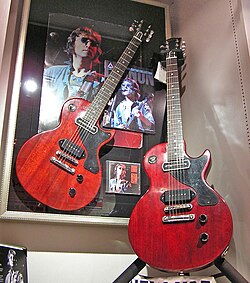
Lennon's Les Paul Jr.
: Lennon's Les Paul Jr.

The Final Chapter and Legacy

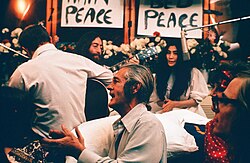
Lennon and Ono sit in front of flowers and placards bearing the word "peace". Lennon is only partly visible, and he holds an acoustic guitar. Ono wears a white dress, and there is a hanging microphone in front of her. In the foreground of the image are three men, one of them a guitarist facing away, and a woman.
Recording "Give Peace a Chance" during the bed-in at the Queen Elizabeth Hotel, Montreal

On December 8, 1980, John Lennon was tragically killed by gunshot wounds in New York City. He was 40 years old. His ashes were scattered in Central Park, near the site of the Strawberry Fields memorial.
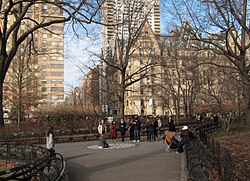
Wintertime at Strawberry Fields in Central Park with the Dakota in the background
: Wintertime at Strawberry Fields in Central Park with the Dakota in the background

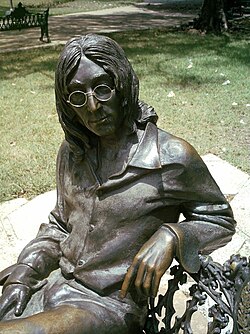
Lennon's legacy persists through his music, his art, and the monuments dedicated to him worldwide, from Liverpool to Havana and Prague.
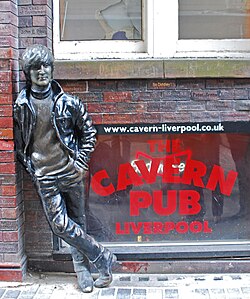
A statue depicting a young Lennon outside a brick building. Next to the statue are three windows, with two side-by-side above the lower, which bears signage advertising the Cavern pub.
Statue of Lennon outside The Cavern Club, Liverpool
: Statue of Lennon outside The Cavern Club, Liverpool

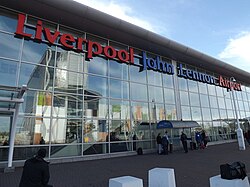
John Lennon Airport in Liverpool
: John Lennon Airport in Liverpool

John Lennon Park in Havana, Cuba
: John Lennon Park in Havana, Cuba

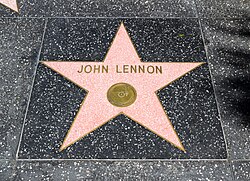
Lennon's star at the Hollywood Walk of Fame
: Lennon's star at the Hollywood Walk of Fame

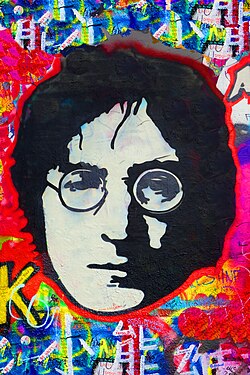
Lennon Wall in Prague
Street art image of Lennon on the Lennon Wall in Prague
: Street art image of Lennon on the Lennon Wall in Prague

Album Title Release Year Collaborator/Band
Unfinished Music No. 1: Two Virgins 1968 Yoko Ono
Unfinished Music No. 2: Life with the Lions 1969 Yoko Ono
Wedding Album 1969 Yoko Ono
John Lennon/Plastic Ono Band 1970 Plastic Ono Band
Imagine 1971 Solo
Some Time in New York City 1972 Yoko Ono
Mind Games 1973 Solo
Walls and Bridges 1974 Solo
Rock 'n' Roll 1975 Solo
Double Fantasy 1980 Yoko Ono
Milk and Honey 1984 Yoko Ono (Posthumous)

Frequently Asked Questions

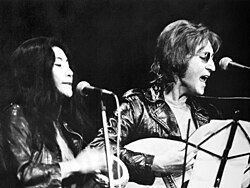
Lennon and Ono performing at the John Sinclair Freedom Rally in December 1971
Lennon with Ono in 1969

What was the "Lost Weekend" in John Lennon's life?

The "Lost Weekend" refers to the period between 1973 and 1975 when Lennon lived apart from Yoko Ono, experiencing a time of personal instability and creative transition.

Which instruments did John Lennon play?

Lennon was a multi-instrumentalist who primarily played the guitar, keyboards, and harmonica, in addition to being a lead and backing vocalist.

Was John Lennon involved in political activism?

Yes, Lennon was a dedicated peace activist. He is well-known for his anti-war stances, his "bed-ins" for peace with Yoko Ono, and songs like "Imagine" and "Give Peace a Chance."

Did John Lennon write books?

Yes, Lennon was an author. His notable works include In His Own Write (1964) and A Spaniard in the Works (1965).

How did the FBI interact with John Lennon?

Due to his political activism, Lennon was subject to FBI surveillance. Declassified documents later revealed that J. Edgar Hoover's office monitored his activities, which contributed to attempts to have him deported from the US.

References

  1. Lennon changed his name by deed poll on 22 April 1969, adding "Ono" as a middle name. Although he used the name John Ono Lennon thereafter, official documents referred to him as John Winston Ono Lennon.[4]
  2. In 2005, the National Postal Museum in the US acquired a stamp collection that Lennon had assembled when he was a boy.[32]
  3. Lennon softened his stance in the mid-1970s, however, and said he had written "How Do You Sleep?" about himself.[128] In 1980, he said that rather than the song representing a "terrible vicious horrible vendetta" against McCartney, "I used my resentment and withdrawing from Paul and the Beatles, and the relationship with Paul, to write 'How Do You Sleep'. I don't really go 'round with those thoughts in my head all the time."[129]
  4. An alternate take of "I'm the Greatest", with Lennon singing a guide vocal, appears on John Lennon Anthology.[148]
  5. "Imagine" topped the US singles chart compiled by Record World magazine, however, in 1971.[153]