John Borthwick Gilchrist: The Architect of Administrative Hindustani
John Borthwick Gilchrist was a pivotal figure in the linguistic landscape of colonial India. A surgeon by training and a linguist by passion, Gilchrist transformed how the British East India Company communicated with the local population, effectively shaping the administrative use of the Hindustani language and influencing the modern development of both Hindi and Urdu.
Early Life and Diverse Beginnings
Born on 19 June 1759 in Edinburgh, John Hay Gilchrist had a childhood marked by mystery; his father, a merchant, disappeared the year he was born. He was raised by his mother, Henrietta Farquharson, who lived to the age of 100. Gilchrist received his early education at George Heriot's School and the Edinburgh High School between 1773 and 1775.
At 16, Gilchrist ventured to the West Indies, where he spent several years learning about the production and cultivation of indigo. This early exposure to international trade and agriculture would reappear later in his professional life.
Career in India and Linguistic Awakening
In 1782, Gilchrist entered the Royal Navy as a surgeon's mate and traveled to Bombay. By 1784, he had joined the East India Company's Medical Service as an assistant surgeon. While marching with the Bengal Army to Fatehgarh, Gilchrist noticed a critical gap in colonial administration: while the Hindustani language (the common tongue of Northern India) was widely understood, the Company neither required nor encouraged its officers to learn it.
Gilchrist became convinced that for officers to communicate effectively with sepoys (Indian soldiers), they needed to master the local vernacular. This realization prompted him to leave the Medical Service in 1787 to dedicate himself to the systematic study of the language.
The First Hindustani Dictionary
Over the next 12 years, Gilchrist lived in various Indian cities, including Delhi, Lucknow, and Patna, immersing himself in the language through native speakers. To fund his research, he briefly engaged in the production of opium, sugar, and indigo in Ghazipur, though the venture eventually failed.
In 1786, he advertised A Dictionary: English and Hindoostanee. Published in installments and completed by 1790, this work was groundbreaking as the first printed publication to use Devanagari type, a script developed by the typographer Charles Wilkins.
Defining the Language of Administration
Hindustani emerged from the need for Persian and Turkish migrants to communicate with the local people of Delhi, who spoke the Dehlavi dialect. This blend of local grammar and Persian vocabulary created a versatile lingua franca.
When Gilchrist arrived, the British believed Persian was the primary language of India. However, Gilchrist discovered that few people spoke Persian or Arabic fluently. He advocated for the adoption of Hindustani—which some then called "Moors language" or "Jargon"—as the official language of British administration.
Fort William College and the Urdu-Hindi Split
At the suggestion of Gilchrist, the Marquess of Wellesley and the East India Company established a training center in Calcutta. Originally the Oriental Seminary, it expanded in 1800 to become Fort William College, where Gilchrist served as the first principal until 1804.
Under his leadership, the college became a hub for Urdu prose. Gilchrist sought a simple, practical style of Urdu that British officers and merchants could easily understand, eschewing complex poetry. He also encouraged the use of a purer form of Khariboli (the root dialect of Hindustani), which contributed to the evolution of modern Hindi.
Scholars remain divided on his legacy. Some credit him with the "bifurcation" of Khariboli into the distinct languages of Hindi and Urdu. Others, like linguist George Abraham Grierson, argued that the "pure" Hindi used today was an artificial hybrid invented by Europeans.
Key Facts
- First Devanagari Print: Gilchrist's dictionary was the first printed work using Devanagari type.
- Administrative Shift: He successfully pushed for Hindustani to replace Persian as the administrative language of British India.
- Educational Leadership: He was the founding principal of Fort William College in Calcutta.
- Financial Legacy: His estate funded the Gilchrist Educational Trust, which still provides grants today.
- Australian Connection: He owned land in Sydney (now the suburb of Balmain) despite never visiting the continent.
Later Life and Return to Britain
Gilchrist returned to Britain in 1804 due to failing health and retired from the East India Company in 1805. In Edinburgh, he co-founded a banking firm and became a fellow of the Royal Society of Edinburgh. He was known for his eccentricities, including a fiery temper and an exotic bird aviary attached to his home.
Despite the failure of his banking business in 1815, he continued to teach oriental languages in London. He was a founding shareholder of University College London, where he served as the first Professor of Hindustani.
Family and Final Years
Gilchrist had several children in India, including a daughter, Mary Anne, who married Major Charles William Burton in Calcutta. In 1808, he married Mary Ann Coventry in Edinburgh.
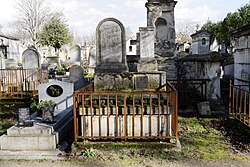
Due to chronic ill health, Gilchrist moved to Paris in 1831. He died there on 9 January 1841, at the age of 81.
The Legal Battle and Educational Legacy
Gilchrist's will sparked a massive legal conflict known as Whicker v Hume. His nephew contested the will, leading to a 17-year legal battle that reached the House of Lords. The case became a landmark legal precedent regarding domicile (the country one is legally considered a resident of) and the execution of wills.
By the time the will was upheld in 1858, the value of his Australian land had skyrocketed. This resulted in an estate worth over £100,000, leading to the 1865 establishment of the Gilchrist Educational Trust.
| Area | Key Contribution/Achievement |
|---|---|
| Linguistics | Created the first English-Hindoostanee dictionary in Devanagari type. |
| Administration | Established Hindustani as the primary language for British colonial rule. |
| Education | First Principal of Fort William College; Professor at University College London. |
| Philanthropy | Founded the Gilchrist Educational Trust via his estate. |
Frequently Asked Questions
What was Gilchrist's main contribution to the Indian languages?
Gilchrist popularized Hindustani as the language of British administration and played a significant role in the development of Urdu prose and the standardization of the Khariboli dialect, which evolved into modern Hindi.
What was the significance of the first Hindustani dictionary?
Beyond providing a linguistic tool, it was the first printed publication to use Devanagari type, marking a major milestone in printing and typography in India.
How did Gilchrist acquire land in Australia?
He purchased a substantial holding near Sydney from William Balmain for a nominal sum to settle a debt, though he never actually visited Australia.
What is the Gilchrist Educational Trust?
It is a charitable organization established in 1865 using the funds from Gilchrist's estate to provide financial grants for the advancement of education and learning worldwide.
Why was the case of Whicker v Hume legally important?
The case established significant legal precedents regarding the definition of domicile and the jurisdiction under which a will must be executed.