Johann Georg Gmelin: The Naturalist Who Mapped the Flora of Siberia
Johann Georg Gmelin was a distinguished German naturalist, botanist, and geographer whose work in the 18th century expanded the scientific world's understanding of the vast Russian wilderness. A child prodigy and a relentless explorer, Gmelin dedicated much of his life to documenting the intersection of chemistry, medicine, and natural history across Europe and Asia.
Key Facts
- Lifespan: August 8, 1709 – May 20, 1755.
- Primary Contribution: Authored Flora Sibirica, describing 1,178 plant species.
- Major Expedition: Participated in Vitus Bering’s Second Kamchatka Expedition (1733–1743).
- Scientific Firsts: Measured the Caspian Sea level relative to the Mediterranean and recorded extreme low temperatures at Yeniseysk.
- Academic Legacy: Professor at the University of Tübingen and member of the Royal Swedish Academy of Sciences.
Early Life and Academic Ascent
Born in Tübingen to a professor at the University of Tübingen, Gmelin demonstrated exceptional intellectual ability from a young age. He began attending university lectures at just 14 years old and earned his medical degree by 18 in 1727. His ambition soon led him to St Petersburg, where he secured a fellowship at the Academy of Sciences in 1728.
By 1730, Gmelin was lecturing at the university, and a year later, he was appointed professor of chemistry and natural history. During this period, he influenced other scholars, such as Johann Amman, and posthumously published the final two volumes of Johann Christian Buxbaum's Centuria.
The Second Kamchatka Expedition
In 1733, Gmelin was selected as one of three professors to join the Second Kamchatka Expedition led by Vitus Bering. Accompanied by student Stepan Krasheninnikov, Gmelin journeyed through the Ural Mountains and western Siberia toward Yeniseysk. During this trek, he identified the Yenisey river as the boundary between Europe and Asia and helped measure one of the lowest temperatures ever recorded at the time.
Gmelin's geographical curiosity extended to the Caspian Sea, where he was the first to determine that its water level was lower than that of the Mediterranean Sea. However, his journey faced a devastating setback in September 1736 upon reaching Yakutsk; a fire on November 8 destroyed his library, notes, and extensive natural history collections. Undeterred, Gmelin spent the following summer re-collecting specimens to replace his lost data.
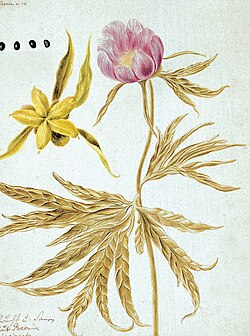
These efforts culminated in the publication of Flora Sibirica (1747–1769), a monumental work describing 1,178 species, 294 of which he illustrated himself. His nephew, Samuel Gottlieb Gmelin, assisted in editing the final two volumes. While Stepan Krasheninnikov wrote a fifth volume focusing on cryptogams (non-seed-bearing plants like ferns and mosses), it was never printed.
Later Career and Legacy
Gmelin returned to the University of Tübingen in 1747, where he served as a professor of medicine and later became the director of the university's botanic garden in 1751. He published his travel accounts in Reise durch Sibirien von dem Jahr 1733 bis 1743. While the work was translated into French and Dutch, it was notably excluded from Russian translation due to Gmelin's critical observations regarding the Russian people.
In recognition of his contributions, Gmelin was elected a foreign member of the Royal Swedish Academy of Sciences in 1749. His name lives on in the botanical world through the genus Gmelina (part of the Lamiaceae family) and numerous other plant and animal species named in his honor.
| Category | Details |
|---|---|
| Education | University of Tübingen (Medical Degree, 1727) |
| Key Publications | Flora Sibirica; Reise durch Sibirien |
| Major Discovery | Caspian Sea level relative to Mediterranean Sea |
| Botanical Impact | 1,178 species described in Flora Sibirica |
| Academic Roles | Professor of Chemistry, Natural History, and Medicine |
Frequently Asked Questions
What was Gmelin's most significant botanical work?
His most significant work was Flora Sibirica (1747–1769), which provided detailed descriptions of 1,178 species and included 294 illustrations.
What happened to Gmelin's research during the Kamchatka Expedition?
While in Yakutsk in 1736, a fire destroyed Gmelin's residence, resulting in the loss of his library, notes, and natural history collections. He spent the following summer re-collecting specimens to recover his data.
Why was Gmelin's travel description not translated into Russian?
The work Reise durch Sibirien was not translated into Russian because it contained uncomplimentary comments and observations about Russians.
Which plant genus is named after him?
The genus Gmelina, which belongs to the Lamiaceae family, is named after him (though some sources suggest it may refer to Johann Friedrich Gmelin).
What geographical boundary did Gmelin help define?
Gmelin described the position of the Yenisey river as the boundary between the continents of Europe and Asia.