IXV: Europe's Pioneering Lifting Body Spacecraft
On February 11, 2015, the European Space Agency (ESA) achieved a historic milestone in aerospace engineering with the flight of the Intermediate eXperimental Vehicle (IXV). This mission marked the first time a lifting body—a spacecraft that generates lift from the shape of its fuselage rather than using wings—successfully performed a full atmospheric reentry from orbital speeds.
While previous space missions relied on either complex, costly winged vehicles or simple but difficult-to-control capsules, the IXV was designed to bridge this gap. By combining controllability with reduced complexity, the IXV provided critical data on how vehicles can safely return to Earth from space.
Key Facts
- Mission Type: Technology demonstration of atmospheric reentry.
- Launch Date: February 11, 2015.
- Peak Altitude: 412 km (256 mi).
- Max Speed: 27,720 km/h (17,220 mph).
- Landing: Successful splashdown in the Pacific Ocean.
- Legacy: Paved the way for the commercial Space Rider vehicle.
Development and Background
The pursuit of reusable spacecraft gained momentum in the 1980s and 1990s, exemplified by the American Space Shuttle and Soviet Buran. European agencies, including France's CNES and Germany's DLR, initially worked on the Hermes spaceplane. However, the Hermes program was terminated in 1992 in favor of using the Russian Soyuz spacecraft.
In 2005, the IXV project was formally initiated under the PRIDE (Programme for Reusable In-orbit Demonstrator in Europe). Led by the Italian Space Agency (ASI) and the Italian Aerospace Research Centre, the project was supported by 11 Member States, with Italy serving as the primary financial backer. Thales Alenia Space was contracted to handle the preliminary development work.
Testing and Validation
The IXV design drew from previous research, specifically the 1998 Atmospheric Reentry Demonstrator (ARD) and the CNES-led Pre-X. To ensure the vehicle could survive the harsh transition from space to sea, ESA conducted rigorous testing.
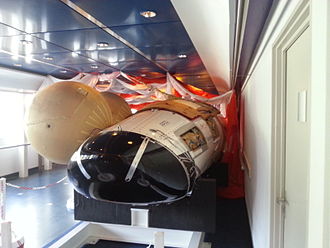
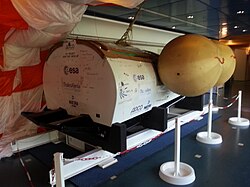
On June 21, 2013, a test vehicle was dropped from 3 km over Sardinia, Italy, to validate the water-landing system, including the subsonic parachute and flotation balloons. Further training exercises were conducted off the coast of Tuscany in June 2014 before the vehicle underwent final flight-readiness checks at the ESTEC Technical Centre in the Netherlands.
The 2015 Flight Test
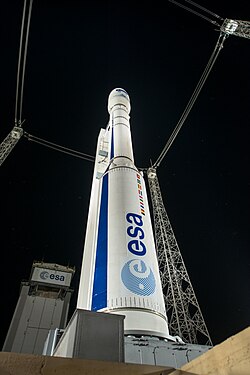
Launched by a Vega rocket on the VV04 mission, the IXV followed a suborbital trajectory. After separating from the launch vehicle at an altitude of 333 km, it reached an apogee (highest point) of 412 km. The vehicle then began a controlled descent, hitting the atmosphere at 120 km altitude while traveling at 7.5 km/s—a speed typical for low Earth orbit (LEO) spacecraft.
The IXV glided over 7,300 km across the Pacific Ocean before deploying its parachutes for a safe splashdown. The vehicle was recovered by the ship Nos Aries, providing researchers with invaluable data on aerodynamics, thermal protection, and guidance systems.
Transition to Space Rider
The success of the IXV led to the development of the Space Rider, a commercialized orbital vehicle. While the IXV was a technology demonstrator that landed in the ocean, the Space Rider is designed for versatility and reuse, with plans for runway landings using landing gear or a parafoil.
The Space Rider will be significantly smaller and lighter than the US X-37B, featuring a payload capacity of 800 kg and the ability to remain in orbit for 2 to 6 months. It will utilize the Vega-C rocket's AVUM stage as a service module for maneuvering and power. The first flight of the Space Rider is currently scheduled for 2028.
Technical Specifications
| Characteristic | Detail |
|---|---|
| Length | 5 m (16 ft 5 in) |
| Wingspan | 2.2 m (7 ft 3 in) |
| Gross Weight | 1,900 kg (4,189 lb) |
| Maximum Speed | 27,720 km/h (17,220 mph) |
| Lift-to-Drag Ratio | 0.7 |
| Max Altitude | 412 km (256 mi) |
Frequently Asked Questions
What is a lifting body?
A lifting body is a spacecraft design where the fuselage itself is shaped to generate aerodynamic lift during reentry, eliminating the need for separate wings while providing more control than a traditional capsule.
How did the IXV land?
The IXV performed a controlled glide over the Pacific Ocean and used a multistage parachute system to slow its descent for a water splashdown.
What was the primary goal of the IXV mission?
The mission was a technology demonstration intended to test the aerodynamics, thermal protection systems, and guidance and navigation of a lifting body returning from orbital speeds.
How does Space Rider differ from IXV?
While IXV was an experimental demonstrator that landed in the ocean, Space Rider is a commercial orbital vehicle designed for payload delivery, longer orbital endurance, and runway landings.
Which rocket launched the IXV?
The IXV was launched into its suborbital trajectory by the Vega rocket on the VV04 mission.