Italian Air Force
The Aeronautica Militare (AM), or the Italian Air Force, serves as the aerial warfare branch of the Italian Republic. With a legacy spanning over a century, it has evolved from a royal service into a modern, technologically advanced force integrated into the NATO alliance. From its early days of reconnaissance balloons to the deployment of fifth-generation stealth fighters, the Italian Air Force remains a cornerstone of Italy's national defense.
The force is guided by the Latin motto Virtute Siderum Tenus, meaning "With valour to the stars," and maintains a strong cultural identity, including the world-renowned acrobatic display team, the Frecce Tricolori.
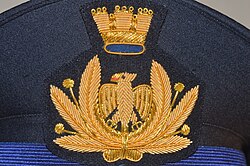
Key Facts
- Founded: March 28, 1923, as the Regia Aeronautica.
- Personnel: Approximately 43,000 members.
- Fleet Size: 962 aircraft.
- Patron: Madonna di Loreto.
- Current Chief of Staff: Generale di squadra aerea Antonio Conserva.
- Primary Roles: Aerial warfare, transport, patrol, and electronic warfare.
Historical Evolution
Early Aviation and World War I
Italy was a pioneer in military aviation, authorizing the Royal Army (Regio Esercito) to acquire an air component as early as 1884. Initially, the Air Service (Corpo Aeronautico Militare) focused on balloons based near Rome. By 1911, during the Italo-Turkish War, Italy achieved a historic milestone by conducting the first use of heavier-than-air aircraft for reconnaissance and bombing in an armed conflict.

The Regia Aeronautica and World War II
On March 28, 1923, King Victor Emmanuel III established the Regia Aeronautica (Royal Air Force) as an independent service. Throughout the 1930s, the force gained operational experience in Ethiopia (1935) and the Spanish Civil War (1936–1939). Upon entering World War II on June 10, 1940, the Regia Aeronautica deployed over 3,000 aircraft, though less than 60% were serviceable at the time.
Following the armistice of September 8, 1943, the force split into two factions: the Italian Co-Belligerent Air Force in the south, aligned with the Allies, and the pro-Axis Aeronautica Nazionale Repubblicana in the north. Hostilities ended on May 8, 1945, paving the way for a total reorganization of Italian military aviation.
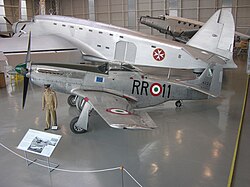
Transition to the Republic and the Cold War
Following a 1946 referendum, Italy became a republic, and the service was renamed the Aeronautica Militare. While the 1947 Peace Treaty of Paris initially imposed strict limitations on the military, Italy's role as a founding member of NATO in 1949 accelerated modernization.
Through the Mutual Defense Assistance Program, Italy integrated American aircraft such as the P-47 Thunderbolt and P-51 Mustang. By 1952, the force entered the jet age with F-84G Thunderjets, F-86D Sabres, and license-built British de Havilland Vampires. This era also saw the rise of the domestic aviation industry, producing the Fiat G.91 and Agusta-Bell helicopters.
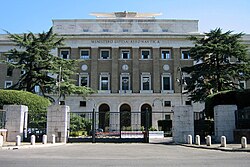
Modernization and the Digital Age
The late 20th century was marked by international collaborations. Italy partnered with the UK and West Germany to develop the Panavia Tornado and later joined a consortium with Germany, Spain, and the UK to create the Eurofighter Typhoon. To bridge the gap during the Typhoon's introduction, Italy leased F-16 Fighting Falcons from the United States until 2012.
In 2003, the force expanded its capabilities by forming the 17º Stormo Incursori (Air Force Raiders Group), a special operations unit specializing in land-based raids, forward air control, and combat search and rescue.
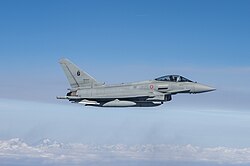
Current Fleet and Capabilities
As of 2014, the Italian Air Force operated 557 aerial vehicles, including 209 manned and 12 unmanned combat aircraft. The force is currently transitioning toward sixth-generation capabilities through the GCAP program, partnering with the UK and Japan to develop the Tempest fighter.
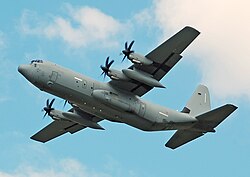
| Role | Aircraft Models |
|---|---|
| Fighter | Eurofighter Typhoon, F-35 Lightning II |
| Attack / EW | Panavia Tornado, Gulfstream G550, Alenia C-27J |
| Transport | C-130J Super Hercules, Alenia C-27J Spartan, Airbus A319CJ, A340-500 |
| Trainer | Alenia M-346 Master, M-345, Piaggio P.180, Tecnam P2006T |
| Helicopter | AgustaWestland AW101, AW139, Agusta-Bell 212, MD 500 Defender |
| Patrol / Recon | ATR 72, Beechcraft Super King Air |
| Tanker | Boeing KC-767, KC-130J Hercules |
Frequently Asked Questions
When was the Italian Air Force founded?
The Italian Air Force was founded as an independent service on March 28, 1923, by King Victor Emmanuel III, originally under the name Regia Aeronautica.
What is the difference between Regia Aeronautica and Aeronautica Militare?
Regia Aeronautica was the "Royal Air Force" used during the Kingdom of Italy. After Italy became a republic in 1946, the name was changed to Aeronautica Militare ("Military Aeronautics").
Which aircraft currently serve as the primary fighters for Italy?
The primary fighter aircraft are the Eurofighter Typhoon and the F-35 Lightning II.
What is the role of the 17º Stormo Incursori?
The 17º Stormo Incursori is a special operations wing responsible for raids on land-based aeronautical compounds, forward air control, and combat search and rescue operations.
What is the GCAP program?
The GCAP is a trilateral program between Italy, the United Kingdom, and Japan to develop a new sixth-generation fighter aircraft known as the Tempest.