Isla de Aves: Venezuela's Strategic Caribbean Outpost
Located deep in the Caribbean Sea, Isla de Aves (Spanish for "Island of Birds") is a small but strategically vital Federal Dependency of Venezuela. Despite its modest size, this remote outpost has played a central role in international diplomacy, maritime law, and territorial disputes due to its location and natural resources.
Key Facts
- Sovereignty: Internationally recognized as Venezuelan territory.
- Dimensions: Approximately 376 meters long and 50 meters wide.
- Highest Point: 4 meters above sea level.
- Strategic Value: Grants Venezuela a 200 nautical mile exclusive economic zone (EEZ).
- Biodiversity: Designated as an Important Bird Area (IBA) by BirdLife International.
- Key Infrastructure: Home to the Simón Bolívar scientific naval base.
Geography and Environmental Profile
Isla de Aves is part of the Aves Ridge, situated west of the Windward Islands. It is a narrow strip of land, measuring 376 meters (1,234 ft) in length and no more than 50 meters (160 ft) in width. Its total area is estimated at 3.36 hectares (8.3 acres), though this figure fluctuates between 0.65 and 4.5 hectares due to constant erosion.
The island's low elevation—peaking at just 4 meters (13 ft)—makes it highly susceptible to the elements. During severe hurricanes, the island can be completely submerged. For example, Hurricane Allen in the 1980s split the island into two parts, which were later reunited by coral accretions, while Hurricane Dean caused severe erosion in 2007.
Environmentally, the island consists mostly of sand with sparse scrubby vegetation. It serves as a critical breeding ground for seabirds, specifically brown noddies and sooty terns, and provides a nesting site for green sea turtles.
Territorial Significance and Maritime Law
The legal classification of Isla de Aves is a point of significant geopolitical importance. Under the United Nations Convention on the Law of the Sea, there is a distinction between a "rock" and an "island." A rock only grants a 12-nautical-mile economic zone, whereas a normal island grants a 200-nautical-mile exclusive economic zone (EEZ)—an area where a state has special rights regarding the exploration and use of marine resources.
Venezuela maintains that Isla de Aves is a normal island, thereby extending its maritime reach significantly into the Caribbean. This claim has been formalized through several international agreements:
- United States: The 1978 United States–Venezuela Maritime Boundary Treaty established borders between Aves Island and Puerto Rico.
- France: A 1980 agreement defined the maritime boundary between Aves Island and the territories of Guadeloupe and Martinique.
- Dominica: In 2006, Dominica's Prime Minister Roosevelt Skerrit unofficially recognized Venezuelan sovereignty over the island.
A History of Dispute and Discovery
Likely discovered by Avaro Sanzze in 1584, the island remained unsettled for centuries. However, it was frequently visited by inhabitants of the Dutch islands of Saba and Sint Eustatius to collect eggs. In the mid-19th century, the discovery of valuable guano (accumulated seabird droppings used as fertilizer) sparked intense territorial conflicts.
The United States, acting under the Guano Islands Act of 1856, saw American citizens attempt to annex the island. Simultaneously, the Netherlands claimed the territory, leading to diplomatic tensions and the dispatch of warships. The dispute was eventually referred to Queen Isabella II of Spain, who ruled in favor of Venezuela in 1865, while preserving the fishing rights of Dutch islanders.

Venezuela formally integrated the island into its territorial reorganization under President Joaquín Crespo in 1895. By 1905, it was established as the "Municipio Oriental" within the Colón Federal Territory.
Modern Presence and Scientific Research
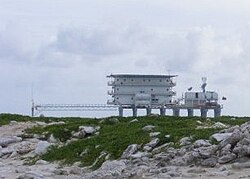
To solidify its sovereignty and monitor the region, Venezuela established a permanent presence on the island. In 1950, the Venezuelan Navy took formal control, and on June 2, 1978, they constructed the Simón Bolívar scientific naval base. This facility, built on stilts over the water on the island's lee side, houses military personnel and scientists.
Beyond its military and political value, the island is a "holy grail" for amateur radio enthusiasts. Classified as a rare entity under the ITU prefix YV0, expeditions to the island are rare and difficult to organize; one such expedition in 2006 required 14 years of planning.
| Feature | Detail |
|---|---|
| Coordinates | 15°40′12″N 63°37′7″W |
| Distance to Mainland Venezuela | 547 km (340 mi) |
| Closest Landmass | Montserrat (185 km / 115 mi) |
| Primary Natural Resource | Guano (historically) |
| Protected Status | Important Bird Area (IBA) |
Frequently Asked Questions
Why is Isla de Aves so important to Venezuela?
The island's primary value is strategic. By maintaining sovereignty over Isla de Aves, Venezuela can claim a 200-nautical-mile exclusive economic zone, significantly expanding its maritime territory and resource rights in the Caribbean.
What is guano and why did it cause disputes?
Guano is the accumulated excrement of seabirds, which is rich in nitrogen and phosphorus, making it a highly valuable fertilizer in the 19th century. This led the US, UK, Netherlands, and Spain to compete for control of the island.
Is the island permanently inhabited?
Yes, the Simón Bolívar scientific naval base is permanently inhabited by a rotating group of Venezuelan military personnel and scientists.
Does the island face any environmental threats?
Yes, the island is extremely vulnerable to erosion and rising sea levels. It is frequently impacted by hurricanes, which can severely erode the land or submerge the island entirely.
How was the dispute with the Netherlands resolved?
The dispute was settled in 1865 when Queen Isabella II of Spain ruled in favor of Venezuela, though she ensured that the inhabitants of the Dutch islands could continue to fish in the surrounding waters.