Intertropical Convergence Zone: The Earth's Dynamic Equatorial Engine
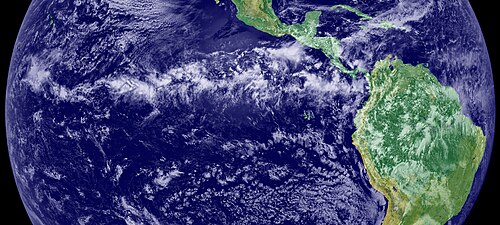
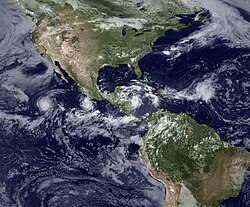
Near the Earth's equator lies a powerful meteorological phenomenon known as the Intertropical Convergence Zone (ITCZ). Often described as a band of clouds and thunderstorms encircling the globe, the ITCZ is the meeting point where the northeast and southeast trade winds converge. While it is a vital driver of global weather patterns, it is also famously known to sailors as the doldrums—a region of monotonous, windless weather that can leave sailing vessels stranded for days or even weeks.
Meteorological Foundations of the ITCZ
The ITCZ functions as a tracer for the ascending branch of the Hadley cell, a large-scale atmospheric circulation pattern. Driven by intense solar heating, the ITCZ creates vertical motion in the form of convective activity, which manifests as frequent thunderstorms. As air rises in this zone, it draws in the surrounding trade winds to replace it.
In the Northern Hemisphere, trade winds move southwestward from the northeast. In the Southern Hemisphere, they move northwestward from the southeast. The specific direction of these winds can shift when they cross the equator due to the Coriolis effect—the deflection caused by Earth's rotation. For example, if the ITCZ is positioned north of the equator, the southeast trade wind becomes a southwest wind once it crosses into the Northern Hemisphere.
Seasonal Migration and Variability
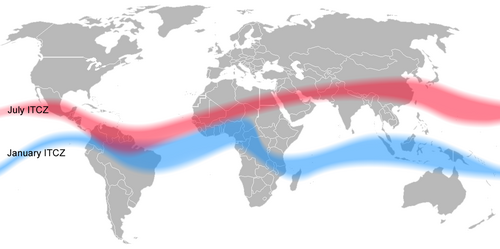
The ITCZ is not a static feature; it migrates north and south following the thermal equator (the zone of maximum solar heating). Because oceans have a higher heat capacity than land, this migration is much more pronounced over continents. Over the oceans, the convergence zone remains more stable and better defined by ocean temperatures.
In some instances, a double ITCZ can form, featuring one zone in the Northern Hemisphere and another in the Southern Hemisphere. When this occurs, a narrow ridge of high pressure typically develops between the two convergence zones.
ITCZ Dynamics: Oceans vs. Land
While the seasonal movement of the ITCZ is a primary driver of rainfall in equatorial nations, the relationship between the zone and precipitation is complex. Over the oceans, the ITCZ and rainfall patterns are closely linked. However, over land, the region of maximum rainfall can become decoupled from the ITCZ itself.
Equatorial precipitation over continents is influenced by more than just surface convergence. It is modulated by regional factors including local atmospheric jets, waves, terrain-induced convection, moisture recycling, and variations in land cover and albedo (the reflectivity of the Earth's surface).
![Seasonal variability of the Intertropical Convergence Zone (ITCZ), Congo air boundary (CAB), tropical rainbelt, and surface winds over Africa (adapted from Dezfuli 2017 with modification). This schematic shows that the ITCZ and the region of maximum rainfall can be decoupled over the continents.[1]](/images/fc/ee/fcee4fa0b087691daec80d2a23cf3abbb4c80e82357d21911da52d7d6b0cfc82.png)
Regional Variations: The South Pacific Convergence Zone
A significant component of the ITCZ is the South Pacific Convergence Zone (SPCZ). This trough extends from the west Pacific warm pool southeastward toward French Polynesia. It is considered the largest and most important part of the ITCZ and shows less dependence on land-mass heating than other sections of the monsoon trough.
In the eastern tropical Pacific and southern tropical Atlantic, a southern ITCZ (SITCZ) can occur during the Southern Hemisphere fall. This zone is sensitive to the El Niño–Southern Oscillation (ENSO); during an El Niño event, the SITCZ often vanishes as the temperature gradients in the ocean shift.
Weather Impacts and Hazards
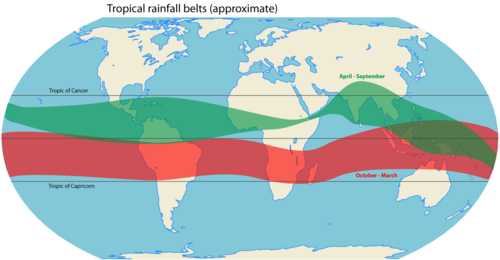
The position of the ITCZ dictates the wet and dry seasons for many tropical nations. Long-term shifts in its location can lead to catastrophic environmental changes, such as severe droughts or widespread flooding. Within the zone, thunderstorm activity often follows a 15 to 25-day cycle, roughly half the wavelength of the Madden–Julian oscillation (MJO).
Role in Tropical Cyclone Formation
The ITCZ plays a critical role in tropical cyclogenesis (the development of tropical cyclones). It provides necessary low-level vorticity (spin) and horizontal wind shear. As the ITCZ moves toward higher latitudes during the summer, the increasing Coriolis force makes it easier for tropical cyclones to form within the zone. Additionally, tropical waves moving along the ITCZ axis can trigger clusters of thunderstorms that develop into larger systems.
Navigational and Aviation Risks
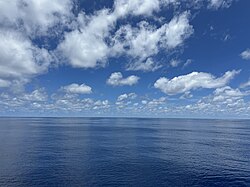
Historically, the "doldrums" were a deadly hazard for sailors in the Age of Sail, as the lack of wind could strand ships in hot, humid conditions. In modern times, the ITCZ presents risks to aviation. Large convective cells (thunderstorms) can cause rapid icing on aircraft sensors, which was a contributing factor in the tragic loss of Air France Flight 447 in 2009.
Climate Change and the Future of the ITCZ
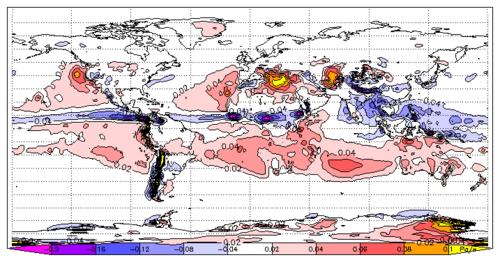
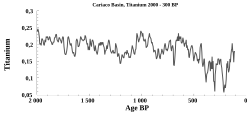
Paleoclimate data—using proxies like titanium concentrations in sediment—show that the ITCZ has shifted significantly throughout history. Recent observations suggest that anthropogenic climate change may be causing the ITCZ to narrow and intensify. This results in sharper contrasts: amplified precipitation in the ITCZ core and suppressed rainfall at its edges.
While there is "medium agreement" regarding the strengthening and tightening of the ITCZ, scientists are still studying potential regional shifts. Some models suggest a northward displacement over the Indian Ocean and eastern Africa, alongside a southward displacement over the eastern Pacific and Atlantic oceans.
Key Facts
- Definition: The area where the northeast and southeast trade winds converge.
- Nickname: Known as the "doldrums" due to the calm, windless conditions often found there.
- Weather Pattern: Characterized by heavy convective activity and frequent thunderstorms.
- Climate Driver: Dictates the wet and dry seasons in tropical regions.
- Climate Change Trend: Evidence suggests the ITCZ is becoming narrower and more intense.
Summary of ITCZ Characteristics
| Feature | Description |
|---|---|
| Primary Driver | Solar heating and Hadley cell ascent |
| Wind Pattern | Convergence of trade winds |
| Typical Weather | Thunderstorms and heavy rainfall |
| Nautical Term | The Doldrums |
| Climate Impact | Determines tropical seasonal cycles |
Frequently Asked Questions
Why is the ITCZ called the doldrums?
The term refers to the calm, stagnant, or inactive winds often found in this equatorial belt, which historically left sailing ships without the wind needed for propulsion.
How does the ITCZ affect rainfall over land?
While the ITCZ's movement generally follows the sun, rainfall over land is also influenced by local factors like terrain, moisture recycling, and atmospheric waves, which can sometimes decouple rainfall from the ITCZ's exact position.
Can the ITCZ move north or south of the equator?
Yes. The ITCZ migrates seasonally following the thermal equator. When it is positioned north or south of the equator, the trade winds change direction due to the Coriolis effect.
What is the relationship between the ITCZ and tropical cyclones?
The ITCZ provides the low-level vorticity and wind shear necessary for tropical cyclone formation. As it moves to higher latitudes during summer, the increased Coriolis force further enables cyclone development.
How is climate change affecting the ITCZ?
Current research suggests the ITCZ may be narrowing and intensifying, leading to more extreme differences between heavy rainfall in the core and drier conditions at the edges of the zone.