Insular Italy Demographics: Population Trends and Urban Centers
The macro-region of Insular Italy, comprising the islands of Sicily and Sardinia, represents a unique demographic profile within the Italian peninsula. As of 2026, the total population stands at 6,329,684. This figure accounts for just over one-tenth of Italy's total population, making it the least populous of all the country's macro-regions.
The gender distribution is nearly balanced, with females making up 51% of the population and males accounting for 49%. The age structure reveals a significant senior presence, with seniors comprising 25.2% of the residents, while minors represent 14.8%.
Key Facts
- Total Population (2026): 6,329,684 residents.
- Regional Distribution: Three-quarters of the macro-region's population resides in Sicily.
- Population Density: This is the lowest density macro-region in Italy, largely due to Sardinia's sparse population.
- Sardinia's Density: Approximately one-third of the national average population density of Italy.
- Primary Urban Center: Palermo is the largest city with 626,273 inhabitants.
Population Growth and Historical Trends
Historical data from ISTAT shows a general upward trend in population from the mid-19th century, peaking in the late 20th century before experiencing recent fluctuations. From a baseline of 3,017,528 in 1861, the population grew steadily, surpassing 6 million by 1961.
While the region saw a peak of 6,642,266 in 2011, there has been a slight decline in recent years, with the 2021 census recording 6,420,742 residents, a decrease of 3.3% from the previous decade.
| Year | Population | Percentage Change (±%) |
|---|---|---|
| 1861 | 3,017,528 | — |
| 1901 | 4,363,917 | +20.8% |
| 1951 | 5,762,772 | +14.5% |
| 1991 | 6,614,634 | +1.7% |
| 2011 | 6,642,266 | +0.6% |
| 2021 | 6,420,742 | −3.3% |
Major Urban Centers
The distribution of inhabitants is heavily concentrated in Sicily. Palermo serves as the primary hub, significantly larger than any other city in the macro-region.
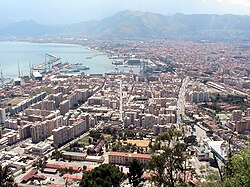
Following Palermo, Catania and Messina are the next most populous cities, both located in Sicily. In Sardinia, Cagliari stands as the most populous urban center.
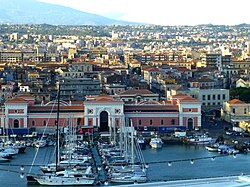
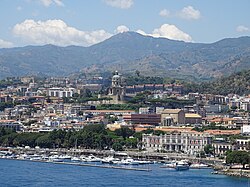
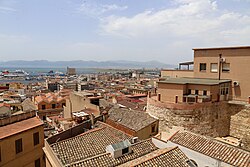
Cities with Over 50,000 Inhabitants
- Palermo (Sicily): 626,273
- Catania (Sicily): 296,984
- Messina (Sicily): 216,458
- Cagliari (Sardinia): 145,981
- Sassari (Sardinia): 120,231
- Syracuse (Sicily): 115,515
Immigration and National Origin
The vast majority of the population is native to Italy. Based on 2025 data for 6,258,527 residents with known countries of birth, 95.2% (5,960,512) were born in Italy.
Among the foreign-born population, Romania is the most represented group with 52,168 residents (0.8%), followed by Germany with 42,668 residents (0.7%).
Frequently Asked Questions
Which island has a higher population?
Sicily has a significantly higher population, housing approximately three-quarters of the total residents of the Insular Italy macro-region.
What is the most populous city in the region?
Palermo is the most populous city, with a population of 626,273 as of 2026.
Why does the region have the lowest population density in Italy?
The low density is primarily attributed to Sardinia, which is one of the least densely populated areas in Italy, with a density roughly one-third of the national average.
What is the age distribution of the population?
Seniors make up 25.2% of the population, while minors account for 14.8%.
Which foreign countries have the most residents in this region?
The most numerous foreign-born residents come from Romania (52,168) and Germany (42,668).