Institute of Archaeology: Facilities, Collections, and Library
The Institute of Archaeology provides a world-class environment for the study of human history through material culture. From its early beginnings at St John's Lodge in Regents Park to its move to Gordon Square in 1958, the Institute has evolved into a hub of scientific research and academic excellence. Today, its facilities span multiple floors, integrating cutting-edge laboratories with vast historical archives.
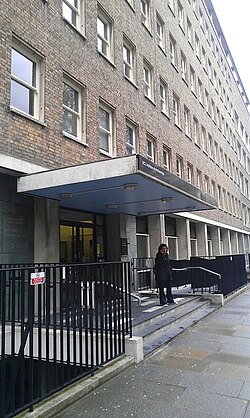
Key Facts
- Collections: Approximately 80,000 objects used for research, teaching, and outreach.
- Specialized Labs: Includes the Wolfson Archaeological Science Laboratories and facilities for GIS and lithic analysis.
- Public Access: The A. G. Leventis Gallery offers free entry to the public.
- Library Scope: One of the world's most extensive printed collections for archaeology and museum studies.
Advanced Research and Teaching Facilities
The Institute is equipped with a diverse array of laboratories designed to support both teaching and high-level research. Central to these is the Wolfson Archaeological Science Laboratories, which work alongside specialized spaces dedicated to conservation, photography, and GIS (Geographic Information Systems)—a framework for gathering, managing, and analyzing spatial data.
Furthermore, the Institute maintains dedicated facilities for lithic analysis (the study of stone tools) and environmental research, ensuring that students and researchers have the tools necessary to analyze ancient materials with scientific precision.
The Institute of Archaeology Collections
With a vast repository of roughly 80,000 objects, the collections serve as primary resources for global archaeological study. These materials span a wide geographical range, including Europe, Africa, Egypt, the Levant, Mesopotamia, Pakistan, India, Mesoamerica, South America, and the Caribbean.
Notable Contributors and Materials
The collections feature contributions from renowned figures such as Flinders Petrie (specifically the Petrie Palestinian Collection), Kathleen Kenyon, Beatrice De Cardi, W. L. Hildburgh, R. G. Gayer-Anderson, and Mortimer Wheeler.
Beyond traditional artifacts like ceramics and lithics, the Institute houses extensive archaeobotanical (plant remains) and zooarchaeological (animal remains) materials. Additionally, collections of slag and minerals provide essential resources for studying ancient technology and metallurgy.
The A. G. Leventis Gallery
A portion of these treasures is available to the public via the A. G. Leventis Gallery of Cypriot and Eastern Mediterranean Archaeology. This gallery showcases objects from ancient Cyprus, Greece, Crete, Egypt, and the Levant. It is open Monday through Friday, from 9 am to 5 pm, with free admission.
The Institute Library and Academic Resources
Founded in 1937, the Institute Library has earned an international reputation for its comprehensive collection of printed materials focusing on archaeology, museum studies, and cultural heritage. This legacy was built largely through the efforts of post-war librarians Joan du Plat Taylor, Geraldine Talbot, and Heather Bell.
The library integrates several specialized collections, including the Yates Classical Archaeology library and the Edwards Egyptology library. Now part of UCL Library Services, it works in tandem with other university resources, such as the Main Library (covering Ancient History, Jewish Studies, Latin American History, History, and Classics) and the DMS Watson Science Library (covering Anthropology, Geography, and the History of Science).
| Category | Key Features / Components |
|---|---|
| Laboratories | Wolfson Archaeological Science, GIS, Lithic Analysis, Conservation, Photography |
| Collections | ~80,000 objects; Ceramics, Lithics, Archaeobotanical, Zooarchaeological |
| Public Gallery | A. G. Leventis Gallery (Cypriot and Eastern Mediterranean Archaeology) |
| Libraries | Institute Library, Yates Classical Archaeology, Edwards Egyptology |
Frequently Asked Questions
What is the A. G. Leventis Gallery and how can I visit?
The A. G. Leventis Gallery is a public display of the Institute's collections, featuring artifacts from ancient Cyprus, Greece, Crete, Egypt, and the Levant. It is free to enter and open Monday to Friday, 9 am to 5 pm.
How many objects are held in the Institute's collections?
The Institute of Archaeology Collections contain approximately 80,000 objects used for teaching, research, and outreach.
What specialized scientific facilities are available at the Institute?
Facilities include the Wolfson Archaeological Science Laboratories, as well as specialized labs for GIS, photography, lithic analysis, conservation, and environmental research.
Which specialized libraries are part of the Institute Library?
The Institute Library includes the Yates Classical Archaeology library and the Edwards Egyptology library, and is now integrated into UCL Library Services.
What types of biological remains are stored in the collections?
The Institute maintains extensive archaeobotanical and zooarchaeological collections, which serve as primary sources for identifying ancient plant and animal remains.