Understanding the Initial Sound Rule in the Korean Language
If you have ever studied the Korean writing system, or Hangul, you may have noticed that certain words change their spelling depending on whether they are being written in South or North Korea. One of the most significant linguistic divides between the two nations is a phenomenon known as the initial sound rule (Korean: 두음법칙; Hanja: 頭音法則; RR: dueum beopchik).
This rule is a series of orthographic changes—rules governing how words are written—designed to better reflect modern Korean phonology (the study of speech sounds). Specifically, the rule affects how certain syllable-initial sounds, such as "r" (ㄹ) and "n" (ㄴ), are written when they appear in Sino-Korean vocabulary (words derived from Chinese characters).
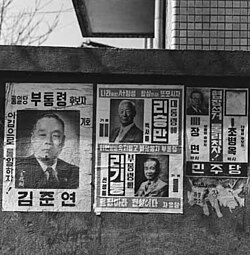
The Historical Evolution of Korean Sounds
To understand why this rule exists, one must look at the nature of the Korean language. In native Korean words, the consonant "r" (ㄹ) does not occur at the onset (the beginning) of a syllable. However, because many Korean words are borrowed from Chinese, these "r" and "n" sounds frequently appear at the start of words in Sino-Korean vocabulary.
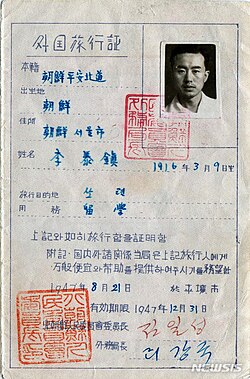
Historical evidence suggests that the pronunciation of these words had been "nativized"—adapted to fit Korean speech patterns—for centuries. As early as the 16th century, literature shows signs of this shift. By the 17th century, records from Hendrick Hamel’s travels noted place names that reflected these pronunciation changes, such as Naju (Hanja: 羅州) and Yeongam (Hanja: 靈巖). Even in the late 19th and early 20th centuries, the common surname Lee was often romanized as "Ye" or "Yi" to reflect these phonetic shifts.
Despite these long-standing patterns, there is academic debate regarding when these rules were officially codified. Professor Emeritus Ryeo Jeoung-dong of Gyeongsang National University, a prominent advocate for the abolition of the rule, has challenged the claim that these rules were first organized in elementary school orthography during the 1912 colonial period.
The North-South Linguistic Divide
Today, the initial sound rule serves as a major marker of the difference between South and North Korean standard languages. While North Korea briefly adhered to the rule, they eventually abandoned it. Consequently, North Korean orthography generally uses the original, earlier spellings for Sino-Korean vocabulary, whereas South Korea maintains the rule to reflect modern pronunciation.
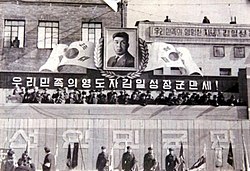
South Korean Standards
In South Korea, the National Institute of Korean Language enforces the rule through three specific guidelines to ensure writing matches spoken sounds:
- Nasal shifts: When the Chinese consonants "nyeo, nyo, nyu, ni" appear at the start of a word, they are written as "yeo, yo, yu, i."
- Liquid shifts (Type 1): When "rya, ryeo, rye, ryo, ryu, ri" appear at the start, they are written as "ya, yeo, ye, yo, yu, i."
- Liquid shifts (Type 2): When "ra, rae, ro, roe, ru, reu" appear at the start, they are written as "na, nae, no, noe, nu, neu."
Summary of Initial Sound Rule Applications
| Original Sino-Korean Consonant | South Korean Written Form | Example Context |
|---|---|---|
| nyeo, nyo, nyu, ni | yeo, yo, yu, i | Phonetic adjustment of nasal sounds |
| rya, ryeo, rye, ryo, ryu, ri | ya, yeo, ye, yo, yu, i | Adjustment of liquid/nasal combinations |
| ra, rae, ro, roe, ru, reu | na, nae, no, noe, nu, neu | Conversion of "r" to "n" at syllable onset |
Key Facts
- The initial sound rule affects how "r" (ㄹ) and "n" (ㄴ) are written at the start of Sino-Korean words.
- South Korea uses the rule to match modern pronunciation.
- North Korea largely ignores the rule, preferring original Sino-Korean spellings.
- The rule is a primary example of the orthographic differences between the two Koreas.
- The rule prevents "r" sounds from appearing at the start of syllables, which is not natural in native Korean words.
Frequently Asked Questions
What is the main purpose of the initial sound rule?
The rule is designed to make the written Hangul system better reflect the way modern Korean is actually spoken, specifically by adjusting sounds that are difficult to pronounce at the beginning of a word.
How does North Korean spelling differ from South Korean spelling?
North Korea generally does not use the initial sound rule for Sino-Korean vocabulary, meaning they retain the original consonant sounds (like "r" or "ry") at the start of words, whereas South Korea changes them to "n" or "y" sounds.
Does the rule apply to all Korean words?
No. The rule specifically applies to Sino-Korean vocabulary (words derived from Chinese characters). It does not apply to native Korean words.
Who regulates these spelling rules in South Korea?
The National Institute of Korean Language is the body responsible for establishing and maintaining the standard rules for Korean orthography.
Is there any controversy surrounding this rule?
Yes. Some scholars, such as Professor Emeritus Ryeo Jeoung-dong, have advocated for the abolition of the initial sound rule.