The Great Korean Script Debate: Hanja Mixed Script vs. Hangul Exclusivity
In the landscape of Korean orthography—the set of rules governing how the language is written—one of the most enduring and heated debates concerns how characters should be used. On one side is Hangul exclusivity (한글 전용), the practice of writing purely in the native Korean alphabet. On the other is Korean mixed script (한자 혼용), or hanja honyong, which integrates Chinese characters (Hanja) into the text.
This is not merely a technical linguistic dispute; it is a cultural and educational issue that touches upon everything from early childhood schooling to university-level literacy. The debate centers on whether the inclusion of Hanja enriches the language or creates unnecessary barriers to communication.
Key Facts
- Hanja refers to Chinese characters used within the Korean writing system.
- Hangul is the native Korean alphabet consisting of 24 letters.
- Approximately 60-70% of Korean vocabulary is derived from Hanja.
- The 5-Year Plan for Hangul Exclusivity (1968) banned Hanja in South Korean public schools and the military.
- A 2023 study showed 31% of Koreans struggle to read text above a basic level.
A Brief History of Korean Writing
Following its creation by Sejong the Great, Hangul was primarily used by the peasantry or by scholars in mixed script to translate Chinese texts. For much of history, hanmun (literary Chinese) served as the standard for formal writing. A shift began in November 1894, when King Gojong declared that Korean legal codes should be written primarily in Hangul, using Hanja as a reference.
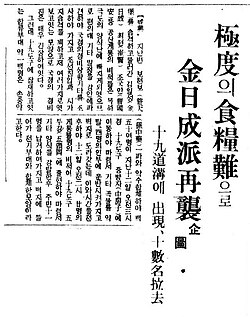
As literary Chinese declined, mixed script became the standard for newspapers and non-fiction. However, the mid-20th century brought significant political shifts. In 1968, South Korean President Park Chung Hee announced the 5-Year Plan for Hangul Exclusivity, aiming to eliminate Hanja from public life by 1972. While public backlash led to the allowance of Hanja in special classes, its use in textbooks remained banned.
The landscape changed significantly in the 1990s. The ban was formally lifted in 1992 under Kim Young-Sam, and the Kim Dae-Jung administration later promoted Hanja on public signage. By 2005, the Law Concerning Hangul Exclusivity was repealed. Today, Hanja is mostly used for newspaper abbreviations, clarifying homophones, or stylistic branding, such as the character 辛 on Shin Ramyun packaging.
The Literacy Argument: Complexity vs. Accessibility
The Case for Hangul Exclusivity
Proponents of Hangul exclusivity argue that the alphabet's simplicity is its greatest strength. By using only 24 letters, the language becomes accessible to everyone, regardless of social class. Historically, Hangul broke the monopoly of the elite class over literacy. Supporters argue that true understanding comes from reading experience and literary analysis, not from memorizing complex characters.
The Case for Mixed Script
Advocates for mixed script argue that literacy rates depend on education access, not the writing system. They point out that countries using complex scripts, such as China, Japan, and Taiwan, maintain high literacy rates. They also raise the concern of functional illiteracy—the inability to read complex information necessary for professional life.
Because 60-70% of Korean vocabulary is Sino-Korean (derived from Hanja), many technical terms are difficult to grasp without character knowledge. A 2005 study found that South Korean adults had the highest rate of functional illiteracy among 22 OECD nations at 38%. Furthermore, a 2023 PIAAC study indicated that 31% of Koreans cannot read text above a basic level, a figure notably higher than in Japan, which continues to use mixed script.
| Metric/Region | Hangul Exclusivity Focus (South Korea) | Mixed Script Focus (Japan) |
|---|---|---|
| Functional Illiteracy (2005 OECD Study) | 38% | Not specified |
| Difficulty reading above basic level (2023) | 31% | 11% |
| Ability to read at Level 3 or above (2023) | 32% | 66% |
Vocabulary and Semantic Clarity
The Challenge of Homophones
One of the primary arguments for mixed script is the issue of homophones—words that sound the same but have different meanings. In Hangul, the syllable "일" (il) could mean "one" (一), "day" (日), or the native word for "work." Writing the Hanja removes this ambiguity instantly.
Similarly, the root "화" (hwa) can represent various meanings such as fire (火), flower (花), or speech (話). Proponents of Hangul exclusivity suggest using native Korean words or new coinages to solve this, but mixed script advocates argue that Hanja provides a more efficient way to convey deep semantic meaning, much like Latin roots function in English.
Vocabulary Origins
The line between "pure" Korean and Sino-Korean is often blurred. Many words considered native Korean actually have Sino-Korean origins that have evolved over time, such as kimchi (김치), which is believed to stem from the Hanja word chimchae (沈菜). Mixed script allows readers to navigate these complex linguistic layers more easily.
The Political Dimension
The debate also carries heavy political weight. Some argue that mixed script is a colonial legacy imposed by Japan during World War II. However, mixed script advocates counter that Korean "mixed scripts" like Idu and Gugyeol existed long before the Japanese occupation. They also note that Hangul exclusivity was often enforced by authoritarian regimes, including the governments of Park Chung Hee in the South and Kim Il-Sung in the North.
Looking toward a potential future reunification, some experts suggest that mixed script could actually aid ethnolinguistic unity. Using a shared Sino-Korean base could reduce the differences in spelling and vocabulary that have developed between the North and South, making the two populations more mutually intelligible.
Frequently Asked Questions
What is the main difference between Hangul and Hanja?
Hangul is the native Korean phonetic alphabet used to write the sounds of the language. Hanja refers to Chinese characters that represent specific meanings and are used within the Korean writing system.
Why is Hanja still used in modern Korea?
While its use has declined, Hanja is still used for newspaper headlines, to clarify words that sound the same (homophones), and for stylistic purposes in branding and signage.
Does using Hangul make it harder to understand complex words?
Some experts argue that because a large portion of Korean vocabulary is Sino-Korean, relying solely on phonetic Hangul can lead to functional illiteracy, as readers may struggle to distinguish between different words that share the same sound.
How does mixed script help with reunification?
Mixed script could help bridge the linguistic gap between North and South Korea by providing a shared orthographic standard (using Hanja) to resolve differences in spelling and pronunciation that have emerged over decades of separation.
Is Hangul exclusivity a new concept?
No, while it became a major policy in the mid-20th century, the movement toward Hangul exclusivity has been a subject of debate for decades, often driven by different political administrations.