Informal Housing: Global Trends, Challenges, and Urban Impact
Across the globe, millions of people live in dwellings that exist outside the boundaries of official government regulation. This phenomenon, known as informal housing, encompasses any shelter or settlement that is illegal, unregulated, or lacks state protection. Because these dwellings operate outside the formal legal framework, the informal housing industry is a significant component of the broader informal sector of the economy.
Living in informal housing means existing in a state of deregulation. In these environments, land ownership, use, and purpose cannot be mapped or fixed according to prescribed laws. This lack of legal recognition typically results in a lack of security of tenure—the certainty that a person's tenure of land will not be arbitrarily terminated. Consequently, residents often struggle to access essential civic amenities, including potable water, electricity, gas, sanitation, waste collection, and emergency services.
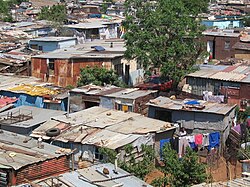
Key Facts
- Global Scale: There are currently over 1 billion squatters worldwide, representing one in seven people.
- Future Projections: This number is expected to rise to 2 billion by 2030 and 3 billion by 2050.
- African Urbanization: Between 50% and 75% of new housing in African cities is developed on informally acquired land.
- Defining Slums: UN-Habitat defines slum housing as lacking at least one of five criteria: durability, sufficient space, safe water, adequate sanitation, or security of tenure.
- Economic Impact: Because occupancy is informal, states are generally unable to collect land taxes or rent from these settlements.
Informal Housing in Developing Countries
While housing insecurity is a global issue, it is particularly acute in developing nations. Several complex factors drive the growth of informal settlements in these regions.
The Impact of Global City Development
As cities strive to become "global cities"—hubs with the economic and regulatory infrastructure needed to support international firms—they often undergo radical physical transformations. According to Saskia Sassen, these interventions frequently displace low-profit households and modest firms, pushing them into informal arrangements.
Institutional Collapse and Economic Pressure
Conflict and instability can destroy the institutions responsible for recording land transactions. For example, in Mogadishu, Somalia, municipal land registries existed until 1991; currently, those records are held by a member of the diaspora in Sweden who charges a fee to verify deeds. When households lack the economic resilience to relocate or repurchase land in a formal market, they often turn to informal housing.
Case Study: Mumbai, India
In Mumbai, a combination of rapid economic growth, inadequate infrastructure, endemic corruption, and restrictive tenancy laws has created a crisis. It is estimated that 54% of the city's population lives informally. In such environments, housing is often built incrementally, meaning residents add enhancements and extensions as they acquire more time and resources.
The growth of these settlements is further accelerated by mass migration, as people move to cities to find work or flee from environmental disasters and war.
Informal Housing in Developed Countries
Informal housing is not exclusive to the developing world; it also exists in developed nations, though it often takes different forms. In the United States, for example, unpermitted secondary units are considered a form of informal housing. In 2012, it was estimated that out of approximately 462,000 single-family homes in Los Angeles, California, nearly 50,000 contained unpermitted secondary units.
Summary of Informal Housing Characteristics
| Feature | Formal Housing | Informal Housing |
|---|---|---|
| Legal Status | Regulated and Legal | Illegal or Unregulated |
| Tenure | Secure Ownership/Lease | Lack of Security of Tenure |
| Civic Amenities | Reliable Access (Water, Power) | Limited or No Access |
| Taxation | Subject to Land Taxes/Rent | Typically Untaxed |
| Construction | Planned/Permitted | Often Incremental |
Frequently Asked Questions
What is the difference between informal housing and a slum?
While the terms are related, "informal housing" is a broader category that includes anyone living outside government regulation. UN-Habitat defines "slum housing" more narrowly, specifically as dwellings that lack at least one of the following: durability, sufficient living space, safe water, adequate sanitation, or security of tenure.
What does "security of tenure" mean?
Security of tenure refers to the legal guarantee that a person's right to live in their home will be recognized and protected, ensuring they cannot be arbitrarily evicted from their land or shelter.
What is incremental housing?
Incremental housing is a process where a home is built in stages. Residents start with a basic structure and add rooms or improvements over time as they gain the necessary financial resources and security.
Is informal housing only found in poor countries?
No. While more prevalent in developing nations due to rapid urbanization and institutional instability, informal housing exists in developed countries as well, such as through unpermitted secondary dwelling units in major U.S. cities.
How many people live in informal settlements globally?
According to Robert Neuwirth, there are currently over 1 billion squatters worldwide. Projections suggest this could increase to 2 billion by 2030 and 3 billion by 2050 if current trends persist.