Population Density: Measuring Human and Biological Distribution
Population density is a fundamental measurement used to describe the number of individuals within a specific unit of land area. While most commonly applied to human populations to understand how we occupy the Earth, the concept is equally vital in population geography and biology. In fields such as botany and agronomy, this measurement is specifically referred to as plant density.
Understanding how life is distributed across the globe helps scientists, policymakers, and urban planners manage resources, protect biodiversity, and prepare for future growth. From the crowded streets of global megacities to the vast, sparsely populated steppes, density provides a snapshot of the relationship between living organisms and their environment.
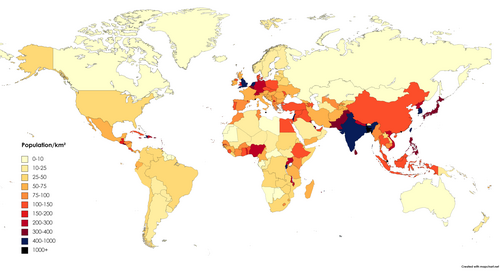
Biological and Environmental Implications
In biological terms, population density is calculated by dividing the total population by the total land area, which may or may not include seas and oceans depending on the study. The density of a species can have profound impacts on its survival.
When densities become critically low, a species may enter what is known as an extinction vortex. This phenomenon, identified as the Allee effect, occurs when low population numbers lead to reduced fertility. This can be caused by several factors, including:
- Increased difficulty in locating sexual mates.
- Higher rates of inbreeding within the small group.
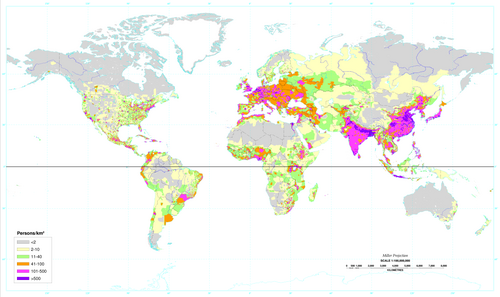
Human Population Density and Global Trends
For humans, density is typically expressed as the number of people per square kilometre or square mile. Because the Earth's surface is a mix of land and water, the resulting figure changes significantly based on the area being measured.
With a global population of approximately 8 billion, the math varies by context:
- Total Earth Area: Including all land and water (510,000,000 km²), the density is roughly 16 people per km².
- Total Land Area: Considering only land (150,000,000 km²), the density rises to approximately 53 people per km².
- Excluding Antarctica: If the uninhabited land of Antarctica is removed from the calculation, the density increases to over 58 people per km².
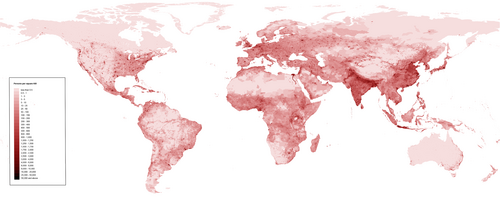
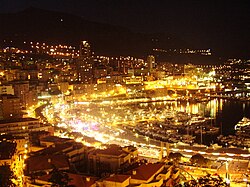
Interestingly, human distribution is highly uneven. Approximately 95% of the world's population is concentrated on just 10% of the Earth's land. This concentration is often seen in city-states, microstates, and urban dependencies. These areas often feature high levels of urbanization and economic specialization, which is distinct from the concept of overpopulation.
Urbanization and Geography
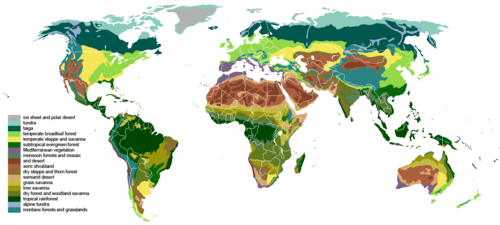
Geography plays a massive role in where people live. Deserts generally have low population densities because the lack of rainfall limits crop growth. However, rapid infrastructure growth in Middle Eastern cities like Dubai, Abu Dhabi, and Kuwait City shows that technology and investment can drive density even in harsh climates.
Conversely, some regions are defined by their vast emptiness. For example, the Mongolian Steppes represent one of the least densely populated areas due to a harsh climate dictated by geography.
![Mongolian Steppes. Mongolia is the least densely populated country in the world due to its harsh climate as a result of its geography.[9]](/images/18/95/1895144d68e0e2d15ea6bf379acc69c265726b8ffc29bb39e5a0cc0e2c8cffc0.jpg)
In contrast, some of the world's most densely populated areas are found in Asia, particularly Southeast Asia. Other high-density urban centers include Lagos, Kinshasa, and Cairo in Africa; Bogotá, Lima, and São Paulo in South America; as well as Mexico City and Saint Petersburg.
Methods of Measuring Density
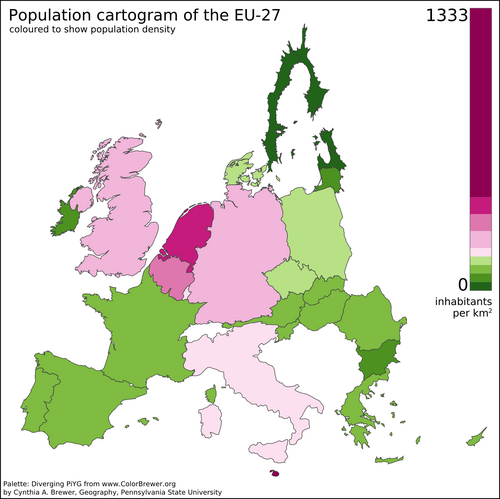
While arithmetic density (total population divided by total land area) is the most common metric, researchers use several other specialized methods to gain deeper insights:
- Physiological density: Total population divided by the area of arable (farmable) land.
- Agricultural density: The rural population divided by the area of arable land.
- Residential density: The number of people in an urban area divided by the area of residential land.
- Urban density: The number of people in an urban area divided by the total area of urban land.
- Ecological optimum: The density of a population that can be supported by available natural resources.
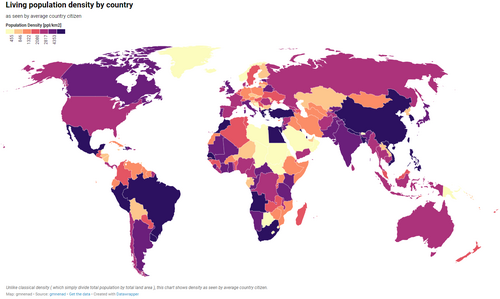
- Population weighted density: Also known as living density, this measures the density at which the average person actually lives.
To assist in these complex calculations, organizations like the European Commission's Joint Research Centre (JRC) have developed tools such as the Global Human Settlement Layer (GHSL) to provide high-quality data for policy support and United Nations systems.
Key Facts
- 95% of the global population lives on only 10% of the world's land.
- The Allee effect describes how low population density can reduce fertility and lead to extinction.
- Macau is one of the most densely populated territories in the world.
- The global human population density is approximately 53 people per km² when considering land area only.
- High density in cities does not always equate to overpopulation; it often reflects high urbanization and economic specialization.
Data Summary: Top Territories and Countries
| Rank/Type | Name | Population | Density (per km²) |
|---|---|---|---|
| Top Territory | Macau (China) | 650,834 | 55,268 |
| Top Territory | Monaco | 37,550 | 18,589 |
| Top Territory | Singapore | 6,036,900 | 8,206 |
| Top Country | Bangladesh | 170,329,768 | 1,269 |
| Top Country | Taiwan | 23,539,888 | 730 |
Frequently Asked Questions
What is the difference between arithmetic and physiological density?
Arithmetic density is the total number of people divided by the total land area. Physiological density is more specific, calculating the total population divided by the amount of arable, or farmable, land available.
What is the Allee effect?
The Allee effect is a phenomenon in biology where a population's growth rate decreases as the population density becomes very low, often due to difficulties in finding mates or increased inbreeding.
Why are some cities considered overpopulated?
Whether a city is overpopulated often depends on its infrastructure, the quality of housing, and the accessibility of essential resources relative to the number of people living there.
How does geography affect population density?
Geography dictates the availability of resources. For example, deserts often have low densities due to lack of rain for crops, while fertile regions or coastal areas often support much higher concentrations of people.
What is living density?
Living density, or population weighted density, is a measurement that reflects the density at which the average person actually lives, rather than a simple average across a whole territory.