India's Nuclear Triad and the Role of Arihant-Class Submarines
India has strategically developed a comprehensive defense framework known as a nuclear triad. This military capability ensures that a nation can launch nuclear weapons from three different platforms: land, air, and sea. By diversifying its delivery systems, India aims to maintain a robust strategic posture and ensure the survivability of its deterrent forces.
The Foundation of Strategic Deterrence
The primary objective of the nuclear triad is to establish a credible minimum deterrence posture. This means maintaining the smallest possible nuclear force necessary to discourage an adversary from initiating a nuclear attack, while ensuring that the force is capable of delivering a retaliatory strike if necessary.
While land- and air-based systems provide significant reach, the sea-based component is considered the most survivable. Unlike fixed silos or airbases, nuclear-powered submarines can remain hidden in the depths of the ocean, making them difficult for an opponent to detect or destroy in a first-strike scenario.
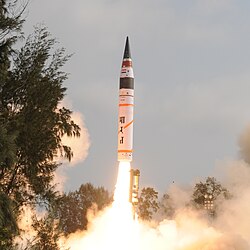
The Evolution of Sea-Based Capabilities
The completion of India's triad was marked by the operationalization of the INS Arihant, a nuclear-powered ballistic-missile submarine. In November 2018, the Government of India announced that the INS Arihant had completed its first deterrence patrol, effectively establishing the survivable sea-based leg of the triad.
To further validate these capabilities, the INS Arihant conducted a successful launch of a submarine-launched ballistic missile in October 2022. According to the Ministry of Defence, this test was critical in validating the operational and technological parameters of the weapon system.
Expanding the Fleet: INS Arighaat
India continues to strengthen its maritime deterrence through the expansion of the Arihant-class. On August 29, 2024, the second submarine of this class, the INS Arighaat, was commissioned into the Indian Navy at Visakhapatnam.
The Ministry of Defence has stated that the addition of the INS Arighaat enhances the country's nuclear deterrence. By operating both the Arihant and the Arighaat, India increases its overall deterrent capability and ensures a more persistent presence of sea-based strategic assets.
Key Facts
- Nuclear Triad: The ability to launch nuclear weapons from land, air, and sea.
- INS Arihant: The first nuclear-powered ballistic-missile submarine to complete a deterrence patrol in November 2018.
- INS Arighaat: The second Arihant-class submarine, commissioned on August 29, 2024, in Visakhapatnam.
- Strategic Goal: To maintain a posture of credible minimum deterrence.
- Validation: A successful submarine-launched ballistic missile test was conducted in October 2022.
Summary of Arihant-Class Submarines
| Vessel Name | Class | Key Milestone | Significance |
|---|---|---|---|
| INS Arihant | Arihant-class | First deterrence patrol (Nov 2018) | Established the survivable nuclear triad |
| INS Arighaat | Arihant-class | Commissioned (Aug 29, 2024) | Strengthened nuclear deterrence capability |
Frequently Asked Questions
What is a nuclear triad?
A nuclear triad is a strategic military structure that allows a country to launch nuclear weapons from three distinct platforms: land-based missiles, strategic aircraft, and submarines.
Why is the sea-based component important for India?
The sea-based component, provided by nuclear-powered submarines, is the most survivable element of the triad because submarines can operate stealthily, ensuring a retaliatory capability even if land-based assets are compromised.
What is the significance of the INS Arighaat?
The INS Arighaat is the second Arihant-class submarine. Its commissioning increases India's deterrent capability by allowing the Navy to operate multiple nuclear-powered ballistic-missile submarines.
What does "credible minimum deterrence" mean?
It is a strategic posture where a nation maintains the minimum amount of nuclear force required to effectively discourage an enemy from attacking, ensuring the deterrent is believable and sufficient.
When was the submarine-launched ballistic missile tested?
The INS Arihant successfully conducted a launch of a submarine-launched ballistic missile in October 2022 to validate the system's technological and operational parameters.