India in World War II: A Global Contribution
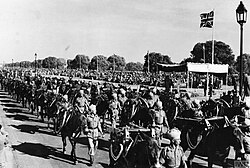
During the Second World War (1939–1945), India played a pivotal role as a member of the British Empire. Officially declaring war on Nazi Germany in September 1939, British India became a cornerstone of the Allied effort. The subcontinent served not only as a source of immense manpower but also as a strategic base for American operations supporting China in the China Burma India Theater.
The scale of India's involvement was unprecedented. Over 2.5 million soldiers fought under British command across multiple continents, contributing to victories in Europe, North Africa, and Southeast Asia. The impact was so significant that Field Marshal Sir Claude Auchinleck later remarked that Britain might not have survived either World War without the support of the Indian Army.
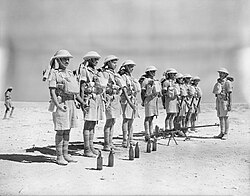
Key Facts
- Manpower: The British Indian Army grew from 205,000 men in 1939 to over 3.35 million by 1945, becoming the largest all-volunteer force in history.
- Human Cost: Approximately 87,000 Indian troops and 3 million civilians lost their lives.
- Global Reach: Indian forces fought in the European theatre, the North African Campaign, and the Southeast Asian theatre.
- Naval Presence: The Royal Indian Navy operated ships with the prefix HMIS (His Majesty's Indian Ship).
- Internal Conflict: While millions fought for the Allies, others, led by Subhas Chandra Bose, collaborated with Axis powers to seek Indian independence.
The British Indian Army and Global Campaigns
The Southeast Asian Theatre
The defense of the Indian subcontinent was a critical priority. By 1942, Japan had invaded Burma and captured the Andaman and Nicobar Islands. The conflict reached a peak in March 1944 when the Indian National Army, supported by Japan, advanced into India as far as Kohima in Nagaland. This offensive was eventually halted at the Battle of Kohima and the Battle of Imphal in June 1944.
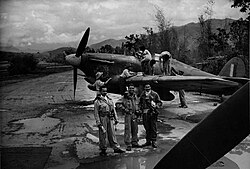
Many Indian officers displayed exceptional bravery during the Burma Campaign, receiving the Distinguished Service Order (DSO), including future military leaders such as Kondandera Subayya Thimayya and Lionel Protip Sen.
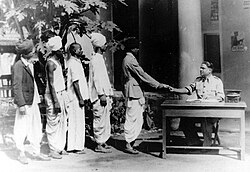
The Middle East and Italy
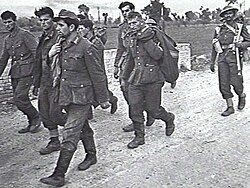
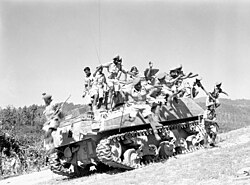
Indian troops were instrumental in the liberation of Italy from Nazi control, providing the third-largest Allied contingent after the United States and Great Britain. The 4th, 8th, and 10th Divisions, along with the 43rd Gurkha Infantry Brigade, faced grueling combat at the Battle of Monte Cassino and fought along the Gothic Line through 1944 and 1945.
Naval and Aerial Contributions
The Royal Indian Navy (RIN)
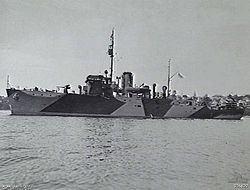
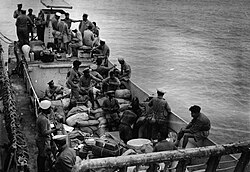
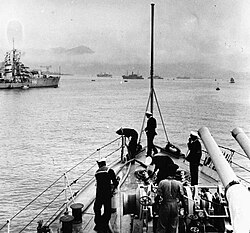
Formally inaugurated on October 2, 1934, the Royal Indian Navy played a vital role in maritime security. While the sloop HMIS Pathan was lost to an Italian submarine in 1940, the RIN achieved significant successes. In February 1944, HMIS Jumna helped sink the Japanese submarine RO-110, and in August 1944, HMIS Godavari contributed to the sinking of the German submarine U-198 near the Seychelles.
The Royal Indian Air Force (RIAF)
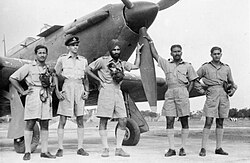
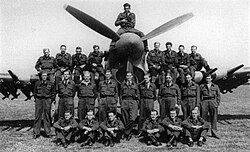
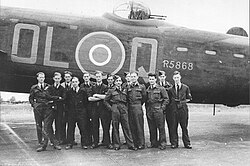
The air arm provided essential support across various theaters. Notable figures like Arjan Singh, who later became Marshal of the Air Force, served with distinction during this era.
Internal Struggles and the Axis Collaboration
The war coincided with a fierce movement for Indian independence. While many served the British, others viewed the war as an opportunity to end colonial rule. Subhas Chandra Bose sought alliances with the Soviet Union and Nazi Germany, helping to form the Indische Legion (Indian Legion), which was briefly incorporated into the Waffen-SS.
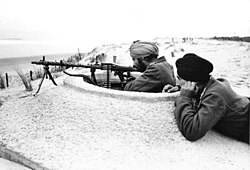
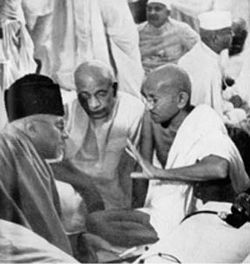
Conversely, prominent leaders like Mahatma Gandhi, Jawaharlal Nehru, and Maulana Azad denounced Nazism even as they continued to oppose British imperialism.
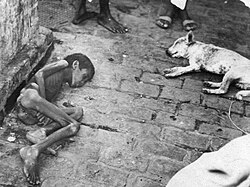
The tension of the era was further marked by the tragedy of the Bengal Famine of 1943. This catastrophe was caused by a combination of the Japanese invasion of Burma, British food exports for the European war, "denial orders" that destroyed local food transport, and the conversion of agricultural land into 900 airfields.
Civilian Effort and Humanitarian Acts
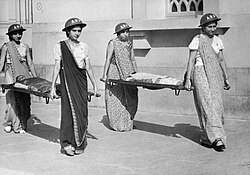
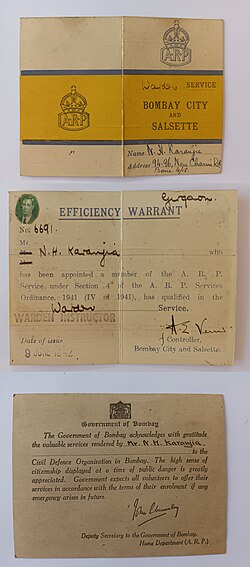
On the home front, Indian civilians contributed through Air Raid Precautions (ARP) duties, particularly in cities like Bombay.
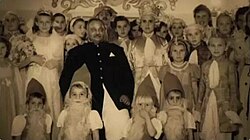
Amidst the chaos, acts of humanity occurred; for instance, Maharaja Jam Sahib rescued Polish children from Soviet camps in 1943, providing them refuge in India.
Summary of India's War Effort
| Category | Details |
|---|---|
| Total Military Personnel | Over 3.35 million (by 1945) |
| Total Fatalities | ~87,000 troops; 3 million civilians |
| Major Theatres | Europe, North Africa, Southeast Asia |
| Key Naval Successes | Sinking of RO-110 and U-198 |
| Key Land Battles | Monte Cassino, Kohima, Imphal |
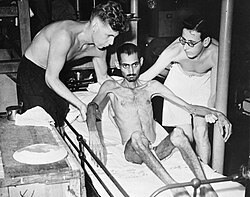
![Captured soldiers of the British Indian Army who refused to join the INA were executed by the Japanese.[52]](/images/b5/45/b545754ad3b03f1135e4909f5130eeb191ca85999a15e9df9f3e9b86fd7b16f6.jpg)
Frequently Asked Questions
How large was the British Indian Army during World War II?
Starting at 205,000 men in 1939, it grew to over 3.35 million by 1945, making it the largest all-volunteer force in history.
What was the role of the Indian National Army (INA)?
The INA was formed with Japanese support and led by Subhas Chandra Bose to liberate India from British rule, advancing as far as Kohima in 1944.
What caused the Bengal Famine of 1943?
The famine resulted from the Japanese invasion of Burma, British food exports to Europe, the destruction of food transport via denial orders, and the use of agricultural land for airfields.
In which European campaigns did Indian troops participate?
Indian forces were heavily involved in the North African Campaign and the liberation of Italy, specifically at the Battle of Monte Cassino and the Gothic Line.
What was the Royal Indian Navy's contribution?
The RIN secured shipping lanes and successfully sank Axis submarines, including the Japanese RO-110 and the German U-198.