Independent Politicians: Roles, Motivations, and Global Examples
In the landscape of representative democracy, most leaders are associated with a political party. However, there is a distinct category of leaders known as independent politicians (or non-affiliated politicians). These individuals formally operate without affiliation to any political party, offering a different approach to governance and electoral representation.
Under various electoral laws, independent candidates are not nominated by party structures. Instead, they are typically nominated by a qualified number of citizens, often becoming known as civic candidates. Depending on the electoral unit, an independent candidacy can be individual—a single person running for a single seat—or collective, where a list of independent candidates runs for a multi-seat unit.
Key Facts
- Definition: A politician formally not affiliated with any political party.
- Nomination: Usually nominated by citizens rather than party officials.
- Pathways: Individuals can start as independents or become one after leaving or being expelled from a party.
- Alliances: Independents may form technical groups or alliances that function similarly to parties.
- Global Presence: Independent candidates appear in various forms across Africa, Asia, Europe, and the Americas.
Why Politicians Choose Independence
The decision to run without a party is rarely accidental. There are several primary motivations for choosing a non-affiliated path:
- Ideological Disagreement: Some view the very concept of political parties as inherently corrupt or flawed.
- Platform Mismatch: A candidate's views may not align with any existing party platform.
- Strategic Positioning: Some may align with a party's views but choose not to run under its name, or they may be unable to do so because the party selected a different candidate.
- Level of Representation: A politician might support a party at a national level but believe they should not be bound by party policies at a local or regional level.
- Administrative Status: In some cases, a politician belongs to a party that is not officially registered, leading them to be recognized as an independent.
Global Examples of Independent Leadership
Europe
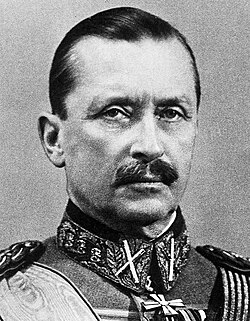
Europe has a rich history of independent executives. In Finland, Marshal C. G. E. Mannerheim served as president from 1944 to 1946 without party affiliation. More recently, Sauli Niinistö was elected to a second term as president in 2018 as an independent, supported by high popularity ratings.
Italy has frequently seen independent Prime Ministers, including Mario Monti, Giuseppe Conte, and Mario Draghi. Similarly, Portugal's current president, Marcelo Rebelo de Sousa, suspended his political affiliation upon taking office in 2016.
The Americas
In Canada, the House of Commons has seen several notable independents. Chuck Cadman won a seat in 2004 after failing to secure a Conservative nomination, and Jody Wilson-Raybould ran as an independent in 2019 following her expulsion from the Liberal Party.
Asia and Africa
In Malaysia, the 15th Parliament and various state assemblies have seen significant independent representation, particularly in Sabah. In Pakistan, independent candidates have played a major role; in 2024, candidates backed by the banned Pakistan Tehreek-e-Insaf won 94 seats as independents. In Algeria, President Abdelmadjid Tebboune ran as an independent in 2019, despite his long-term membership in the National Liberation Front's central committee.
Summary of Independent Representation
| Region | Common Characteristics | Notable Examples |
|---|---|---|
| Europe | Frequent independent heads of state/government | Finland, Italy, Portugal |
| Americas | Often results from party expulsion or nomination failure | Canada (House of Commons) |
| Asia | High numbers during party bans or regional shifts | Pakistan, Malaysia |
| Africa | Mixed affiliation (formal independent vs. party member) | Algeria |
Frequently Asked Questions
How does an independent candidate get on the ballot?
Unlike party candidates who are nominated by their organization, independent candidates are most commonly nominated by gathering a qualified number of signatures from citizens, as dictated by the specific electoral laws of their jurisdiction.
Can an independent politician still collaborate with others?
Yes. Independents often form alliances, technical groups, or registered organizations to coordinate their efforts. While they remain formally independent, these groups can function similarly to a political party.
What happens if a party member is expelled?
When a politician is expelled from their party, they typically become an independent. For example, Bill Casey in Canada served as an independent after being expelled from the Conservative Party in 2007.
Is being an independent the same as being non-partisan?
While closely related, an independent is specifically a person not affiliated with a party. Non-partisanism is a broader concept where the electoral process itself is designed to be free from party influence, such as the historical requirements for the Governor of Liechtenstein under the 1862 Constitution.