Representative Democracy: Evolution, Structure, and Global Impact
Representative democracy, often referred to as indirect or electoral democracy, is a system of governance where citizens elect delegates to represent their interests and make legislative decisions on their behalf. This stands in contrast to direct democracy, where citizens vote on laws and policies personally. In the modern era, most Western-style governments utilize this model to manage large populations and complex administrative needs.
Examples of this system vary by national structure. The United Kingdom operates as a unitary parliamentary constitutional monarchy, while Germany is a federal parliamentary republic. France utilizes a unitary semi-presidential republic, and the United States functions as a federal presidential republic.
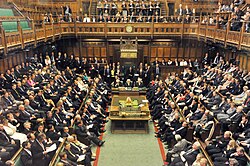
It is important to distinguish representative democracy from liberal democracy. While a representative system may feature free, fair, and multiparty elections, it does not inherently guarantee a fully developed rule of law or the protection of individual and minority rights outside the electoral process.
Key Facts
- Core Mechanism: Power is vested in elected representatives rather than the general populace.
- Polyarchy: A term used by theorists like Robert Dahl to describe the practical functioning of representative democracy.
- Role of Parties: Political parties often become central when electoral systems encourage voting for party lists or affiliated candidates.
- Global Trend: Data from the V-Dem Institute indicates that electoral democracy peaked in 2012 and has since declined, with acceleration in the early 2020s.
![The V-Dem Institute's index of electoral democracy (another term for representative democracy) peaked in 2012, and has since declined, with the decline accelerating in the early 2020s.[28]](/images/23/98/2398d0e581af82ef90a75a98406994e81f47e355c496b104d6553f64668f6855.webp)
The Historical Evolution of Representation
Ancient and Medieval Origins
The roots of representative government can be traced back to early constitutional developments. In Britain, the process began in the late 13th century. The Oxford Parliament of 1258 limited the king's unlimited authority, and Simon de Montfort's Parliament of 1265 was notable for including both noblemen and citizens from various towns.
By the 17th century, the Parliament of England integrated liberal democratic ideas, leading to the Glorious Revolution and the 1689 Bill of Rights. The voting franchise continued to expand through various Reform Acts during the 19th and 20th centuries.
The Corsican Experiment
Following its independence from Genoa in 1755, the Corsican Republic adopted a Constitution drafted by Pasquale Paoli. This document is considered by some to be the first written Constitution for a nation-state, incorporating Enlightenment principles and female suffrage in local elections.
Under this system, all men over 25 could vote for representatives to the diet regardless of social class. The executive branch consisted of a rotating council of state and a president. However, this system was revoked in 1769 when the Kingdom of France took over the island.
Expansion in the Americas and France
The American Revolution resulted in the 1787 U.S. Constitution, establishing a national legislature with representatives elected every two years. While the House was based on direct elections, Senators were not directly elected by the people until the Seventeenth Amendment in 1913. Over time, voting rights were extended to women, non-property owners, and Black citizens through legislative changes.
In France, the 1789 Declaration of the Rights of Man and of the Citizen set a precedent for representation. Although short-lived, the National Convention of 1792 was elected by all males, and universal male suffrage was later re-established after the Revolution of 1848.
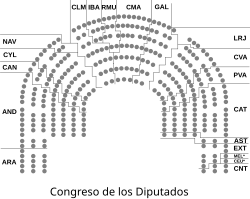
The Rise of Modern Representative Systems
Representative democracy became the preferred model following the Industrial Revolution. As populations grew and citizens became more politically engaged, the logistical challenges of direct democracy became insurmountable. In the United Kingdom, the Reform Act of 1832 is widely credited with launching the modern era of representative governance.
| Country | System Type | Key Characteristic |
|---|---|---|
| United Kingdom | Unitary Parliamentary Constitutional Monarchy | Parliamentary supremacy; constitutional monarch |
| United States | Federal Presidential Republic | Separation of powers; federalist structure |
| Germany | Federal Parliamentary Republic | Federal states with a central parliamentary government |
| France | Unitary Semi-Presidential Republic | Dual executive (President and Prime Minister) |
Criticisms and Stability
Despite its prevalence, the system faces theoretical criticisms. In 1911, Robert Michels proposed the iron law of oligarchy, arguing that most representative systems inevitably deteriorate into oligarchies or "particracies," where power is concentrated in the hands of a few leaders.
To counter this instability, theorist Adolf Gasser suggested that stability could be maintained if local communities joined into higher units, such as cantons, to preserve a balance of power and prevent the concentration of authority.
Frequently Asked Questions
What is the difference between representative and direct democracy?
In a representative democracy, citizens elect officials to make laws and decisions on their behalf. In a direct democracy, citizens vote on policy initiatives and laws themselves without intermediaries.
What is polyarchy?
Polyarchy is a term used by political theorists, including Robert Dahl, to describe a political system that possesses the institutional characteristics of a representative democracy, emphasizing the distribution of power among multiple centers.
How does representative democracy differ from liberal democracy?
Representative democracy focuses on the mechanism of electing officials. Liberal democracy adds a layer of protection for individual rights, minority rights, and the strict adherence to the rule of law, regardless of the electoral outcome.
What is the "iron law of oligarchy"?
Proposed by Robert Michels, this theory suggests that all complex organizations, including representative democracies, eventually evolve into oligarchies where a small elite holds the majority of the power.
Who was Pasquale Paoli?
Pasquale Paoli was the author of the Corsican Republic's Constitution (1755), which is noted for being one of the first written national constitutions and for including early forms of female suffrage.