Imperial Service Troops: The Auxiliary Forces of India's Princely States
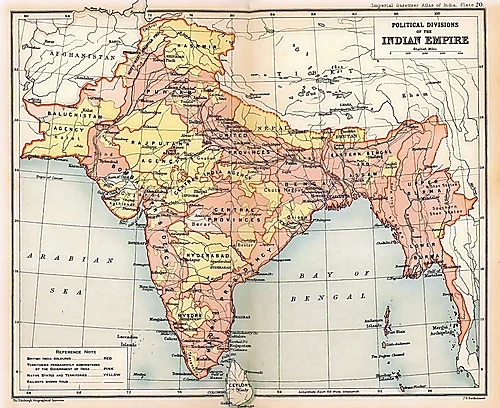
The Imperial Service Troops (IST), later renamed the Indian States Forces in 1920, were specialized auxiliary military units raised by the princely states of the Indian Empire. These forces served as a strategic reserve, deployed alongside the regular Indian Army whenever the British administration required their service. Inaugurated in 1888 by the Viceroy of India, these troops represented a unique intersection of traditional feudal loyalty and modern colonial military organization.
By the dawn of the 20th century, the IST comprised approximately 18,000 men. While they were smaller in scale than the regular army, their reach was global, with deployments spanning from China and British Somaliland to the major theaters of both World Wars.
Key Facts
- Established: 1888 by the Viceroy of India.
- Renamed: Became the Indian States Forces (ISF) in 1920.
- Funding: Training and equipment costs were borne by the Native States.
- WWI Strength: 22,479 soldiers from 29 Indian states.
- WWII Strength: Approximately 250,000 men.
- Legacy: Contributed to the formation of the 61st Cavalry in the modern Indian Army.
The Genesis of the Imperial Service Troops
The catalyst for the creation of the IST was the Panjdeh incident of March 1885. After Russian forces defeated the Afghan army at Panjdeh, a village on the Russian-Afghan frontier, the British grew concerned about the security of the North-West Frontier. In response, many Indian rulers, most notably the Nizam of Hyderabad, offered generous financial donations to support a potential war effort.
Although the crisis was eventually resolved through compromise, the British recognized the value of the princes' support. This led to the establishment of a reserve force of roughly 20,000 soldiers. These men were recruited from the armies of the Native States but were trained and equipped to the standards of the regular Indian Army.
The Role of Princely State Armies
Before the IST, the armies of the Princely States were heavily restricted by subsidiary alliances—treaties that limited their military capabilities to prevent internal rebellion or external aggression. These forces were primarily used for ceremonial displays and internal policing.
Under these treaties, states were forbidden from fortifying interior posts or constructing factories for guns and ammunition. They were also prohibited from enlisting subjects of other states. The British Government assumed the responsibility for protecting these dominions from invasion, ensuring that the princes' forces remained subordinate to the overarching defense strategy of the King-Emperor.
Training, Equipment, and Standards
To ensure the IST could operate effectively alongside regular regiments, the Government of India provided necessary weapons and equipment. In exchange, the princely states had to maintain a high level of readiness. This was achieved through several measures:
- Secondment: Indian Army officers were assigned to IST units to provide professional leadership.
- Instruction: Dedicated schools of instruction were created for recruits.
- Oversight: An Inspector-General of Imperial Service Troops, supported by a staff of inspectors, advised the military durbars (courts) of the states.
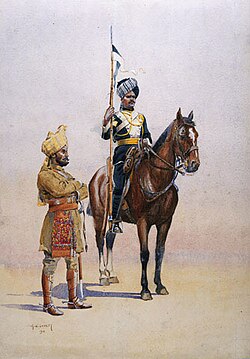
While the larger states kept traditional units for ceremonial purposes, the IST units were the primary combat-ready forces. Interestingly, while they wore elaborate parade uniforms reflecting the tastes of their rulers, they adopted the standard khaki drill service dress of the Indian Army during active mobilization.
Early Campaigns and Global Deployment
The IST proved their utility in several early conflicts. Kashmir was the first to provide active service, deploying two mountain batteries during the Hunza Nagar campaign (1891) and the Chitral Expedition (1895). During the Frontier War of 1897, nine different Indian states provided detachments.
The forces also operated far from home. During the Boxer Rebellion in China (1901), units from Alwar, Bikaner, Jodhpur, and Malerkotla were deployed. The Bikaner Camel Corps later served in Somaliland in 1902. Additionally, while Indian troops were not officially deployed in the South African War (1899–1902), the princely states provided significant quantities of equipment and horses from their IST stocks.
Service in the First World War
By 1914, 29 Indian states participated in the IST scheme, totaling 22,479 personnel. This force included 7,673 cavalry, 10,298 infantry, 2,723 transport corps, and 637 Camel Corps troopers. Approximately 18,000 of these soldiers served in East Africa, Egypt, Palestine, and Mesopotamia.
The Kashmir Rifles earned distinction at the Battle of Tanga in East Africa. Meanwhile, sappers and transport units were deployed to France. The commitment of the Indian princes was immense; Viceroy Lord Hardinge reported that 700 princes offered various forms of aid, including hospital ships and financial support.
The Imperial Service Cavalry Brigade
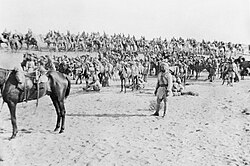
Between 1914 and 1916, the Imperial Service Cavalry Brigade—comprising the Jodhpore, Mysore, and 1st Hyderabad Imperial Service Lancers—operated as part of the Egyptian Expeditionary Force. They played a key role in the Defence of the Suez Canal and the Sinai and Palestine campaigns.
By 1918, these regiments formed the 15th (Imperial Service) Cavalry Brigade. They participated in the cavalry phase of the Battle of Megiddo and continued fighting near Aleppo after the advance from Damascus.
Evolution and the Second World War
In 1920, the system was reorganized into the Indian States Forces (ISF). The forces were categorized into three tiers:
- Field Service Units: Trained and armed to regular Indian Army standards.
- General Service Units: A reserve force that could be upgraded as needed.
- Militia: Lower-standard units used for internal security.
On paper, the ISF grew to approximately 50,000 men from 49 states, though full implementation of the new scheme was delayed until 1939. During the Second World War, the scale of contribution increased dramatically, with the princely states providing 250,000 men. These units served in Italy, North Africa, the Middle East, Burma, and Malaya. Notably, five ISF battalions were among the garrison that fell during the surrender of Singapore in February 1942.
Post-Independence Integration
After 1947, the ISF units were integrated into the armies of the newly formed nations of India and Pakistan. Sixty-nine units were transferred to the Dominion of India. Most infantry units were merged into existing regular regiments; for example, the 1st and 2nd Patiala Infantry became the 15th and 16th battalions of the Punjab Regiment.
A unique legacy remains in the 61st Cavalry, formed by the amalgamation of six ISF cavalry regiments. It continues to be the only non-ceremonial horse-mounted unit in the Indian Army. Additionally, four infantry regiments and one mountain artillery battery were incorporated into the Pakistan Army.
| Period | Official Name | Approx. Strength | Key Deployments |
|---|---|---|---|
| 1888–1920 | Imperial Service Troops | 18,000 – 22,000 | China, Somaliland, WWI (Middle East, Africa) |
| 1920–1947 | Indian States Forces | 50,000 – 250,000 | WWII (Malaya, Burma, Italy, North Africa) |
| Post-1947 | Integrated into National Armies | N/A | Indian Army (e.g., 61st Cavalry), Pakistan Army |
Frequently Asked Questions
What triggered the creation of the Imperial Service Troops?
The IST was created following the Panjdeh incident of 1885, where a Russian victory over Afghan forces alarmed the British. The subsequent financial and military support offered by Indian princes prompted the British to formalize a reserve force recruited from the Native States.
How did the IST differ from the regular Indian Army?
While they were trained and equipped to the same standards and inspected by British officers, the IST were raised and funded by the princely states rather than the central British Indian government. They also maintained distinct ceremonial uniforms.
Which famous units were part of the Imperial Service Troops?
Notable units included the Bikaner Camel Corps, the Jodhpore Imperial Service Lancers, the Mysore Imperial Service Lancers, and the 1st Hyderabad Imperial Service Lancers.
What happened to these forces after India gained independence?
The units were absorbed into the armies of India and Pakistan. In India, most were merged into regular regiments, though six cavalry regiments formed the 61st Cavalry, which remains a horse-mounted unit today.
Where did the IST serve during the First World War?
They saw significant action in Mesopotamia, Egypt, Palestine, and East Africa, with some sappers and transport units also serving in France.