Hygroscopy in Nature: How Plants and Animals Harness Atmospheric Moisture
In the natural world, survival often depends on the ability to manage water. Hygroscopy—the physical property of absorbing moisture from the air—is a sophisticated mechanism utilized by both animals and plants. While animals primarily use it for hydration and nutrition, plants have evolved complex hygroscopic movements to facilitate reproduction, seed dispersal, and germination.
This biological phenomenon is often a result of convergent evolution, where unrelated species independently evolve similar traits to solve the same environmental challenges. From the sticky webs of spiders to the self-burying seeds of grasses, hygroscopy acts as a silent engine driving essential life processes.
Key Facts
- Hygromorphs are plant tissues that undergo large-scale movement in response to humidity changes.
- Hygroscopic movement is driven by the shrinking of cell walls during desiccation and their expansion during re-hydration.
- Some animals, such as the file snake and certain frogs, use hygroscopic skin or secretions to absorb water directly from the environment.
- Plants use hygroscopic actuators to time seed release with favorable weather, such as rainfall (hygrochasy) or low humidity (anemochory).
- The direction of hygroscopic movement (bending, twisting, or coiling) is determined by the internal architecture and orientation of the plant's cell walls.
Hygroscopy in the Animal Kingdom
For many animals, hygroscopy is a vital tool for maintaining water balance, especially for species that transition between aquatic and terrestrial environments.
The file snake (Acrochordus granulatus) possesses a hygroscopic integument (skin) that acts as a water reservoir. This adaptation retards desiccation, allowing a primarily aquatic reptile to travel across land. Similarly, the waxy monkey tree frog (Phyllomedusa sauvagii) and the Australian green tree frog (Litoria caerulea) use hygroscopic secretions to enhance the uptake of condensation on their skin while simultaneously creating a barrier that reduces evaporative water loss.
Certain toads, such as those in the Anaxyrus genus, secrete hygroscopic glycosaminoglycans from their parotoid glands. By wiping these secretions over their bodies, they can harvest moisture from the surrounding air to maintain hydration.
Even invertebrates utilize this property. Orb-weaver spiders (Larinioides cornutus) coat their capture threads with a hydrogel composed of glycoproteins and low molecular mass organic and inorganic compounds (LMMCs). Because these LMMCs are hygroscopic, they pull moisture from the air to keep the web's glue soft and tacky.
Hygroscopic Hydration in Plants
Plants employ hygroscopy not just for movement, but for critical survival needs. Epiphytes, such as air plants (Tillandsia bulbosa), lack nutritive roots and instead rely on hygroscopic leaves to absorb moisture from the atmosphere, transporting it to internal storage via osmotic pressure.
In the legume family, including red and white clover (Trifolium pratense and T. repens), a specialized structure called the hilar valve (hilum) regulates embryo moisture. This valve prevents liquid water from entering the seed unless humidity rises gradually, signaling favorable growing conditions. Conversely, in low humidity, the valve opens to expel excess moisture and maintain viability.
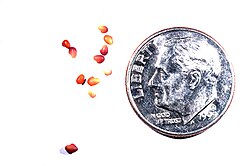
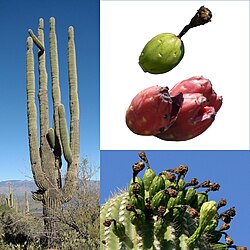
The saguaro cactus (Carnegiea gigantea) also exhibits this trait, with seeds capable of imbibing up to 20% of their weight in atmospheric moisture.
Mechanisms of Hygroscopic Movement
Hygroscopic movement occurs when plant tissues—often composed of dead, thick-walled cells—respond to moisture changes. When these cells dry, they shrink; when they re-hydrate, they expand. The resulting force depends on the microfibril angle (MFA) and the arrangement of cell layers (annular, planar, or bi-layered).
Biological Actuators and Hinges
Many plants use these movements as biological actuators. In the Xerochrysum bracteatum, bi-layered cell arrays act as a hinge for the involucral bracts. These bracts follow a diurnal rhythm, bending outward during the day to expose the flower head (capitulum) and closing at night as humidity shifts.
![Illustration botanique, Xerochrysum (Helichrysum) bracteatum; No.1- Capitulum [bracts, florets, stamens]](/images/cc/fb/ccfb33f9a621114d2723e2c77494811578ae51e562379cc90a2ff0a4055761a5.jpg)
Seed Dispersal Strategies
Hygroscopy is most prominent in seed dispersal, where it ensures seeds are released only under optimal conditions:
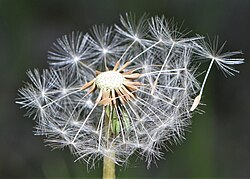
- Anemochory (Wind Dispersal): Dandelions (Taraxacum) use a hygroscopic actuator in the apical plate of the seed. High humidity causes the pappus (the parachute-like filaments) to close, preventing dispersal during rain. In low humidity, the pappus expands, allowing the wind to carry the seed.
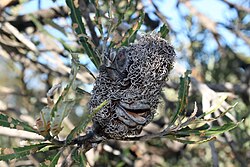
- Serotiny (Fire-Triggered Release): Some species, like Banksia attenuata and lodgepole pine (Pinus contorta), use a dual-stage process. First, extreme heat from fire melts resin seals. Then, hygroscopic movement opens the woody follicles or cones to release seeds.
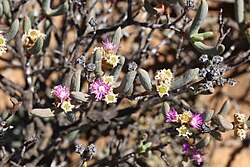
- Hygrochasy (Rain-Triggered Release): Common in the ice plant (Aizoaceae), this involves seed capsules with hygroscopic keels. These valves open only when hydrated by liquid water, creating a "splash cup" that uses raindrops to flush seeds out of the capsule.
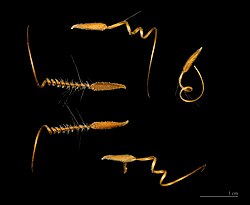
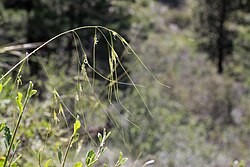
- Herpochory (Self-Burying): Grasses like Needle-and-Thread (Hesperostipa comata) and the common stork's-bill (Erodium cicutarium) have hygroscopic awns. These appendages twist or bend as humidity changes, effectively drilling the seed into the soil.
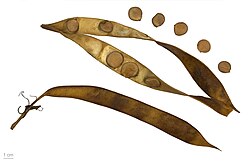
- Ballochory (Active Ejection): Some plants, such as Bauhinia purpurea, use the sudden rupture of hygroscopic pods to propel seeds up to 15 meters.
Summary of Hygroscopic Adaptations
| Species/Group | Mechanism | Primary Function | Trigger |
|---|---|---|---|
| Orb-weaver Spider | Hygroscopic Hydrogel | Web Adhesion | Environmental Humidity |
| File Snake | Hygroscopic Integument | Water Retention | Atmospheric Moisture |
| Dandelion | Apical Plate Actuator | Wind Dispersal | Low Humidity |
| Ice Plant | Hygroscopic Keels | Rain Dispersal | Liquid Water |
| Banksia | Bi-layer Cell Network | Serotinous Release | Heat followed by Humidity |
| Stork's-bill | Bi-layered Awns | Self-Burial | Humidity Fluctuations |
Frequently Asked Questions
What is the difference between hygroscopy and hygromorphy?
Hygroscopy is the general physical property of absorbing moisture from the air. Hygromorphy refers specifically to the large-scale movement of plant tissues (hygromorphs) that occurs as a result of this moisture absorption and loss.
How do hygroscopic seeds prevent rotting from liquid water?
Many seeds, such as those of the red clover, use a hilar valve. This valve is controlled by hygroscopic cells that swell and close the opening when humidity is high, blocking liquid water while still allowing water vapor to maintain the embryo's viability.
What is hygrochasy?
Hygrochasy is a seed dispersal method where the seed capsule opens specifically in response to rainfall. This is common in arid regions, where plants like the ice plant use "splash cups" to disperse seeds only when there is enough water to support germination.
How does the microfibril angle (MFA) affect plant movement?
The MFA determines the direction of the force generated during hydration or desiccation. If the fibers are parallel, the tissue typically bends; if the fibers are tilted or non-parallel, the tissue may twist or coil, as seen in the awns of certain grasses.
Why do some plants require fire before hygroscopic seed release?
This is known as serotiny. In fire-prone regions, plants like the lodgepole pine use resin to seal their seeds. The heat of a fire melts the resin, which then allows the hygroscopic mechanisms to function and release the seeds into a nutrient-rich, post-fire environment.