Understanding Morphology: The Study of Biological Form and Structure
In the vast field of biology, morphology serves as the fundamental study of the form and structure of organisms. It seeks to understand the specific structural features that define a living being, ranging from its external appearance to its complex internal systems. While many people confuse it with other biological disciplines, morphology is specifically concerned with "what an organism looks like" and "how it is built."
This study encompasses the outward appearance of an organism, including its shape, structure, color, pattern, and size. It also extends to the internal arrangement of parts, such as bones and organs, a specialized branch known as anatomy. It is important to distinguish morphology from physiology; while morphology focuses on the physical structure, physiology is primarily concerned with how those structures function.
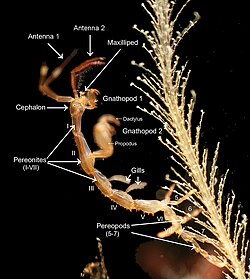
The History and Etymology of Morphology
The term "morphology" is derived from the Ancient Greek words morphḗ, meaning "form," and lógos, meaning "word," "study," or "research." While the distinction between form and function has been a topic of biological interest since the time of Aristotle, the formal field of morphology was developed through the work of Johann Wolfgang von Goethe and the German anatomist and physiologist Karl Friedrich Burdach.
Throughout history, several prominent theorists have shaped the discipline, including Lorenz Oken, Georges Cuvier, Étienne Geoffroy Saint-Hilaire, Richard Owen, Carl Gegenbaur, and Ernst Haeckel. One of the most significant moments in the history of the field occurred in 1830, when Cuvier and Saint-Hilaire engaged in a famous debate. This discussion highlighted the two major directions of biological thought at the time: whether animal structure was primarily driven by function or by evolution.
The Different Divisions of Morphology
Because the study of form is so broad, scientists categorize morphology into several distinct branches depending on their specific focus:
- Comparative morphology: This involves analyzing the patterns of where structures are located within an organism's body plan. This analysis serves as the foundation for taxonomical categorization (the science of classifying organisms).
- Functional morphology: This branch examines the direct relationship between the structure of a morphological feature and the specific function it performs.
- Experimental morphology: This field studies how external factors, such as genetic mutations, affect the morphology of organisms under controlled experimental conditions.
- Anatomy: A specialized branch of morphology that focuses specifically on the internal structure of organisms.
- Gross morphology: This refers to the description of an organism's collective structures as a whole, providing a general overview of its form without focusing on individual parts.
- Molecular morphology: A less common term, this usually refers to the superstructure of polymers (such as how fibers form) or larger composite assemblies, rather than the spatial structure of individual molecules.
3D Cell Morphology
With the advancement of microscopy, scientists can now observe 3D cell morphology—the three-dimensional structure of cells—with high spatial and temporal resolution. These dynamic cellular processes are controlled by complex systems and play vital roles in biological functions, including immune responses and invasive cellular behaviors.
Morphology and Biological Classification
Morphology is a primary tool used to distinguish between different taxa (groups of organisms). Generally, closely related taxa show fewer morphological differences than distantly related ones. However, this is not always a perfect rule, and several complexities exist:
- Cryptic species: These are species that appear nearly identical or even outwardly indistinguishable but are actually reproductively isolated from one another.
- Convergent evolution: This occurs when unrelated taxa acquire similar appearances because they have adapted to similar environments or roles.
- Mimicry: This is a process where one organism evolves to look like another, often for protection.
- Intra-species variation: Differences can exist even within a single species. For example, in the species Apoica flavissima, queens are significantly smaller than workers.
Modern science also uses allometric engineering to study these differences. This involves manipulating one or both species to phenocopy (replicate the physical appearance of) the other to examine the significance of their morphological traits. Furthermore, while morphology is useful, DNA analysis sometimes reveals that organisms which appear to be two distinct species are actually a single species.
Homology vs. Homoplasy
When evaluating traits within a species, biologists look at two key concepts:
- Homology: This indicates that features were derived from a common ancestor.
- Homoplasy: This describes features that resemble each other but evolved independently through parallel or convergent evolution.
Summary of Morphological Divisions
| Division | Primary Area of Study |
|---|---|
| Comparative | Patterns of structures for taxonomic classification |
| Functional | The relationship between structure and function |
| Experimental | Effects of external factors and mutations on form |
| Anatomy | Internal structures of organisms |
| Gross | The organism's structure as a whole |
| Molecular | Superstructures of polymers and assemblies |
Key Facts
- Morphology is the study of form and structure, whereas physiology focuses on function.
- The field includes both outward appearance (color, shape, size) and internal anatomy.
- Homology refers to traits shared due to common ancestry, while homoplasy refers to traits that look similar due to independent evolution.
- Cryptic species are organisms that look the same but cannot interbreed.
- Microscopy has allowed for the high-resolution study of 3D cell morphology.
Frequently Asked Questions
What is the difference between morphology and physiology?
Morphology is the study of the physical form and structure of an organism, while physiology is the study of how those structures function.
What are cryptic species?
Cryptic species are groups of organisms that look very similar or identical on the outside but are actually different species because they are reproductively isolated.
What is the difference between homology and homoplasy?
Homology refers to biological features that are similar because they were inherited from a common ancestor. Homoplasy refers to features that look similar but evolved independently through processes like convergent evolution.
How does convergent evolution affect morphology?
Convergent evolution can cause unrelated organisms to develop similar physical traits, which can sometimes make them appear more closely related than they actually are.
What is anatomy in the context of morphology?
Anatomy is a specific branch of morphology that focuses on the internal structures of an organism, such as its organs and bones.