Homing Pigeons: The History and Science of Avian Messengers
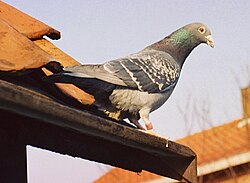
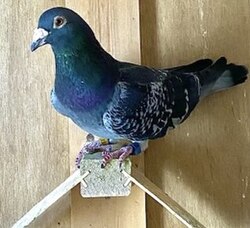
Long before the digital age, the world relied on a remarkable biological phenomenon for long-distance communication: the homing pigeon. A variety of the domestic pigeon (Columba livia domestica), these birds were selectively bred for their extraordinary ability to navigate back to their home lofts over vast distances. This innate skill gave rise to the "pigeon post," a system of communication that served empires, armies, and commercial enterprises for millennia.
While often colloquially called "carrier pigeons," it is important to distinguish them from the English carrier, an ancient breed of fancy pigeon. However, modern homing pigeons do carry English carrier blood, blending aesthetic lineage with functional utility.
Key Facts
- Species: Derived from the wild rock dove (Columba livia sspp.).
- Navigation: Use magnetoreception (the ability to detect the Earth's magnetic field) to find their way home.
- Performance: Top racers can reach speeds of 160 km/h (100 mph) over short distances.
- Endurance: Recorded competitive flights have reached up to 1,800 km (1,100 miles).
- Capacity: Trained pigeons can carry loads up to 75 g (2.5 oz) on their backs.
The Science of Navigation
The homing pigeon's ability to return to its nest is not mere instinct but a complex biological process. The primary mechanism is magnetoreception, allowing the bird to orient itself using the planet's magnetic field. This capability allows "racing homers" to maintain an average speed of approximately 97 km/h (60 mph) over moderate distances of 965 km (600 miles).

A Global History of Pigeon Post
The use of pigeons for communication dates back thousands of years. Evidence suggests that Ancient Egyptians utilized pigeon post as early as 1350 BCE, tying messages to the birds' legs. By the first century CE, Pliny the Elder documented their use as military messengers.
Ancient and Medieval Networks
Pigeons were used to announce the winners of the Ancient Olympics and were employed in Baghdad as early as 1150. By 1167, Sultan Nur ad-Din established a regular service between Baghdad and Syria. Other notable users included Genghis Khan and Tipu Sultan of Mysore, the latter of whom utilized pigeon holes in the minarets of the Jamia Masjid mosque in Srirangapatna.
Commercial and Early Airmail
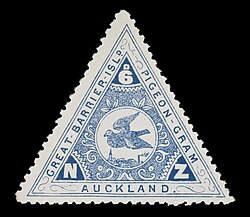
In the 19th century, pigeons transitioned into commercial news delivery. In 1860, Paul Reuter used a fleet of over 45 pigeons to transmit stock prices and news between Brussels and Aachen, laying the groundwork for the Reuters press agency. In New Zealand, the Great Barrier Pigeongram Service (established in 1897) may have been the world's first regular airmail service, issuing its own stamps between 1898 and 1908.
Pigeons in Warfare and Emergency Services
During conflicts, these birds were known as "war pigeons." Their reliability was critical when electronic communications failed or were too risky to use.
World War I and II
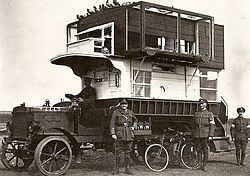
In the First World War, the military adapted infrastructure for avian use, such as converting London B-type buses into mobile pigeon lofts for use in Belgium and France. During World War II, pigeons were vital during the Invasion of Normandy to avoid radio interception. In Operation Market Garden, 82 pigeons were dropped into the Netherlands, required to fly 390 km (240 miles) back to their London loft.
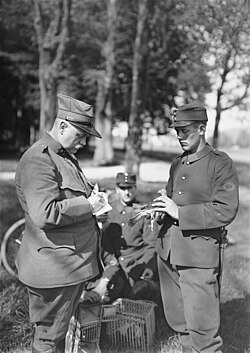
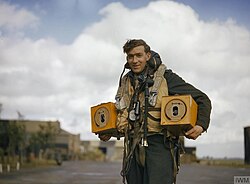
The bravery of these birds was formally recognized through the Dickin Medal, awarded to 32 pigeons—including the Irish Paddy, the American G.I. Joe, and the English Mary of Exeter—for saving human lives.
Modern Emergency Use
The transition to digital communication was gradual. The Swiss army only retired its pigeon service in 1994. Similarly, police departments in Odisha, India, used pigeons for emergency communications following natural disasters until 2002, when the expansion of the Internet rendered the service obsolete.
Diverse Roles: From Medicine to Computing
Beyond messaging, pigeons have been used for specialized transport. In 1903, Julius Neubronner used them to deliver urgent medication. Later, in 1977, English hospitals in Plymouth and Devonport used a system of 30 pigeons to transport laboratory specimens in unbreakable vials.
The "IP over Avian Carriers" Experiment
In a humorous nod to technology, RFC 1149 defines an Internet protocol for transmitting messages via homing pigeon. While intended as an April Fools' joke, it was actually implemented in Bergen, Norway, in 2001. In 2009, a South African company demonstrated that a pigeon named Winston, carrying a 4 GB memory stick, could transfer data 80 km (50 miles) faster than the local ADSL broadband service.
Illicit Use
The birds' homing instinct has also been exploited for smuggling. Between 2009 and 2015, pigeons were used to smuggle mobile phones, SIM cards, and narcotics into prisons in the Brazilian state of São Paulo.
Summary of Homing Pigeon Capabilities
| Metric/Role | Detail/Value |
|---|---|
| Average Speed (Moderate Distance) | 97 km/h (60 mph) |
| Maximum Observed Speed | 160 km/h (100 mph) |
| Maximum Recorded Distance | 1,800 km (1,100 miles) |
| Maximum Carry Weight | 75 g (2.5 oz) |
| Primary Navigation Method | Magnetoreception |
Frequently Asked Questions
What is the difference between a homing pigeon and a carrier pigeon?
In common usage, the terms are interchangeable. However, technically, a homing pigeon is a bird bred for navigation, while the "English Carrier" is a specific breed of fancy pigeon. Modern homing pigeons are descendants of the old-style carriers.
How do homing pigeons find their way back?
They primarily use magnetoreception, which allows them to sense the Earth's magnetic field to determine their position and direction relative to their home loft.
Can pigeons fly back and forth between two locations?
Naturally, they only fly one way: home. However, they can be trained to fly between two points if food is placed at one location and their home at the other, allowing for round trips up to 160 km (100 mi).
Were pigeons actually used for the Internet?
Yes, in a limited and experimental capacity. The "IP over Avian Carriers" (RFC 1149) protocol was tested in 2001, and a 2009 experiment in South Africa showed a pigeon carrying a memory stick could be faster than slow ADSL internet for large data transfers.
Which animals received the Dickin Medal?
The Dickin Medal is awarded for gallantry in war; 32 homing pigeons received this honor for their roles in saving lives, including birds like G.I. Joe and Mary of Exeter.