Hippie Culture: The History and Legacy of the 1960s Counterculture
The hippie subculture emerged as a defining force of the mid-1960s to early 1970s, representing a seismic shift in youth values and social norms. Originating in the United States before spreading globally, this movement challenged the status quo through a commitment to peace, love, and a rejection of conventional societal expectations. From the colorful streets of San Francisco to the sprawling fields of Woodstock, the hippie era left an indelible mark on art, music, and spirituality.
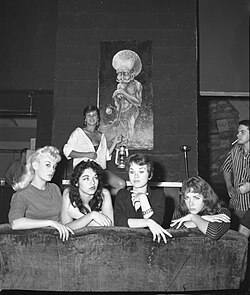
The term itself evolved from "hipster," a word used to describe those attuned to the latest trends. By the 1940s, terms like "hip" and "hep" were common in African American jive slang, meaning sophisticated or up-to-date. This linguistic foundation was adopted by the Beat Generation, the intellectual and artistic predecessors to the hippies, who prioritized spontaneity and non-conformity.
Key Facts
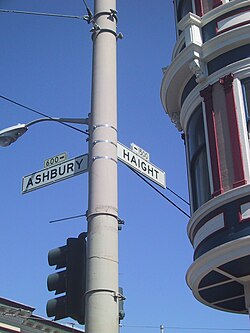
- Origins: Began as a youth subculture in the US, specifically in hubs like San Francisco's Haight-Ashbury and New York's Greenwich Village.
- Core Values: Focused on peace, love, sexual liberation, and the exploration of altered states of consciousness.
- Defining Events: The 1967 Human Be-In, the Summer of Love, and the 1969 Woodstock Festival.
- Global Reach: Spread to the UK, Mexico (as jipitecas), Australia, New Zealand, and Eastern Europe.
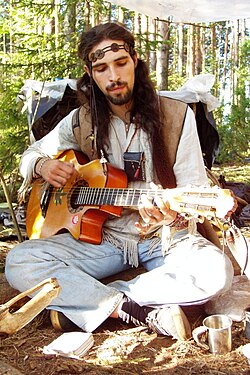
- Cultural Markers: Associated with psychedelic music, tie-dyed clothing, and nomadic lifestyles.
The Rise of the Movement
![Escapin' through the lily fields I came across an empty space It trembled and exploded Left a bus stop in its place The bus came by and I got on That's when it all began There was cowboy Neal At the wheel Of a bus to never-ever land – Grateful Dead, lyrics from "That's It for the Other One"[47]](/images/b4/b3/b4b30f9e415beb9879f47c998dfe91a50792be55cbf307f5091f2e74982fa76f.jpg)
From Beatniks to Hippies
The transition from the Beat Generation to the hippie movement saw a shift toward more communal living and a broader embrace of psychedelic experiences. Early hippies established themselves in specific urban enclaves, including Los Angeles' Laurel Canyon and Chicago's Old Town. The term "hippie" was popularized in the media by San Francisco writer Michael Fallon, though the lifestyle was already taking root.
The 1967 Explosion
The movement reached a tipping point on January 14, 1967, with the Human Be-In in San Francisco's Golden Gate Park. Organized by Michael Bowen, this event drew between 20,000 and 30,000 people, signaling the start of a massive cultural surge. This momentum culminated in the Summer of Love, during which an estimated 100,000 people flocked to the Haight-Ashbury district.
While the media celebrated the ideals of peace and love, the movement also faced criticism for its permissive ethos, anti-work attitudes, and drug use.
Global Expansion and Major Festivals

The hippie ethos was not confined to the American West Coast. It evolved into a global phenomenon with distinct regional variations:
- Mexico: Known as jipitecas, they formed "La Onda" (the Wave) and gathered at Avándaro.
- United Kingdom: The 1970 Isle of Wight Festival attracted approximately 400,000 people. Later, "peace convoys" of New Age travellers made pilgrimages to Stonehenge.
- Australia: The 1973 Aquarius Festival in Nimbin became a central gathering point, alongside the annual MardiGrass Cannabis Law Reform Rally.
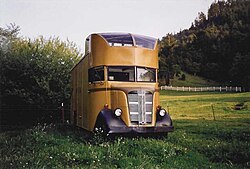
- New Zealand: Nomadic housetruckers promoted sustainable energy and alternative living at Nambassa.
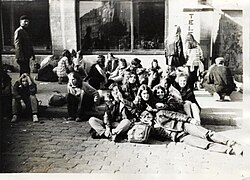
- Eastern Europe: Psychedelic culture influenced youth in Iron Curtain countries, such as the Mánička.
The Peak: Woodstock and Beyond
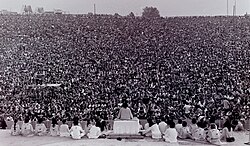
The 1969 Woodstock Festival on the East Coast of the US served as the pinnacle of the era's influence, blending music, spirituality, and communal living on a massive scale.
Cultural Characteristics and Lifestyle
Art, Fashion, and Travel
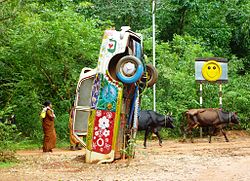
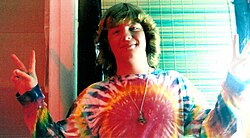
Hippie aesthetics were a visual rebellion against the rigid styles of the 1950s. Tie-dyed clothes and hand-crafted items became symbols of the movement's creativity and rejection of mass production. Travel also played a key role, with many embarking on the "Hippie Trail," a journey from Europe through Istanbul to India and Nepal in search of spiritual enlightenment.
Spirituality and Consciousness
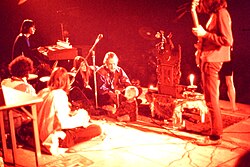
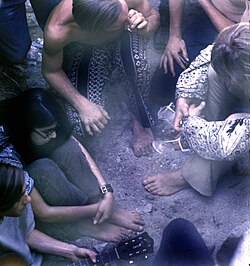
Many hippies explored altered states of consciousness using substances such as marijuana and LSD. This was often paired with an interest in Eastern religions and spirituality, as seen in the influence of figures like Timothy Leary and various gurus.
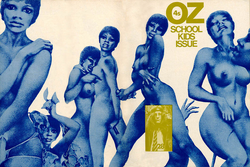
The movement also embraced the sexual revolution, advocating for love and sexual freedom outside the constraints of traditional marriage and societal norms.
Summary of Hippie Culture
| Category | Key Details |
|---|---|
| Primary Era | Mid-1960s to early 1970s |
| Key Locations | Haight-Ashbury (SF), Greenwich Village (NYC), Nimbin (AUS), Avándaro (MEX) |
| Core Philosophy | Peace, love, non-conformity, and sustainable living |
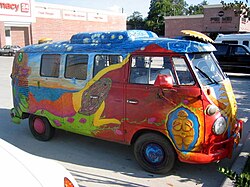
| Iconic Symbols | VW Kombi buses, tie-dye, psychedelic art, peace signs |
| Major Events | Human Be-In, Summer of Love, Woodstock, Isle of Wight Festival |
Frequently Asked Questions

Where did the word "hippie" come from?
The word is derived from "hipster," which in turn came from "hip" and "hep," terms used in 1940s African American jive slang to mean sophisticated or fashionable.
What was the "Summer of Love"?
The Summer of Love occurred in 1967, primarily in the Haight-Ashbury district of San Francisco, where approximately 100,000 young people gathered to promote ideals of peace, love, and communal living.
Who were the Beatniks?
The Beat Generation (or Beatniks) were a group of writers and artists who preceded the hippies. They shared a similar rejection of mainstream society and influenced the hippies' countercultural values.
Was the hippie movement only in the United States?
No, it was a global phenomenon. It had significant presence in the UK, Australia, New Zealand, Mexico, Chile, and even behind the Iron Curtain in Eastern Europe.
What was the "Hippie Trail"?
The Hippie Trail was a nomadic travel route used by young Westerners to travel overland from Europe to Asia, particularly to India and Nepal, seeking spiritual growth and alternative lifestyles.