Hinduism: Traditions, Philosophy, and Spiritual Practices
Hinduism is a comprehensive umbrella term for a diverse array of Indian religious and spiritual traditions, known as sampradayas. Rather than a single monolithic faith, it is a synthesis of various Indian cultures and Brahmanical orthopraxy—the correct practice of ritual and law. Unified by the concept of dharma (the cosmic order maintained through righteous living and ritual), it is often referred to by its followers as Sanātana Dharma, meaning "eternal dharma," or Vaidika Dharma ("Vedic dharma").
While some describe it as the oldest surviving religion in the world, scholars note that the modern synthesis of Hinduism emerged between 500 to 200 BCE and 300 CE. This period saw the composition of the great epics and the first Puranas, creating a spiritual framework that flourished through the medieval period and continues to evolve today.
Key Facts
![Srirangam Ranganathaswamy Temple, dedicated to the Hindu deity Vishnu, is said to be worshiped by Ikshvaku (and the descendants of Ikshvaku Vamsam).[94][95][96]](/images/46/27/4627b0d2175b0a32e33f72c2b0b4fb743ab23dce1224ae1573ee64f3c955364f.jpg)
- Global Presence: Hindus comprise approximately 14.9% of the world's population, making it the third-largest religion by percentage.
- Core Goal: The ultimate aim is moksha, which is liberation from the cycle of death and rebirth.
- Scriptural Basis: Texts are divided into Śruti ("heard") and Smṛti ("remembered").
- Major Denominations: The four primary traditions are Vaishnavism, Shaivism, Shaktism, and Smartism.
- Philosophical Schools: There are six Āstika schools that recognize the authority of the Vedas: Sankhya, Yoga, Nyaya, Vaisheshika, Mīmāṃsā, and Vedanta.
Sacred Scriptures and Philosophy
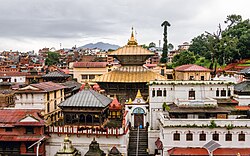
Hindu thought is grounded in a vast library of texts. The Vedas are the most ancient and authoritative, followed by the Upanishads, Puranas, and the great epics: the Ramayana and the Mahabharata (which includes the Bhagavad Gita). These texts explore the nature of existence, ethics, and the divine.
![The Rigveda is the first among four Vedas[note 22] and is one of the oldest religious texts. This Rigveda manuscript is in Sanskrit.](/images/4f/36/4f36c67689513f0450fdbc604951715c159eb1a36cdad74a585a0723fac4ccfb.jpg)
The Four Puruṣārthas
Hinduism defines four proper goals or aims of human life, known as the Puruṣārthas:
- Dharma: Ethics, moral duties, and righteousness.
- Artha: Prosperity, work, and the resources needed for a fulfilling life.
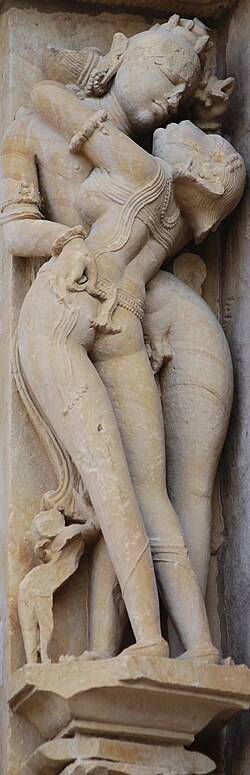
- Kama: Sensory, emotional, and aesthetic pleasure.
- Moksha: Liberation and freedom from suffering and the cycle of rebirth.
Karma and Saṃsāra
Central to Hindu belief is karma—the law of action, intent, and consequence. This governs saṃsāra, the continuous cycle of death and rebirth. Through righteous living and spiritual practice, an individual seeks to resolve their karma to eventually achieve liberation from this cycle.
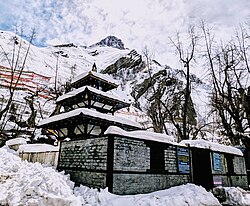
Major Denominations and Deities
Because Hinduism has no central doctrinal authority, it manifests in several major denominations, often centered on the worship of a specific aspect of the Divine.
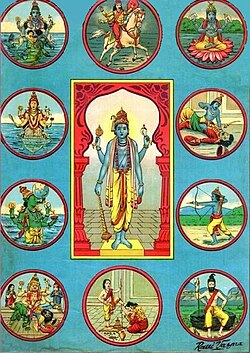
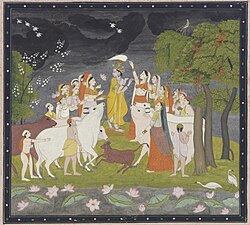
- Vaishnavism: Focused on the worship of Vishnu and his ten major avatars, including Rama and Krishna.
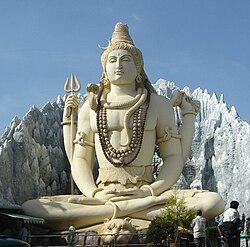
- Shaivism: Dedicated to Shiva, the lord of all beings.
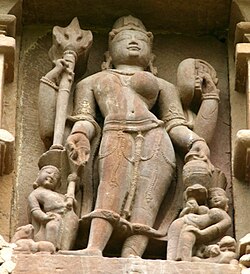
- Shaktism: Centered on the Goddess (Shakti) as the supreme power.
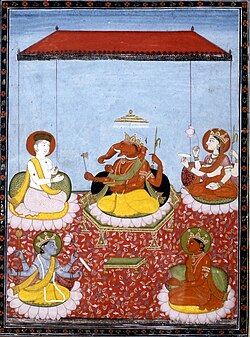
- Smartism: A tradition that often recognizes five or six deities as equal manifestations of the one Brahman.
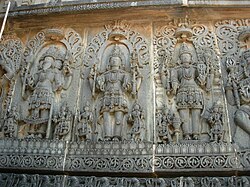
The concept of the divine is flexible, ranging from a single supreme reality to a pantheon of deities. For example, the Trimurti represents the three cosmic functions of creation (Brahma), preservation (Vishnu), and destruction (Shiva).
Religious Practices and Rituals
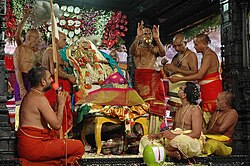
Hindu practice is diverse, ranging from quiet meditation to elaborate public festivals. Common practices include bhakti (devotion), puja (worship), yajna (sacrificial rites), and dhyana (meditation).
Life-Cycle and Daily Rituals
Rituals are integrated into daily life and major milestones. The most extensive personal ritual for an adult is the wedding, typically solemnized before a Vedic fire. Other practices include Sādhanā (spiritual discipline) and the use of home shrines for daily offerings.
![A wedding is the most extensive personal ritual an adult Hindu undertakes in their life. A typical Hindu wedding is solemnised before Vedic fire ritual (shown).[346]](/images/16/b1/16b150d66be928192a7ef7ce55a7fdec86fcd688d466745ebba69b90b4c71c41.jpg)
Festivals and Pilgrimage
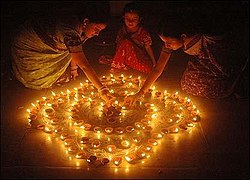
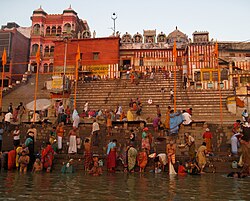
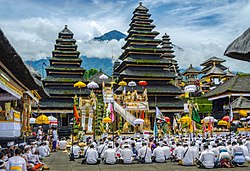
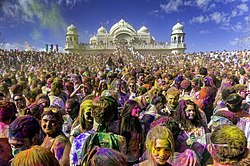
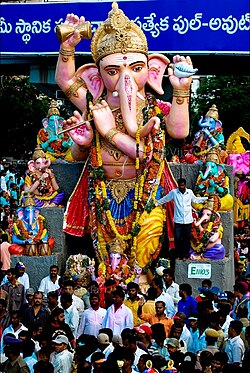
Hinduism is marked by vibrant festivals that celebrate cosmic events and deities. Notable examples include Diwali (the festival of lights), Holi (the festival of colors), and Ganesh Chaturthi. Pilgrimage to sacred sites, such as the Ganges at Varanasi, is also a vital part of spiritual life.
Hinduism in the Modern World
In the 19th century, Hinduism began to engage more deeply with Western culture. Figures like Swami Vivekananda played a pivotal role in introducing Vedanta and Yoga to Europe and the United States, helping Hinduism become a global religion.
![Swami Vivekananda was a key figure in introducing Vedanta and Yoga in Europe and the United States,[162] raising interfaith awareness and making Hinduism a world religion.[163]](/images/d5/d1/d5d1e87b160d9feae06014b63e0e55597b97bb81a6eb0e35c015411114d83924.jpg)
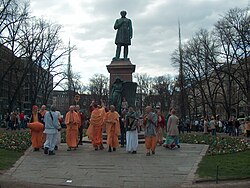
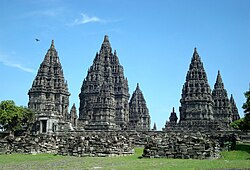
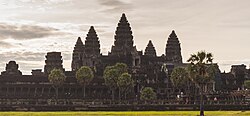
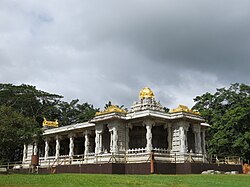
Today, the influence of Hinduism is seen worldwide through the popularization of Yoga, Transcendental Meditation, and movements such as ISKCON (the Hare Krishna movement). From the massive Angkor Wat in Cambodia to the Kauai Hindu monastery in Hawaii, the tradition's reach is truly international.
Summary of Hindu Traditions
| Tradition | Approximate Followers |
|---|---|
| Vaishnavism | 399,526,000 |
| Shaivism | 385,423,000 |
| Shaktism | 305,643,000 |
| Neo-Hinduism | 20,300,000 |
| Reform Hinduism | 5,200,000 |
| Cumulative | 1,116,092,000 |
Frequently Asked Questions
![Global percentage of adherents by religion. Hindus comprise about 14.9% of the world's population, comprising the third largest by percentage.[546]](/images/77/65/7765c58927c1cd1d47139d38326be52d34e82426dc984e6aaf8e282b89db6260.webp)
What is the difference between Śruti and Smṛti?
Śruti refers to texts that are considered "heard" or divine revelations, such as the Vedas. Smṛti refers to texts that are "remembered," which include the Puranas and the great epics like the Ramayana and Mahabharata.
What are the four goals of human life in Hinduism?
The four Puruṣārthas are dharma (ethics and duty), artha (prosperity and work), kama (desire and pleasure), and moksha (liberation from the cycle of rebirth).
Does Hinduism have a single founder?
No, Hinduism has no specific founder. It is regarded by scholars as a synthesis of various Indian cultures and Brahmanical traditions that emerged over centuries.
What is the meaning of Karma and Samsara?
Karma is the law of action and consequence, where every intent and deed affects a person's future. Samsara is the resulting cycle of birth, death, and rebirth that the soul undergoes until it achieves liberation.
Who are the primary deities in Hinduism?
While there are many deities, the most prominent include the Trimurti: Brahma (the Creator), Vishnu (the Preserver), and Shiva (the Destroyer), along with the Divine Mother (Shakti) and Ganesha.