High Technology: Evolution, Global Ecosystems, and Economic Impact
High technology, commonly referred to as high-tech or advanced technology, represents the cutting edge of human innovation. It is defined as the most complex or newest technology available on the market at any given time. To understand high-tech, it is helpful to view it in contrast to low technology—simple, traditional, or mechanical tools. Interestingly, the lifecycle of innovation means that yesterday's high-tech can become today's low-tech; for instance, vacuum tube electronics were once the pinnacle of advancement but are now considered low-tech.
Between these two extremes lies mid-tech, which describes technology that occupies a middle ground in terms of complexity and novelty. In the modern business landscape, startups focusing on scientific discoveries or disruptive innovations are often categorized as deep tech. Additionally, the term high-tech is sometimes used to describe self-service experiences that eliminate the need for human interaction, a concept known as high-touch.
Key Facts
- Definition: High-tech is the most advanced, complex, or newest technology currently available.
- Economic Weight: The high-tech sector accounts for 20% of Israel's economy, the highest ratio globally, and 9.3% of the U.S. economy.
- Leading Exporter: China is the world's largest exporter of high-tech products, with a value of $825 billion in 2023.
- Top Hub: Silicon Valley remains the top-ranked global startup ecosystem as of 2024.
- Classification: The OECD uses research and development (R&D) intensity to categorize high-technological industries.
The History and Classification of High Tech
The terminology we use today evolved over several decades. The phrase first appeared in a 1958 New York Times story regarding atomic energy in Western Europe. By 1969, financial columnist Robert Metz used the term to describe patents in various fields, and by 1971, the abbreviated form "high tech" entered common usage.
To standardize the definition, the OECD provided a widely used classification in 2006. This system categorizes industries into four distinct groups based on the intensity of their research and development activities. This framework allows economists to measure how deeply integrated advanced technology is within a specific national economy.
Global Startup Ecosystems
The growth of high technology is driven by startup ecosystems—concentrated hubs of innovation, capital, and talent. The Global Startup Ecosystem Report (GSER) tracks these hubs annually, ranking the top 40 cities worldwide.
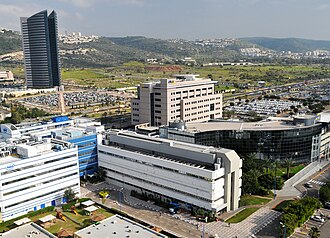
Silicon Valley continues to lead the world, followed closely by London and New York City. Other significant hubs include Tel Aviv, which has seen a rise in ranking, and major Asian centers such as Singapore, Beijing, Seoul, and Tokyo.
Top 10 Global Startup Hubs (2024)
| Rank | Hub | Change from 2023 |
|---|---|---|
| 1 | Silicon Valley | - |
| 2 | London | - |
| 2 | New York City | - |
| 4 | Tel Aviv | (1) |
| 4 | Los Angeles | - |
| 6 | Boston | - |
| 7 | Singapore | (1) |
| 8 | Beijing | (1) |
| 9 | Seoul | (3) |
| 10 | Tokyo | (5) |
High-Tech Exports by Value
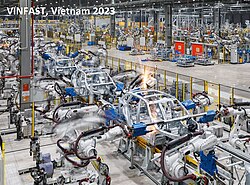
The economic impact of advanced technology is most visible in international trade. According to United Nations data, a small group of nations dominates the export of high-tech products. China leads the world by a significant margin, followed by Hong Kong and Germany.
The United States, Singapore, and South Korea also maintain strong positions, reflecting their heavy investment in semiconductors, electronics, and other advanced industrial sectors. Vietnam and Malaysia have also emerged as key players in the high-tech supply chain.
Frequently Asked Questions
What is the difference between high-tech and deep tech?
While high-tech refers generally to the most advanced technology available, deep tech specifically refers to startups or innovations based on significant scientific discoveries or disruptive engineering breakthroughs.
Can high-tech become low-tech?
Yes. As technology evolves and newer, more complex systems are developed, older "high-tech" becomes standard or obsolete, eventually being classified as low-tech. Vacuum tubes are a primary example of this transition.
Which country has the most high-tech integrated economy?
Israel has the highest ratio in the world, with the high-tech sector accounting for 20% of its total economy.
How does the OECD classify high-tech industries?
The OECD classifies these industries based on the intensity of their research and development (R&D) activities, dividing them into four distinct categories.
What is the difference between high-tech and high-touch?
High-tech refers to technology-driven, often self-service experiences that require little to no human interaction, whereas high-touch refers to experiences that rely heavily on human interaction and personal service.