Vinod Khosla: A Legacy of High-Risk Innovation and Venture Capital
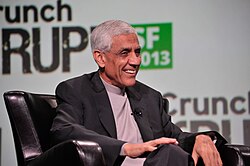
From the early days of computer-aided design to the frontiers of artificial intelligence and clean energy, Vinod Khosla has established himself as one of the most influential figures in Silicon Valley. After earning his MBA from Stanford in 1980, Khosla bypassed traditional employment to pursue entrepreneurship, embarking on a career defined by a willingness to embrace "black swan" technologies—innovations with a high risk of failure but the potential for massive societal impact.
Co-founding Sun Microsystems and Early Ventures
Khosla's entrepreneurial journey began in 1980 with Daisy Systems, an electronic design automation company targeting electrical engineers. While Daisy Systems became one of the most successful IPOs of 1984, Khosla left the company prior to its public offering to focus on general-purpose computing. Following a failed attempt with a startup called Data Dump, Khosla co-founded Sun Microsystems in 1982 alongside Stanford classmates Andy Bechtolsheim and Scott McNealy, later joined by Bill Joy.
Sun Microsystems became a titan of the industry, pioneering RISC processors (Reduced Instruction Set Computer) and open systems technology. The company developed the Java programming language and the Network File System (NFS), focusing on distributed systems and networked servers. With seed capital of $300,000 from Kleiner Perkins Caufield & Byers, Sun reached $1 billion in annual sales within five years. During his tenure as the first chairman and CEO (1982–1984), Khosla recruited future industry leaders, including Google CEO Eric Schmidt and Yahoo! CEO Carol Bartz.
The Kleiner Perkins Era: Scaling Success
In 1986, Khosla joined Kleiner Perkins as a general partner. His tenure there was marked by a series of legendary investments in semiconductors and networking. He helped create NexGen, the first successful Intel microprocessor clone, and played a pivotal role in the growth of Excite, where he suggested the advertising revenue model and attempted to broker a deal for Excite to acquire Google for $1 million—a proposal the CEO rejected.
Khosla's most significant wins came through his focus on fiber optics and internet infrastructure. He incubated Juniper Networks, steering it toward the development of Internet routers; a $3 million investment eventually returned $7 billion. He also incubated Cerent Corporation, which sold to Cisco for $7.8 billion, and Siara, which sold to Redback Networks for $4.3 billion. By 1999, John Doerr noted that Khosla had generated $10 billion in profits for Kleiner Perkins.
The Evolution of Khosla Ventures
Seeking to focus on science-based startups and spend more time with his family, Khosla founded Khosla Ventures in 2004. Based in Menlo Park, California, the firm focuses on first-principles innovation across healthcare, AI, robotics, and energy. Starting with approximately $1.5 billion in personal capital, the firm later opened to outside investors in 2009.
Cleantech and Sustainability
Khosla has been a vocal advocate for "Cleantech 1.0," prioritizing breakthroughs in energy production over simple efficiency. His portfolio includes QuantumScape, a solid-state battery company for EVs that returned over $1 billion to the firm, and LanzaTech, which focuses on carbon recycling. He continues to invest in fusion (Commonwealth Fusion), green hydrogen (Verdagy), and direct air capture (Spiritus), arguing that dramatic technological shifts are required to solve climate change.
AI, Fintech, and Future Infrastructure
Khosla Ventures was an early backer of disruptive consumer platforms including Square, DoorDash, and Instacart. In the realm of AI, the firm was the first venture capital investor in OpenAI, investing $50 million in its for-profit subsidiary in 2019. Khosla has also written extensively on the role of AI in medicine and education, predicting that "bionic assistance" will eventually transform the role of doctors.
Key Facts
- Sun Microsystems: Co-founded in 1982; reached $1 billion in annual sales within five years.
- Juniper Networks: A $3 million investment that returned $7 billion (2500x return).
- Khosla Ventures: Manages approximately $15 billion in capital; ranked #1 in the 2023 Founders Choice list.
- OpenAI: First VC investor, taking a 5% stake in 2019 via a $50 million investment.
- Sports Ownership: Entered a formal agreement in July 2026 to purchase the Seattle Seahawks NFL franchise.
| Company/Entity | Role/Investment | Outcome/Impact |
|---|---|---|
| Sun Microsystems | Co-founder & CEO | Pioneered Java and RISC processors |
| Juniper Networks | Incubator/Investor | $7 billion return on $3 million |
| Cerent Corporation | Incubator/Investor | Sold to Cisco for $7.8 billion |
| QuantumScape | Early Investor | Over $1 billion return |
| OpenAI | First VC Investor | $50 million investment in 2019 |
Frequently Asked Questions
What is a "black swan" technology in the context of Khosla's investing?
Black swan technologies are high-risk innovations that have a significant probability of failure but, if successful, provide transformative environmental or societal benefits.
How did Vinod Khosla contribute to the early internet?
Through Sun Microsystems, he helped pioneer open systems and distributed networking. Later, at Kleiner Perkins, he funded critical infrastructure companies like Juniper Networks and Excite.
What is Khosla's view on the future of healthcare?
Khosla believes that artificial intelligence will eventually transform healthcare, suggesting that algorithms and "bionic assistance" will replace many traditional medical roles.
Which major consumer companies did Khosla Ventures invest in early?
The firm was an early investor in several high-growth companies, including Square, DoorDash, Instacart, Stripe, and Affirm.
What is the current status of his involvement with the NFL?
As of July 11, 2026, Vinod Khosla and his ownership group have entered a formal agreement to become the controlling owners of the Seattle Seahawks.