Hardcore Punk: The Evolution of a High-Energy Subculture
Hardcore punk, often referred to simply as hardcore or hXc, is a faster, heavier, and more aggressive evolution of punk rock. Emerging in the late 1970s and early 1980s, it stripped punk down to its rawest elements, emphasizing speed and intensity over the melodic structures of its predecessors. From its roots in Southern California and Washington, D.C., to its global expansion, hardcore has become a cornerstone of alternative music and a catalyst for numerous subgenres.
The movement was not just about sound; it was defined by a DIY ethic (Do-It-Yourself), where bands and fans took control of recording, promoting, and distributing music independently of major corporate labels. This spirit of independence fostered tight-knit local scenes and a culture of mutual support and rebellion.
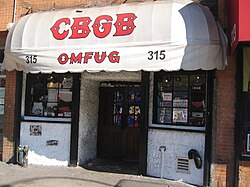
Key Facts
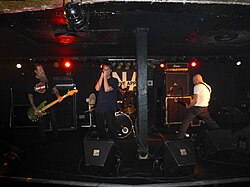
- Origins: Developed in the late 1970s/early 1980s across Southern California, Vancouver, San Francisco, Knoxville, and Washington, D.C.
- Musical Style: Characterized by extreme speed, short song lengths, and aggressive vocals.
- Cultural Pillars: Heavily influenced by the DIY ethic, straight edge (abstinence from drugs and alcohol), and anarcho-punk politics.
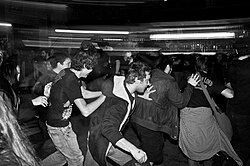
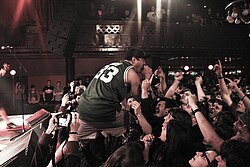
- Physicality: Associated with moshing, a high-energy style of dancing involving colliding with other participants.
- Legacy: Directly led to the creation of genres like metalcore, emo, grunge, and post-hardcore.
The History and Regional Growth of Hardcore
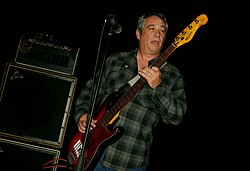
The Early Wave (Late 1970s – Early 1980s)
Hardcore began as a reaction to the perceived commercialization of early punk. In the United States, different hubs developed distinct sounds. Los Angeles and San Francisco became epicenters of the West Coast scene, while Washington, D.C. and Boston forged a more disciplined, often politically charged East Coast identity. New York City also emerged as a powerhouse, blending aggression with a distinct urban energy.
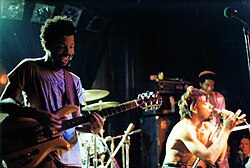
International Expansion
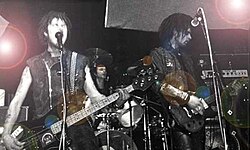
The energy of American hardcore quickly spread globally. In the United Kingdom, the scene evolved into D-beat (a driving, rhythmic drum style) and anarcho-punk. Other significant scenes took root in Canada, Brazil, Japan, Sweden, Italy, and Australia, each adapting the hardcore template to their own local social and political climates.
Evolution Through the Decades
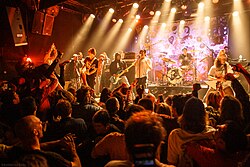
By the mid-to-late 1980s, the genre began to diversify. The 1990s saw the rise of metalcore—a fusion of hardcore and extreme metal—and the emergence of emo (emotional hardcore), which focused on introspection and melody. The 2000s and 2010s witnessed a resurgence of the genre with bands like Turnstile bringing a fresh, crossover appeal to the scene, while others like Code Orange achieved critical acclaim by pushing the boundaries of the sound.
Musical Diversity and Fusion Genres
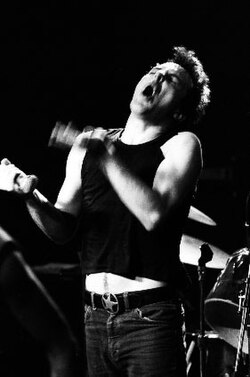
Hardcore punk is rarely a static genre; it constantly merges with other styles to create new sonic landscapes. These fusions range from the high-velocity chaos of powerviolence and thrashcore to the complex rhythms of mathcore and jazzcore.
Notable Fusion Styles
- Crossover Thrash: A blend of hardcore punk and thrash metal.
- Rapcore: The integration of hip-hop elements and rapping into hardcore structures.
- Grindcore: An extreme fusion of hardcore and death metal, characterized by brevity and noise.
- Nintendocore: A niche fusion incorporating 8-bit chiptune sounds.
- Sludgecore: A slow, heavy blend of hardcore and sludge metal.

Cultural Impact and Subcultures
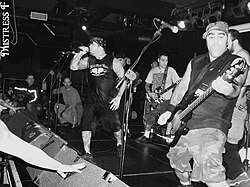
Beyond the music, hardcore created a lifestyle. The straight edge movement, for instance, advocated for a life free of alcohol, tobacco, and recreational drugs. Similarly, youth crew bands emphasized positivity and clean living, contrasting with the nihilism often associated with early punk.
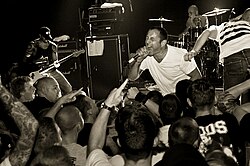
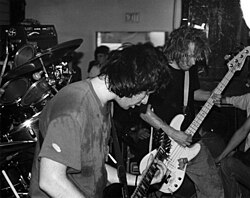
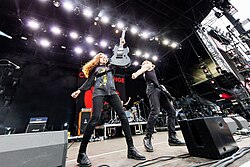
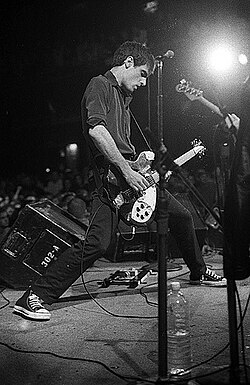
The physical experience of a hardcore show is equally vital. Moshing and stage diving are common, reflecting the raw energy of the music. While some scenes became associated with "tough guy" hardcore or beatdown styles, others remained rooted in the political activism of anarcho-punk.
Hardcore Punk Summary
| Category | Details |
|---|---|
| Stylistic Origins | Punk rock, proto-punk |
| Key Regional Hubs | Washington D.C., Southern California, New York, Boston, UK |
| Core Philosophies | DIY ethic, Straight Edge, Anarchism |
| Derivative Genres | Grunge, Emo, Black Metal, Death Metal, Nu Metal |
| Common Performance Traits | Moshing, high-speed drumming, aggressive vocals |
Frequently Asked Questions
What is the difference between punk rock and hardcore punk?
Hardcore punk is generally faster, louder, and more aggressive than traditional punk rock. It typically features shorter songs, more distorted guitars, and a more intense vocal delivery, stripping away the pop sensibilities found in some early punk.
What does "Straight Edge" mean in the hardcore scene?
Straight edge is a subculture of hardcore punk that advocates for abstinence from alcohol, tobacco, and recreational drugs. It often emphasizes a healthy lifestyle and mental clarity.
What is the DIY ethic?
The DIY (Do-It-Yourself) ethic is the practice of creating and distributing music, art, and zines independently. This means bypassing major record labels and corporate promoters to maintain creative control and community connection.
What is metalcore?
Metalcore is a fusion genre that combines the speed and ethics of hardcore punk with the heavy riffs, complex structures, and guttural vocals of extreme metal.
What is moshing?
Moshing is a high-energy style of dancing common at hardcore and metal shows, characterized by participants bumping into one another and jumping in a crowded area known as the mosh pit.