Hangul Evolution: The History of Obsolete Korean Letters
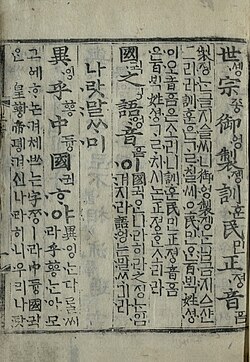
The Korean writing system, known internationally as Hangul (or Hangeul in South Korea and Choson'gŭl in North Korea), is celebrated for its logical design. However, the script we recognize today is a streamlined version of a much more complex system. When first introduced, the alphabet consisted of 28 main letters, known as jamo. Over the centuries, various vowels and consonants were introduced, used for specific linguistic purposes, and eventually faded from standard use. Today, modern Korean utilizes only 24 of these main letters.
Understanding these lost characters provides a window into the phonetic history of the Korean language and how it adapted to transcribe foreign sounds and evolving pronunciations.
Key Facts
- The original Hangul system contained 28 main jamo, whereas modern Korean uses 24.
- Many obsolete letters were specifically designed to transcribe Chinese or other foreign languages.
- The vowel ㆍ is no longer used in standard Korean but remains active in the Jeju language.
- Some historical letters, like the light labials (yŏnsŏ), were used primarily for transcribing Chinese sounds.
- Unicode preserves many of these obsolete characters for historical and linguistic study.
Obsolete Base Letters and Consonants
Several fundamental letters disappeared as the sounds they represented merged with other existing phonemes. For instance, ㆁ ([ŋ]) was a consonant representing an "ng" sound. Though visually similar to the null initial ㅇ, they were distinct until they functionally merged by the 17th century. Similarly, ㅿ ([z]) was a voiced consonant that fell out of use by the late 16th century after its corresponding sound disappeared from the language.
Other specialized consonants included ㆆ ([ʔ]), a glottal stop used to indicate preglottalization, which was largely replaced by ㅅ by the end of the 15th century. The vowel ㆍ ([ʌ] or [ɐ]) saw a gradual decline between the 16th and 18th centuries. While it was officially prohibited by the 1933 Unified Hangul Orthography, its legacy lives on in the Jeju language, where it is still pronounced as [ɔ] or [ʌ].
Doubled Consonants and Clusters
The history of Hangul also includes various doubled consonants with unclear or highly specific functions. ㆀ was a doubled form of ㅇ, potentially used to indicate specific causative or passive morphemes. ㆅ, a doubled ㅎ, was introduced for Sino-Korean transcription but saw very little use, eventually being replaced by ㅎ, ㅋ, or ㅆ.
While modern Korean uses doubled letters like ㄲ, Middle Korean allowed for heterogeneous initial clusters—combinations of different letters at the start of a syllable. These were common in historical texts and were even used in the early 20th century to transcribe English sounds, such as using ᅋ to represent the [f] sound in "knife" (나이ᅋᅳ).
![Entries from the 1908 text Ahakp'yŏn. In the top left entry, the unusual heterogeneous cluster ᅄ is being used to represent the English [v] sound.](/images/8c/3b/8c3b946fe36856959e47bfee2cc6db0ec7e801d2c974299aa2a0b0a41271dbef.png)
Light Labials and Specialized Sibilants
A unique category known as yŏnsŏ (light labials) consists of labial consonants with a small ㅇ underneath them. Most of these, such as ㆄ and ㅱ, were used for transcribing Chinese. The letter ㅸ ([β]) was a native Korean initial consonant that largely disappeared by the mid-16th century, often merging with the semivowel /w/.
Linguists also identify a group of pure dental and palatal-supradental sibilants. These ten letters (including ᄼ, ᄽ, and ᅎ) were not part of the original Hunminjeongeum but were likely introduced by scholars like Sin Sukchu to assist in the transcription of Chinese sounds. They appear in specific historical editions but were never part of the standard native script.
Vowel Evolution and Clusters
Vowels have undergone significant shifts. The vowel ᆢ, a doubled form of ㆍ, was intended to represent a heavier, longer sound. While it disappeared from standard Korean, its sound can still be heard in the Jeju language. Other complex vowel combinations, such as ᆜ (ㅣ + ㅡ) and ᆖ (a doubled ㅡ), were introduced at various points to represent specific combined sounds, though many met with resistance or were never fully implemented due to historical shifts in Korean sovereignty.
Summary of Obsolete Character Types
| Category | Examples | Primary Use/Reason for Disappearance |
|---|---|---|
| Base Letters | ㆁ, ㅿ, ㆆ, ㆍ | Phonetic merger or replacement by other letters. |
| Light Labials (yŏnsŏ) | ㅸ, ㆄ, ㅱ | Primarily used for transcribing Chinese. |
| Sibilants | ᄼ, ᄽ, ᅎ | Specialized transcription of Chinese sounds. |
| Vowel Clusters | ᆜ, ᆖ, ᆝ | Representing specific combined sounds or dialects. |
Frequently Asked Questions
Why did the number of Hangul letters decrease?
The decrease from 28 to 24 main letters occurred because many sounds represented by the original jamo merged with other sounds or disappeared from the spoken language entirely, making the extra letters unnecessary for standard writing.
Is the letter ㆍ still in use today?
In standard modern Korean, ㆍ is obsolete and has been replaced by ㅡ or ㅏ. However, it is still actively used in the Jeju language.
What were the "light labial" letters used for?
The yŏnsŏ (light labials) were primarily used as specialized characters to help transcribe the sounds of the Chinese language into the Korean script.
How were foreign languages transcribed in the past?
Historically, Koreans used heterogeneous clusters and specialized obsolete letters to approximate foreign sounds. For example, the 1908 text Ahakp'yŏn used unique clusters to transcribe English words.
Are these obsolete letters available in digital text?
Yes, many of these historical characters and combinations are accounted for in the Unicode standard, allowing linguists and historians to use them in digital formats.