Hammurabi: The King Who Unified Mesopotamia and Defined Ancient Law
In the heart of the ancient Near East, one ruler rose from a minor city-state to forge one of history's first great empires. Hammurabi, the sixth Amorite king of Babylon, reigned from approximately 1792 BC to 1750 BC. While he is most famous today for his comprehensive legal code, his legacy is equally rooted in his strategic brilliance as a conqueror and his administrative skill as a governor.
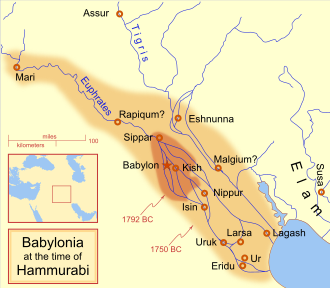
Hammurabi inherited a modest kingdom from his father, Sin-Muballit, who abdicated due to failing health. At the time, Babylon was overshadowed by more powerful neighbors like Assyria, Elam, and Larsa. However, through a combination of diplomacy, opportunistic alliances, and military force, Hammurabi transformed Babylon from a small city-state into the dominant power of Mesopotamia.
Key Facts
- Reign: c. 1792 – c. 1750 BC.
- Origin: Sixth king of the Amorite First Dynasty of Babylon.
- Major Achievement: Unified almost all of Mesopotamia under Babylonian rule.
- Legal Legacy: Created the Code of Hammurabi, consisting of 282 laws.
- Language Reform: Promoted Akkadian as the primary language, replacing Sumerian.
The Rise to Power and Military Conquests
Hammurabi's ascension occurred during a volatile geopolitical era where Amorite-ruled city-states fought constantly for fertile agricultural land. His father had already begun consolidating power by conquering Borsippa, Kish, and Sippar, providing Hammurabi with a stable foundation.
One of Hammurabi's most significant strategic victories involved the kingdom of Larsa. When the Elamites attempted to incite war between Babylon and Larsa, Hammurabi formed an alliance with Rim-Sîn I of Larsa to crush the Elamite threat. However, when Larsa failed to provide sufficient aid during the conflict, Hammurabi turned on his former ally, invading and annexing Larsa around 1763 BC. This victory gave him control over the lower Mesopotamian plain.
He continued his expansion by conquering the city-states of Eshnunna and Mari, and ousting Ishme-Dagan I of the Kingdom of Upper Mesopotamia. By the end of his reign, the vast majority of Mesopotamia was under his centralized authority.
Administration and Daily Governance
Beyond the battlefield, Hammurabi was a meticulous administrator. Modern historians have discovered 55 of his personal letters and numerous contract tablets that reveal the complexities of his rule. These documents show a king deeply involved in the minutiae of statecraft, from managing massive herds of livestock to addressing floods and correcting flaws in the official calendar.
Hammurabi's administration also focused on cultural unification. He initiated language reforms to establish Akkadian—the daily spoken language of Babylon—as the pre-eminent tongue of the region, effectively replacing the older Sumerian language in official and literate circles.
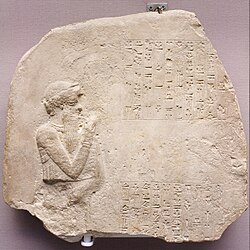
![Tablet of Hammurabi (𒄩𒄠𒈬𒊏𒁉, 4th line from the top), King of Babylon. British Museum.[43][44][45]](/images/ff/75/ff75351c81e8902700839936724372ace259c5e1730692d4b04a4aecdcb2253e.jpg)
The Code of Hammurabi
The most enduring symbol of Hammurabi's reign is the Code of Hammurabi. This collection of 282 laws was inscribed on a massive stone stele and placed in public view. While literacy was limited, the public nature of the stele served as a permanent declaration of the king's justice.
The laws were written in Akkadian, making them accessible to any literate citizen. At the top of the stele, a carving depicts Hammurabi receiving the laws from Shamash, the Babylonian god of justice, signaling that the king's authority was divinely ordained.
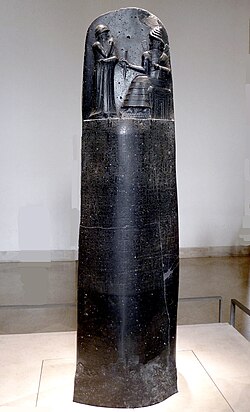
The stele was eventually plundered by the Elamites and taken to Susa (modern-day Iran), where it remained until its rediscovery in 1901. It is now housed in the Louvre Museum in Paris.
![Copy of Hammurabi's stele usurped by Shutruk-Nahhunte I. The stele was only partially erased and was never re-inscribed.[51]](/images/59/eb/59ebdbe39d6a5444109889771c4f9b3c84801c9c725e43dd5aa6c8b2508d0720.jpg)
Family and Succession
Hammurabi's family ties were often used to strengthen political bonds. He had at least three sons—Sumu-ditana, Mutu-Numaha, and Samsu-iluna—and one daughter who married Silli-Sin, the king of Eshnunna. Upon Hammurabi's death around 1750 BC, he was succeeded by his son, Samsu-iluna. However, the empire Hammurabi had spent decades building began to unravel quickly under his successor's rule.
| Category | Details |
|---|---|
| Dynasty | Amorite First Dynasty |
| Reign Dates | c. 1792 – c. 1750 BC |
| Predecessor | Sin-Muballit (Father) |
| Successor | Samsu-iluna (Son) |
| Key Conquests | Larsa, Eshnunna, Mari |
| Primary Language | Akkadian |
Historical Legacy and Influence
The Amorite Dynasty eventually fell in 1595 BC when the Hittite Empire sacked Babylon. The city was subsequently handed over to the Kassites, who ruled for over 400 years and continued to respect and adopt Hammurabi's legal traditions.
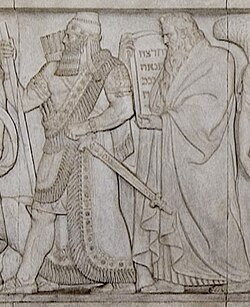
Hammurabi's influence extended far beyond his own era. In the 19th and 20th centuries, the discovery of his code sparked the "Babel und Bibel" controversy in Germany. Scholars like Friedrich Delitzsch argued that the Mosaic Laws of the Old Testament were derived from Hammurabi's Code, though these views were highly controversial and often politically charged. While early scholars once identified Hammurabi as the biblical Amraphel, this theory has been largely rejected by modern historians.
Frequently Asked Questions
What is the Code of Hammurabi?
The Code of Hammurabi is a set of 282 laws inscribed on a stone stele. It is one of the oldest and most complete written legal codes in history, designed to standardize justice across the Babylonian Empire.
How did Hammurabi expand his empire?
Hammurabi used a mix of strategic alliances and military conquest. He notably allied with Larsa to defeat the Elamites, only to later invade and annex Larsa himself, eventually conquering other city-states like Mari and Eshnunna.
Which language did Hammurabi promote?
Hammurabi promoted Akkadian, the daily language of Babylon, over Sumerian. He implemented language reforms to make Akkadian the primary language for administration and law.
Who succeeded Hammurabi?
Hammurabi was succeeded by his son, Samsu-iluna, around 1750 BC. Under Samsu-iluna's reign, the Babylonian empire began to decline and unravel.
Where is the Code of Hammurabi located today?
The original stele is currently held in the Louvre Museum in Paris, after being rediscovered in Susa, Iran, in 1901.