Halil İnalcık: The Architect of Modern Ottoman Historiography
Halil İnalcık (1916–2016) was a towering figure in the field of history, renowned for transforming the study of the Ottoman Empire. By shifting the academic focus from mere political narratives to deep socioeconomic analysis, İnalcık provided a more nuanced and accurate understanding of how the empire functioned. His career spanned nearly a century, during which he bridged the gap between Eastern and Western scholarship, challenging biases on both sides.
Key Facts
- Specialization: Social and economic history of the Ottoman Empire.
- Academic Legacy: Founded the history department at Bilkent University.
- Methodology: Pioneered the use of Ottoman judicial records to understand societal structures.
- Major Correction: Disproved the 15th-century fabrication that the Ottoman dynasty belonged to the Kayı tribe.
- Global Reach: Taught at prestigious institutions including the University of Chicago, Harvard, and Princeton.
Early Life and Academic Foundations
Born in Istanbul on September 7, 1916, to a Crimean Tatar family, İnalcık's academic journey began at the Balıkesir Teacher Training School and continued at Ankara University's Faculty of Language, History and Geography. His early research on Timur caught the attention of the esteemed historian Mehmet Fuat Köprülü, who helped him enter the university's Modern Age Department.
İnalcık completed his PhD in 1942. His doctoral thesis focused on the Tanzimat (a period of intensive reform in the Ottoman Empire) and the Bulgarian question. This work was groundbreaking, as it represented one of the first socioeconomic approaches in Turkish historiography, moving away from traditional political storytelling.
A Global Academic Journey
Throughout the 1950s and 60s, İnalcık expanded his horizons internationally. In 1949, he studied Ottoman and Turkic inscriptions at the British Museum and attended seminars at the School of Oriental and African Studies (SOAS) in London. During this time, he connected with influential scholars like Bernard Lewis and Fernand Braudel, the latter of whose work deeply influenced his approach to historical structures.
Despite receiving permanent offers from Harvard and the University of Pennsylvania in 1971, İnalcık initially chose to remain in Turkey. However, escalating political turmoil and student conflicts eventually led him to accept a position at the University of Chicago in 1972, where he taught Ottoman history until 1986.
Redefining Ottoman History
İnalcık's primary mission was to counter two extremes: the hostile, biased narratives often found in Western sources and the romanticized, nationalistic history prevalent in Turkey. For example, he challenged Franz Babinger's depiction of Mehmed the Conqueror as a sadistic personality, arguing that such views lacked proper research.
He revolutionized the field by diving into Ottoman judicial records. At a time when these documents were neglected or destroyed due to alphabet changes in Turkey, İnalcık recognized them as vital keys to understanding the socioeconomic factors of Ottoman society.
Final Years and Legacy
In 1992, İnalcık returned to Turkey to found the history department at Bilkent University. He remained a dedicated educator and researcher until his death on July 25, 2016, at the age of 99. In 1993, he generously donated his extensive collection of books and journals to the Bilkent University library to support future scholars.
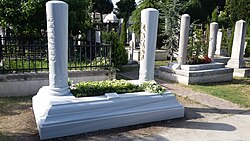
Summary of Academic and Professional Profile
| Category | Details |
|---|---|
| Alma Mater | Ankara University, SOAS (University of London) |
| Key Institutions | Ankara University, University of Chicago, Bilkent University |
| Major Thesis | The Tanzimat and the Bulgarian Question (1943) |
| Notable Awards | King Faisal Prize, Presidential Grand Award for Culture and Arts |
| Resting Place | Fatih Mosque, Istanbul |
Frequently Asked Questions
What was Halil İnalcık's main contribution to history?
He shifted the study of the Ottoman Empire from a political-centric narrative to a socioeconomic analysis, utilizing previously ignored judicial records to reveal the actual functioning of Ottoman society.
Which historical myth did Halil İnalcık debunk?
He discovered and proved that the claim that the Ottoman dynasty originated from the Kayı tribe was a fabrication created in the 15th century.
Where did Halil İnalcık teach during his career?
He held positions at Ankara University, the University of Chicago, and Bilkent University, and served as a visiting professor at Harvard, Princeton, and the University of Pennsylvania.
What was the significance of his work on the Tanzimat?
His PhD thesis on the Tanzimat and the Bulgarian question was one of the first instances of applying a socioeconomic lens to Turkish historiography, setting a precedent for future research.
How did he view Western narratives of the Ottoman Empire?
He believed many Western sources were biased and hostile, often relying on generalizations rather than deep archival research, and he sought to correct these misconceptions with factual evidence.