Exploring Gyeonggi Province: The Heart of South Korea
Surrounding the bustling capital of Seoul, Gyeonggi Province serves as the vital engine of South Korea. As the most populous province in the country, it represents a dynamic blend of rapid urbanization, high-tech economic power, and deep-rooted historical significance. From the sprawling metropolitan cities to the serene natural landscapes, Gyeonggi is a region that defines the modern Korean experience.

Key Facts
- Capital: Suwon
- Population: Over 13.5 million (Ranked 1st in South Korea)
- Total Area: 10,199 km²
- GDP (2023): KRW 594 trillion (approx. US$ 475 billion)
- Administrative Divisions: 28 cities and 3 counties
Geography and Climate
Gyeonggi Province is situated in the western central region of the Korean Peninsula. It occupies approximately 10% of South Korea's total territory. The province is geographically diverse, sharing an 86-kilometer border with the cease-fire line to the north and a 413-kilometer coastline to the west.
The province is bordered by Gangwon Province to the east, and North Chungcheong and South Chungcheong provinces to the south. Notably, the capital city of Seoul is located entirely within the center of Gyeonggi. While the provincial government is headquartered in Suwon, some administrative buildings are maintained in Uijeongbu to ensure efficient governance for the northern regions.
A History of Growth and Urbanization
The administrative landscape of Gyeonggi has shifted significantly over the decades. A major turning point occurred in 1967 when the seat of the provincial government was moved from Seoul to Suwon. As South Korea underwent rapid modernization, the province experienced an unprecedented population explosion.
In 1960, the population stood at approximately 2.7 million. By 2020, that number had surged to over 13.5 million. This growth is closely tied to the urbanization of the Seoul Metropolitan Area, turning once-rural counties into major industrial and residential hubs.
![Percentage surviving to certatin ages in Gyeonggi Province in 2023. Life expectancy for the province in 2023 was 83.9 years.[6]](/images/a9/30/a930ab9ab281b0347ccef4939ea8eb19d1b98ecd8d43e6943b3aba57046eb17b.png)
Economy and Infrastructure
Gyeonggi is an economic powerhouse, boasting a nominal GDP of KRW 594 trillion as of 2023. With a per capita GDP of approximately US$39,969, the province plays a critical role in the national economy. This prosperity is supported by a sophisticated transportation network, including major expressways like the Gyeongbu and Seohaean Expressways, which connect the province to major cities like Seoul, Busan, and Mokpo.
Major Cities by Population
The province is divided into several highly populated urban centers. As of 2024, the most populous cities include:
- Suwon
- Yongin
- Goyang
- Hwaseong
- Seongnam
- Bucheon
Culture, Sports, and Tourism
Despite its industrial strength, Gyeonggi offers a wealth of cultural and recreational opportunities. The province is home to major theme parks like Everland in Yongin and the Korean Folk Village. For those interested in history, various local festivals celebrate the region's heritage, such as the Hwaseong Cultural Festival in Suwon.
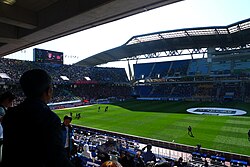
Sports enthusiasts can find excitement in various professional leagues hosted within the province. Gyeonggi is a hub for association football (K League), baseball (KT Wiz), and basketball (KBL), with dedicated stadiums serving major metropolitan areas.

Summary of Gyeonggi Province Data
| Category | Details |
|---|---|
| Total Area | 10,199 km² |
| Population (2020) | 13,511,676 |
| GDP (2023) | KRW 594 trillion |
| Life Expectancy (2023) | 83.9 years |
| Major Religions | Christianity (32.0%), Buddhism (10.7%) |
Frequently Asked Questions
What is the capital of Gyeonggi Province?
The capital of Gyeonggi Province is Suwon. The provincial government moved its headquarters there from Seoul in 1967.
Which cities in Gyeonggi are the most populated?
As of 2024, the most heavily populated cities are Suwon, followed by Yongin, Goyang, Hwaseong, Seongnam, and Bucheon.
What are some popular tourist attractions in the province?
Popular destinations include the Everland theme park and the Korean Folk Village in Yongin, the Icheon Hot Springs, and various cultural sites like the Hwaseong Fortress area in Suwon.
How has the population changed over time?
The province has seen massive growth due to urbanization. The population rose from roughly 2.7 million in 1960 to over 13.5 million by 2020.
What is the religious makeup of Gyeonggi?
According to 2015 census data, 32.0% of the population follows Christianity (comprising 23.0% Protestantism and 9.0% Catholicism), while 10.7% follow Buddhism. The remaining 57.3% are either non-religious or follow indigenous religions.