Guayaquil Conference: The Historic Meeting of Bolívar and San Martín
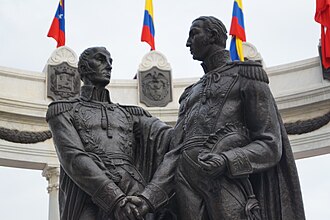
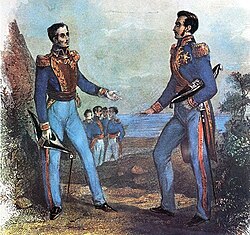
On July 26–27, 1822, the port city of Guayaquil (now part of Ecuador) became the stage for one of the most pivotal encounters in history. The Guayaquil Conference brought together two legendary libertadors—José de San Martín and Simón Bolívar—to determine the fate of Peru and the broader trajectory of South American independence.
At the time, the continent was in a state of flux. While both leaders shared the goal of ending Spanish colonial rule, they approached the challenge from different directions and with vastly different visions for the future. This meeting served as a critical turning point that would ultimately decide who would lead the final push for liberation.
Key Facts
- Date: July 26–27, 1822.
- Location: Guayaquil, present-day Ecuador.
- Participants: José de San Martín and Simón Bolívar.
- Primary Conflict: Disagreement over governance (Constitutional Monarchy vs. Republic).
- Outcome: San Martín's retirement from public life and Bolívar's assumption of leadership in the liberation effort.
The Road to Guayaquil
The Southern Campaign of San Martín
José de San Martín had focused his efforts on the southern regions. After the Chilean War of Independence, he organized a navy to siege and capture Lima, the capital of the Viceroyalty of Peru and the most significant royalist stronghold in South America. Although San Martín declared Peru's independence, royalist forces remained powerful in the Peruvian countryside, leaving the victory incomplete.
The Northern Campaign of Bolívar
Simón Bolívar led a separate, aggressive campaign in the north. He liberated Venezuela and, with the assistance of Francisco de Paula Santander, liberated the United Provinces of New Granada. These territories were merged to form Gran Colombia. Bolívar's approach was characterized by a "war to the death" against royalists, leaving no room for ambiguity.
The Dispute Over Guayaquil
While the two leaders campaigned, a revolt in the city of Guayaquil sparked a wider independence movement in Ecuador. The region was divided: some factions desired to join Peru, others wanted to join Colombia, and some sought total independence. Bolívar eventually ended the debate by annexing Guayaquil into Colombia, despite pressure on San Martín to annex the city to Peru.
Core Objectives and Ideological Clashes
The primary goal of the conference was to establish a strategy to finalize the war of independence as royalist forces began to reorganize. However, the discussions were complicated by a fundamental disagreement over how to govern the liberated lands.
Monarchy vs. Republic
The two leaders held opposing political philosophies:
- José de San Martín favored European models, specifically British constitutional rule. He believed that establishing constitutional monarchies—including placing a European prince on the throne of Peru—was the most stable path forward.
- Simón Bolívar advocated for the creation of republics. His vision was based on modifications to the political theories found in the Constitution of the United States.
Despite mutual respect and San Martín's offer to serve under Bolívar's command, the ideological gap proved insurmountable.
The Aftermath and Legacy
The conference concluded on July 27 with a banquet and ball. The toasts exchanged during the event highlighted their differing perspectives: Bolívar toasted to the "two greatest men in South America," while San Martín toasted to the prompt conclusion of the war and the health of the Liberator of Colombia.
The consequences were immediate. San Martín returned to Lima, abdicated his power before the Peruvian Congress, and eventually left South America to retire in France. This left Simón Bolívar as the primary leader to complete the liberation of the continent.
The mystery and psychological tension of the meeting have since entered the realm of literature, most notably in the short story Guayaquil by Jorge Luis Borges, published in 1971.
| Feature | José de San Martín | Simón Bolívar |
|---|---|---|
| Primary Region | Peru / Southern South America | Gran Colombia / Northern South America |
| Preferred Government | Constitutional Monarchy | Republic |
| Post-Conference Action | Abdicated and retired to France | Continued liberation efforts |
| View on Guayaquil | Pressure to annex to Peru | Annexed to Colombia |
Frequently Asked Questions
What was the main purpose of the Guayaquil Conference?
The conference was held to coordinate the final stages of the South American wars of independence and to resolve the sovereignty of the Free Province of Guayaquil.
Why did San Martín and Bolívar disagree on governance?
San Martín believed that constitutional monarchies based on European models would provide more stability, whereas Bolívar believed that republics based on modified American political theories were the correct path for the new nations.
What happened to José de San Martín after the meeting?
Following the conference, San Martín abdicated his power in Peru and eventually left the continent to live in retirement in France.
How did the conference affect the independence of Peru?
The conference effectively shifted the leadership of the Peruvian liberation effort from San Martín to Simón Bolívar, who continued the campaign to fully remove royalist forces.
Who eventually gained control of Guayaquil?
Simón Bolívar annexed Guayaquil into Gran Colombia, ending the local debate over whether the city should join Peru or remain independent.