Guarani People: History, Culture, and the Legacy of the Jesuit Reductions
The Guarani are an Indigenous people of South America with a resilient history spanning centuries of colonial struggle, spiritual transformation, and cultural endurance. With an estimated population of 400,000 (and up to 5 million when including Mestiços), they maintain a significant presence across Argentina, Bolivia, Brazil, and Paraguay. Their story is one of complex interactions with European powers, characterized by both violent coercion and unique symbiotic relationships.
From the depths of the rainforests to the structured communities of the Jesuit missions, the Guarani have navigated the pressures of colonization while preserving their native language and ancestral identity. Their legacy is not only found in historical archives but in the modern socio-economic structures of the regions they inhabit.
Key Facts
- Population: Approximately 400,000 indigenous people; up to 5 million including Mestiços.
- Primary Regions: Argentina, Bolivia, Brazil, and Paraguay.
- Language: Native Guarani, with widespread use of Spanish and Portuguese.
- Religion: Predominantly Christianity (Catholicism and Protestantism), with minority practices of Animism and native religions.
- Historical Landmark: The Jesuit Reductions, which provided protection against slavery but eventually declined after the Jesuits' expulsion.
European Contact and Early Conflict
European interaction began in earnest in 1537 when Gonzalo de Mendoza traversed Paraguay and founded Asunción. Initial relations were marked by cuñadazgo, a practice where local chiefs (caciques) gave women to newcomers to cement political alliances. However, this evolved into a darker era of sexual and economic coercion.
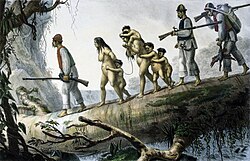
By 1541, the alliance system was replaced by rancheadas—violent mass seizures of women who were traded as slaves to Portuguese settlements. Despite the Laws of the Indies forbidding slavery in Hispanic America, these practices continued largely unchecked by local settlers.
The Jesuit Reductions
The arrival of the Jesuits in the early 17th century marked a pivotal shift. In 1610, the first mission, Loreto, was established. These settlements, known as Reductions, served as sanctuaries for the Guarani, offering the only viable protection against the predatory slave raiders known as Paulistas.
Growth and Prosperity
The Reductions became highly organized socio-economic hubs. The Guarani provided the labor for crops and trade goods, while the Jesuits acted as intermediaries with Spanish authorities. By 1732, there were 30 missions housing 141,252 converted Guarani. These communities were so well-organized that they maintained a professional army of 7,000 soldiers to defend the colony and their own lands.
The Threat of Slavery and Disease
The prosperity of the missions was frequently interrupted by tragedy. Slave raiders often attacked on Sundays during Mass to maximize captures. In 1629, a Paulista army destroyed several missions, leading to the enslavement of 60,000 converts. Furthermore, devastating smallpox epidemics in 1734 and 1765 claimed the lives of over 42,000 people.
Political Turmoil and Decline
The mid-18th century brought geopolitical instability. The Treaty of Madrid (1750) transferred seven mission territories from Spain to Portugal. The Guarani, fearing Portuguese slave hunters, refused to leave, leading to years of guerrilla warfare known as the Guarani War.
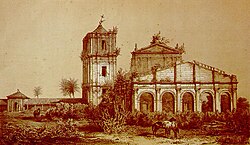
The end of the Jesuit era came in 1767 when the Spanish crown expelled the Jesuits from its dominions. Despite pleas from the Guarani caciques, who expressed their happiness serving under the Jesuits, the missions were handed over to other orders, primarily Franciscans. Without the specific Jesuit administrative system, the Reductions rapidly declined. By 1814, only 8,000 mission Indians remained, and the once-grand churches fell into ruin.
Regional Variations and Modern Legacy
Not all Guarani shared the same experience. In Bolivia, the Chiriguanos lived in the Andean foothills and were known for their warlike resistance against the Inca Empire, the Spanish, and the Bolivian state. They remained largely independent until their defeat in 1892 at the Battle of Kuruyuki.
Interestingly, the impact of the Jesuit missions persists today. A 2018 study published in The Quarterly Journal of Economics found that areas of former Jesuit presence show 10–15% higher educational attainment and 10% higher incomes compared to neighboring areas, attributing this to long-term structural transformations in agriculture and technology adoption.

| Country | Estimated Population | Data Year |
|---|---|---|
| Argentina | 135,232 | 2022 |
| Bolivia | 103,712 | 2024 |
| Brazil | 85,000 | 2017 |
| Paraguay | 73,607 | 2024 |
Frequently Asked Questions
What were the Jesuit Reductions?
The Reductions were missionary settlements established by the Jesuits in the 17th and 18th centuries. They served as both religious centers and protective sanctuaries where the Guarani could live and work while being shielded from European slave raiders.
How did the Treaty of Madrid affect the Guarani?
The 1750 treaty transferred territory from Spain to Portugal without consulting the Guarani. This led to the forced displacement of many communities and sparked the Guarani War, as the people fought to keep their lands.
Who were the Chiriguanos?
The Chiriguanos are a subgroup of the Guarani in Bolivia. Unlike those in the Reductions, they were noted for their warlike nature and resisted Spanish and Bolivian control until the late 19th century.
What is the long-term economic impact of the Jesuit missions?
Research indicates that regions once managed by Jesuits have higher current income levels and educational attainment, likely due to the introduction of specialized occupational skills and agricultural technologies during the mission era.
What is the current status of the Guarani language?
The Guarani language remains a vital part of the cultural identity in South America, particularly in Paraguay, where it is spoken alongside Spanish.