The Grey Wolf (*Canis lupus*)
The grey wolf, scientifically known as Canis lupus, is one of the most iconic and misunderstood predators on Earth. With a global wild population estimated to be between 200,000 and 250,000 individuals as of 2026, these animals play a vital role in their ecosystems. While they have long been a subject of fear and conflict in many human societies, they are also deeply respected in various agrarian and hunter-gatherer cultures.
Despite their reputation, wolf attacks on humans are rare. This is largely because wolves typically live far from human settlements and have developed a natural fear of people due to centuries of interaction with hunters, farmers, and ranchers. Most recorded attacks on humans are actually attributed to animals suffering from rabies rather than predatory behavior.
Scientific Classification and Taxonomy
The grey wolf belongs to the kingdom Animalia, the phylum Chordata, and the class Mammalia. As members of the order Carnivora and the family Canidae, they are closely related to other canines. The species Canis lupus was first formally named by Linnaeus in 1758.

Evolutionary History
The phylogenetic descent—or the evolutionary lineage—of the modern grey wolf is widely believed to stem from Canis mosbachensis, which in turn descended from Canis etruscus. Some of the oldest fossils of the modern grey wolf have been found in Ponte Galeria, Italy, dating back approximately 406,500 years. Other remains found in Alaska may be as old as 1 million years, though scientists find it difficult to distinguish between modern wolves and C. mosbachensis in these ancient samples.
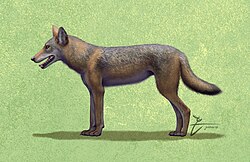
Genomic research indicates that modern wolves and domestic dogs share a common ancestral wolf population. A 2021 study highlighted that the Himalayan wolf and the Indian plains wolf represent a basal lineage—meaning they split from other wolf lineages very early—approximately 200,000 years ago. Other wolf populations appear to have shared a more recent common ancestry within the last 23,000 years, likely originating from Siberia or Beringia.
The divergence between Old World and New World wolves occurred roughly 12,500 years ago. Furthermore, the lineage leading to domestic dogs split from other Old World wolves between 11,100 and 12,300 years ago. Some evidence suggests an extinct Late Pleistocene wolf may have been the ancestor of the dog, with modern dogs sharing genetic similarities through admixture, or the mixing of previously distinct genetic lineages.
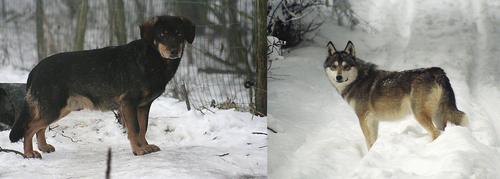
Physical Characteristics and Appearance
Wolves are robust animals with significant physical variation depending on their environment. They are classified as having a Least Concern conservation status by the IUCN, and they are listed under CITES Appendix II.
Size and Weight
Adult wolves typically measure between 105 and 160 cm in length and stand 80–85 cm at the shoulder. Their body mass varies significantly; the mean mass is approximately 40 kg, but individuals have been recorded as small as 12 kg and as large as 79.4 kg. In central Russia, exceptionally large males can reach weights of up to 79 kg.
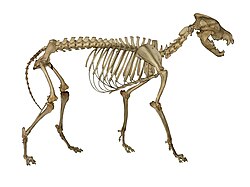
Wolf size often follows Bergmann's rule, a biological principle stating that within a certain taxonomic group, populations of larger size are found in colder environments, while populations of smaller size are found in warmer regions. For example, European wolves average 38.5 kg, while North American wolves average 36 kg, and Indian and Arabian wolves are smaller, averaging 25 kg.
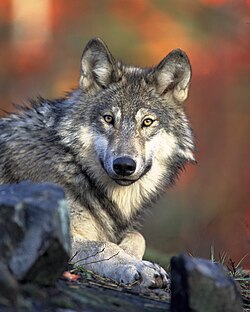
Coat Color and Patterns
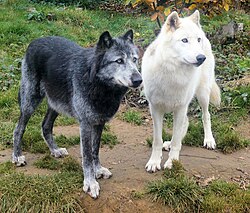
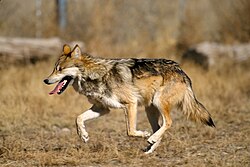
The color of a wolf's coat often follows Gloger's rule, which suggests that animal coloration is influenced by environmental factors like humidity and latitude. In North America, wolves in the Canadian Arctic are often white, while those in southern Canada, the U.S., and Mexico are predominantly grey. In certain areas of the Rocky Mountains, black coats are common. These black coats are believed to have been acquired through wolf-dog admixture after dogs arrived across the Bering Strait 12,000 to 14,000 years ago.
Ecology and Behavior
Wolves are highly social and intelligent animals that play a critical role in maintaining the balance of their habitats.
Diet and Hunting
As pack hunters, wolves primarily prey on ungulates (hoofed mammals). Their diet includes both large prey, such as moose (240–650 kg), and medium-sized prey (23–130 kg). A coordinated pack of 15 wolves is capable of bringing down an adult moose. The specific variety of prey depends on the available species in their specific geographic region.
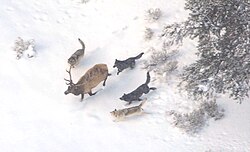
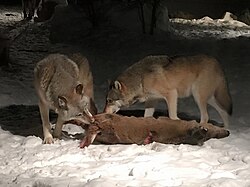
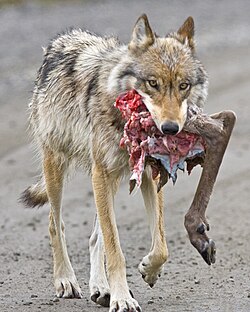
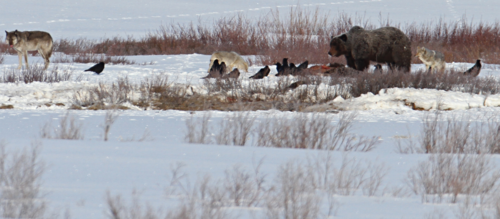
Wolves are also known to compete with other predators. In some ecosystems, they may compete with bears, coyotes, and ravens over a single kill.
Social Structure and Dispersal
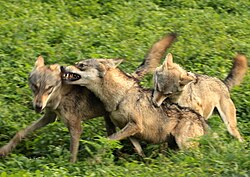
Wolf offspring typically remain with their natal pack for 10 to 54 months. Eventually, they undergo dispersal—the process of leaving their birth group to find new territory. This is often triggered by sexual maturity or competition for food within the pack. Dispersing wolves can travel vast distances, sometimes exceeding 670 km, to find an area without hostile packs. New packs are usually founded by an unrelated male and female traveling together.
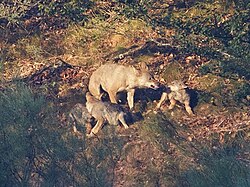
While wolf packs are generally exclusive and may kill unrelated wolves that enter their territory, rare instances of adoption occur, typically involving immature animals between one and three years old.
Communication and Scent Marking
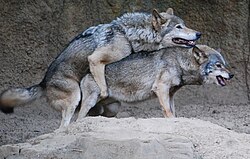
Wolves use scent marking as a primary method of communication to advertise territory. This involves the use of urine, feces, and scents from anal and preputial glands. Scent marks are often placed near prominent landmarks like rocks, trees, or large animal skeletons and can last for two to three weeks. Raised leg urination is a critical form of communication, accounting for 60–80% of observed scent marks.
Health and Infections
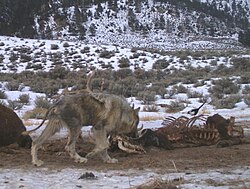
Like many wild animals, wolves are susceptible to various health issues. One notable condition is mange, a skin disease caused by mites, which can affect the appearance and health of individual wolves.
Global Distribution and Conservation
Wolf populations vary significantly across the globe due to different management practices and environmental conditions.
North America
Canada serves as a major stronghold for the species, with 50,000–60,000 wolves living in 80% of their historical range. In Alaska, between 7,000 and 11,000 wolves inhabit approximately 85% of the state. While wolves are protected in Canadian national parks, they may be hunted or trapped with a license in other areas.
Eurasia
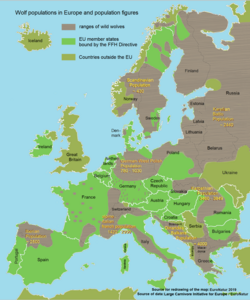
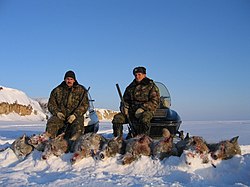
In the European Union, there are approximately 20,300 wolves across 23 countries. While many EU nations provide strict legal protection, wolves were historically exterminated in places like Great Britain and France. Since 1980, populations have rebounded in many parts of Europe. In Russia, the population is much larger, reaching up to 45,000, though they are often managed as pests due to livestock predation.
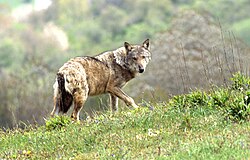
In Italy, wolves have established populations in the Apennines and other mountainous habitats.
The Middle East
Wolf populations in the Middle East are generally smaller. Turkey has an estimated 7,000 wolves, while the Arabian Peninsula hosts between 300 and 600. Israel provides explicit legal protection for its wolf population, which has maintained a size of approximately 150 individuals through effective conservation enforcement.
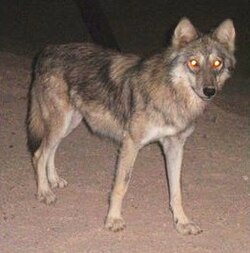
Human Relationships and Culture
The wolf holds a complex place in human history. In folklore and mythology, they are often depicted as symbols of danger or mystery. For example, the legend of the Capitoline Wolf tells of the mythical she-wolf that fed the founders of Rome, Romulus and Remus.

In literature and fairy tales, such as the story of Little Red Riding Hood, wolves are frequently cast as villains. This cultural perception has often fueled the historical persecution of wolves by pastoral communities seeking to protect their livestock.
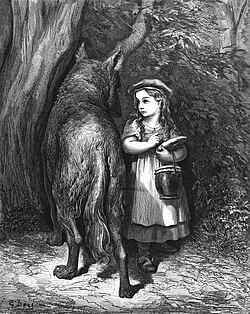
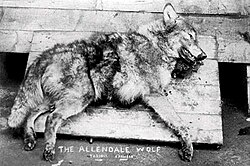
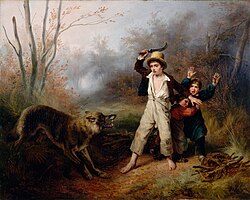
Historical records show the impact of human conflict, from the escaped Hexham wolf in England to depictions of children being surprised by wolves in the 19th century.
Key Facts
- Scientific Name: Canis lupus
- Global Population: Estimated 200,000–250,000 (as of 2026).
- Conservation Status: Least Concern (IUCN).
- Average Weight: Approximately 40 kg (range: 12–79.4 kg).
- Primary Diet: Ungulates (hoofed mammals).
- Social Unit: Packs, often led by a mated pair.
Summary Table
| Region | Estimated Population / Details |
|---|---|
| Canada | 50,000–60,000 wolves |
| Alaska, USA | 7,000–11,000 wolves |
| Russia | Up to 45,000 wolves |
| European Union | Approximately 20,300 wolves |
| Turkey | Approximately 7,000 wolves |
| Israel | Approximately 150 wolves |
| Arabian Peninsula | 300–600 wolves |
Frequently Asked Questions
Are wolves dangerous to humans?
Wolf attacks on humans are rare. Wolves generally avoid human contact and have developed a fear of people due to historical interactions with hunters and farmers. Most incidents involving humans and wolves are linked to animals suffering from rabies.
How do wolves communicate with each other?
Wolves use a variety of methods, including vocalizations like howling and physical scent marking. Scent marking with urine and feces is a highly effective way to advertise territory and is often used in combination with scratch marks on trees or rocks.
What do wolves primarily eat?
Wolves are pack hunters that specialize in preying on ungulates. Their diet typically consists of medium to large hoofed mammals, such as deer, elk, or moose, depending on the available prey in their specific habitat.
Why are some wolves black?
In North America, some wolves have black coats due to admixture, which is the genetic mixing that occurred when domestic dogs crossed with wolves after arriving in the region approximately 12,000 to 14,000 years ago.
What is the difference between a wolf and a dog?
While dogs and wolves share a common ancestor, they diverged into different lineages thousands of years ago. Genomic studies suggest the lineage leading to domestic dogs split from other Old World wolves roughly 11,100–12,300 years ago.