Greater Los Angeles: A Comprehensive Overview of the Southern California Megacity
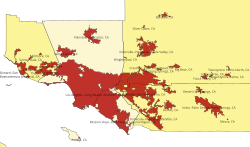
Greater Los Angeles represents one of the most significant urban expanses in the United States. Functioning as a massive Combined Statistical Area (CSA), this region integrates several major metropolitan areas into a singular, interconnected economic and social powerhouse. Spanning approximately 33,950 square miles, the area is a complex tapestry of coastal cities, sprawling valleys, and bustling urban centers.
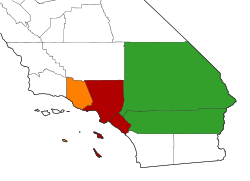
At its core, the region is defined by its diverse subregions, ranging from the dense urban landscape of the Los Angeles Basin to the expansive reaches of the Inland Empire and the scenic coasts of Ventura County. This megacity is not merely a collection of towns but a highly integrated network of commerce, culture, and transit.
Key Facts

- Total CSA Population: Approximately 18.3 million (2023 estimate).
- Economic Power: The CSA boasts a GDP of $1.697 trillion (2024).
- Major Components: Includes the Los Angeles–Long Beach–Anaheim, Riverside–San Bernardino–Ontario, and Oxnard–Thousand Oaks–Ventura metropolitan areas.
- Primary Hubs: Los Angeles, Long Beach, Anaheim, Riverside, and San Bernardino.
- Global Connectivity: Home to major international hubs including LAX and the Port of Long Beach.
The Structure of the Combined Statistical Area
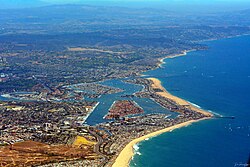
The Greater Los Angeles CSA is composed of three distinct Metropolitan Statistical Areas (MSAs), each contributing unique characteristics to the region's identity.
The Los Angeles–Long Beach–Anaheim MSA
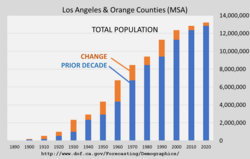
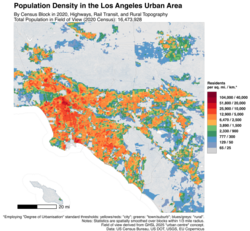
This is the primary engine of the region, encompassing Los Angeles and Orange Counties. It is characterized by high population density and a massive economic output. Major cities within this division include Los Angeles, Long Beach, Anaheim, Irvine, and Santa Ana.
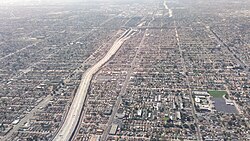
The urban form here is incredibly dense, with many areas completely filled with residential buildings, commercial structures, and extensive freeway networks.
The Riverside–San Bernardino–Ontario MSA
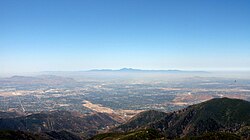
Often referred to as the Inland Empire, this subregion provides a vital connection between the coastal basins and the eastern deserts. It includes Riverside and San Bernardino Counties, featuring diverse landscapes from the San Bernardino Valley to the high desert regions.
The Oxnard–Thousand Oaks–Ventura MSA
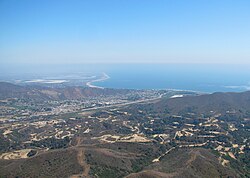
Coterminous with Ventura County, this area offers a blend of coastal beauty and suburban living, including the Oxnard Plain and the Conejo Valley.
Economic and Demographic Landscape
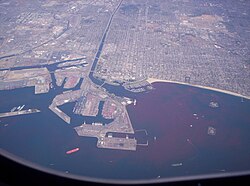
The economic scale of Greater Los Angeles is staggering. With a per capita GDP reaching $92,647 across the CSA, the region is a global leader in various industries. The economy is supported by massive infrastructure, including the Port of Long Beach and several major international airports.
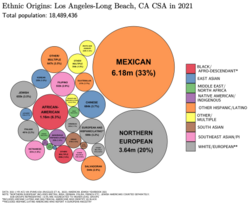
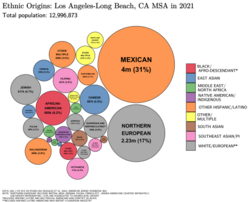
Demographically, the region has seen significant growth since the late 19th century. While some individual counties have seen slight recent population fluctuations, the aggregate metropolitan presence remains one of the largest in the nation.
| Metropolitan Area (MSA) | Area (sq mi) | Population (2023/24) | GDP (Millions USD) |
|---|---|---|---|
| Los Angeles–Long Beach–Anaheim | 12,580 | 12,906,895 | $1,354,718 |
| Riverside–San Bernardino–Ontario | 70,610 | 4,747,876 | $272,671 |
| Oxnard–Thousand Oaks–Ventura | 4,770 | 833,431 | $69,606 |
| Total CSA | 87,960 | 18,488,202 | $1,696,995 |
Transportation and Infrastructure
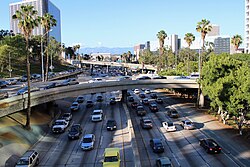
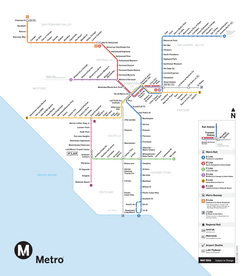
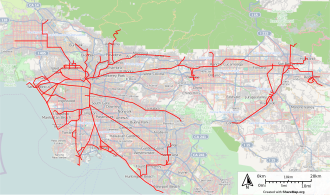
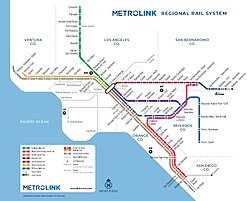
Moving through this vast area requires a sophisticated multi-modal transportation network. The region relies heavily on a combination of massive freeway systems, regional commuter rail like Metrolink, and local transit systems such as the Los Angeles County Metro.
For international and domestic travel, the area is served by several key airports, with Los Angeles International Airport (LAX) acting as the primary global gateway.
Culture, Education, and Sports
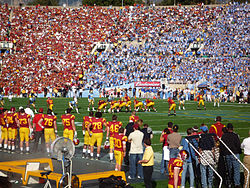
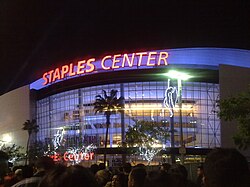
Greater Los Angeles is a global cultural hub, home to world-class universities such as UCLA, USC, and Caltech. The region's sports culture is equally prominent, hosting professional teams across the NFL, NBA, MLB, NHL, and MLS.
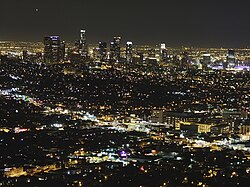
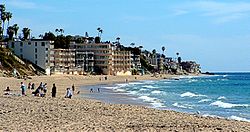
From the vibrant nightlife of Downtown Los Angeles to the scenic coastlines of Laguna Beach, the region offers an unparalleled variety of lifestyle experiences.
Frequently Asked Questions
What is the difference between the MSA and the CSA in Los Angeles?
The Metropolitan Statistical Area (MSA) refers to a specific core urban area and its surrounding counties, such as the Los Angeles–Long Beach–Anaheim MSA. The Combined Statistical Area (CSA) is a larger grouping that includes multiple MSAs that are socially and economically integrated.
Which are the largest cities in the region?
Los Angeles is the largest city by population, followed by Long Beach, Santa Clarita, Glendale, and Anaheim.
How is the economy of Greater Los Angeles structured?
The economy is highly diversified, with massive contributions from international trade (via the ports), aerospace, technology, entertainment, and tourism, resulting in a multi-trillion dollar regional GDP.
What major airports serve the area?
The primary airports include Los Angeles International (LAX), John Wayne Airport in Orange County, Ontario International, and Hollywood Burbank Airport.
What is the Inland Empire?
The Inland Empire is a subregion of the Greater Los Angeles CSA that primarily encompasses Riverside and San Bernardino Counties.