Gonochorism: The Biological System of Separate Sexes
In the diverse world of biological reproduction, gonochorism is a sexual system characterized by the existence of two distinct sexes. In a gonochoric species, every individual organism is either male or female. While we often take this binary for granted in humans and other mammals, it is just one of several reproductive strategies found across the tree of life.
The term is derived from the Greek words gone (generation) and chorizein (to separate). Also referred to as gonochory or unisexualism, this system ensures that individuals remain a single sex throughout their entire lives, distinguishing them from species that can change sex or possess both sets of reproductive organs.
Key Facts
- Definition: A sexual system where individuals are exclusively male or female.
- Prevalence: Approximately 95% of animal species are gonochoric.
- Vertebrates: 99% of vertebrates follow this system, including all birds and mammals.
- Evolution: It is linked to the evolution of anisogamy (the production of gametes of different sizes).
- Plant Equivalent: In vascular plants, this state is known as being dioecious.
The Evolution of Separate Sexes
Gonochorism has evolved independently multiple times across different lineages and is considered evolutionarily stable in animals. Its origins are tied to anisogamy, though scientists are still debating whether anisogamy first led to hermaphroditism or directly to gonochorism.
Research suggests that gonochorism was the ancestral state for several groups, including nematodes, Hexacorallia, polychaetes, and various hermaphroditic fishes. In the case of fish, the prevalence of gonochorism in basal clades and other vertebrate lineages supports the theory that it was the original state.
Evolutionary transitions between gonochorism and hermaphroditism are rare but present. Studies from 2008 suggest these transitions occurred between 10 and 20 times in animals. However, a 2017 study of 165 taxon groups found that transitions from gonochorism to hermaphroditism were more frequent than the reverse.
Gonochorism Across the Animal Kingdom
The vast majority of animals are gonochoric. This is especially true for vertebrates, where 99% of species—including 98% of all fishes—operate under this system. Mammals and birds are exclusively gonochoric.
Beyond vertebrates, the system is common in tardigrades, most arthropods (including the majority of crustaceans), and approximately 75% of snail species. While sex is typically determined genetically, some species use environmental triggers. For instance, alligators utilize temperature-dependent sex determination during the incubation of their eggs.
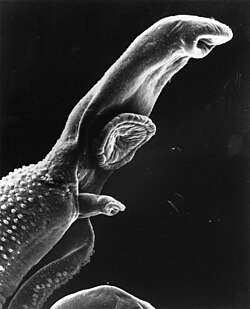
Most flatworms are hermaphroditic, but schistosomes are a notable exception because they are gonochoric.
Sexual Systems in Plants
While the term gonochorism is primarily used for animals, plants have their own terminology for separate sexes. Vascular plants with single-sex individuals are called dioecious, while bryophytes (non-vascular plants) are referred to as dioicous.
Flowering plants exhibit a complex array of sexual arrangements. A flower may be hermaphroditic (containing both stamens and ovaries) or unisexual (lacking one or the other). Depending on how these flowers are distributed, a plant species can be categorized as monoecious, dioecious, trioecious, polygamomonoecious, polygamodioecious, andromonoecious, or gynomonoecious.
Examples of dioecious pollination include kiwifruit and hollies. In these species, the male plant responsible for providing pollen is specifically called the pollenizer.
Comparing Reproductive Strategies
Gonochorism stands in contrast to asexual reproduction and hermaphroditism. Some taxa show a surprising variety of strategies within a single genus; for example, the genus Ophryotrocha contains both gonochoric and hermaphroditic species.
Additionally, some species practice sequential hermaphroditism, where an individual changes its sex during its lifetime. This phenomenon is observed in cockles and parrotfish (such as Patella ferruginea), making it difficult to distinguish them from purely gonochoric species without long-term observation.
Species that reproduce via thelytokous parthenogenesis (a form of asexual reproduction where females produce female offspring without males) can still be classified as gonochoric if they lack males entirely.
| System | Animal Terminology | Plant Terminology | Key Characteristic |
|---|---|---|---|
| Separate Sexes | Gonochoric | Dioecious / Dioicous | Individuals are either male or female |
| Both Sexes in One | Hermaphrodite | Monoecious / Hermaphrodite | Individual possesses both male and female organs |
| Sex Change | Sequential Hermaphrodite | N/A | Individual changes sex during its lifetime |
Frequently Asked Questions
What is the difference between gonochorism and dioecy?
The difference is primarily terminology based on the kingdom of life. Gonochorism is the term used for animals with separate sexes, while dioecy (or dioecious) is the term used for vascular plants with separate sexes.
Are all vertebrates gonochoric?
Almost all are. Approximately 99% of vertebrates are gonochoric, including 100% of mammals and birds, and 98% of fishes.
How is sex determined in gonochoric species?
In most animals, sex is determined genetically. However, some species use other mechanisms, such as alligators, which rely on the temperature of the eggs during incubation.
Can a species be both gonochoric and hermaphroditic?
A single species is typically one or the other. However, within a single genus, such as Ophryotrocha, different species may have evolved different strategies, with some being gonochoric and others being hermaphrodites.
What is the relationship between gonochorism and anisogamy?
Gonochorism owes its origin to the evolution of anisogamy, which is the condition where male and female gametes (sperm and egg) differ in size and form.