Glucose: The Essential Chemistry and Biological Role of Blood Sugar
Glucose, often referred to as blood sugar, dextrose, or corn sugar, is a fundamental monosaccharide—the simplest form of carbohydrate—that serves as a primary energy source for living organisms. This white, crystalline powder is highly soluble in water and plays a critical role in maintaining the metabolic functions of the human body, particularly in the brain and muscles.
From a chemical perspective, glucose is a hexose, meaning it contains six carbon atoms. It exists in several structural forms, transitioning between an open-chain structure and cyclic rings, a process that is vital for its biological activity.

Key Facts

- Chemical Formula: C6H12O6
- Molar Mass: 180.156 g/mol (anhydrous)
- Common Names: Dextrose, Grape sugar, Blood sugar
- Physical State: White powder, highly soluble in water (909 g/L at 25 °C)
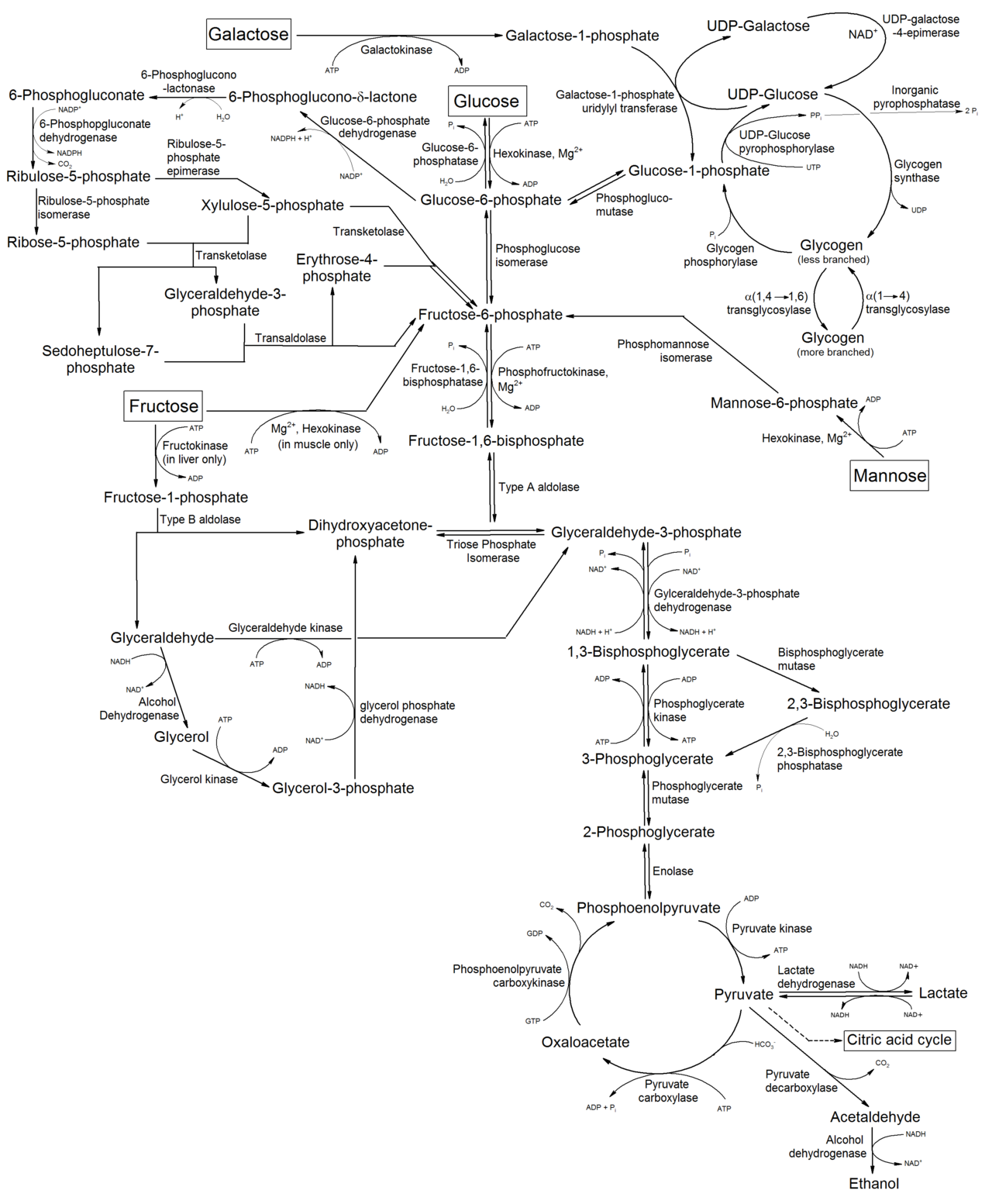
- Primary Function: Central energy source for cellular metabolism via glycolysis
- Storage Form: Stored in the liver and muscles as glycogen
Chemical and Physical Properties
Glucose typically appears as a white or colorless solid. It is highly soluble in water and acetic acid, though it shows poor solubility in alcohols like methanol and ethanol. The substance has a pKa value of 12.16 at 25 °C.
The melting point of glucose varies depending on its anomeric form: α-D-glucose melts at 146 °C (295 °F), while β-D-glucose melts at 150 °C (302 °F). When heated beyond 188 °C (370 °F), glucose decomposes, releasing volatile products and leaving behind a carbon residue.

Anhydrous vs. Monohydrate Forms
Glucose is commonly encountered in two forms: anhydrous D-glucose (molar mass 180.16 g/mol) and D-glucose monohydrate (molar mass 198.17 g/mol). These two forms differ in their density and water content, which can affect their application in pharmaceutical and industrial settings.
Structure and Molecular Dynamics
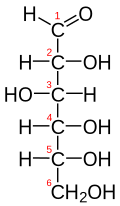
Glucose is a versatile molecule that exists in several projections, including the Fischer projection (linear) and the Haworth projection (cyclic). In aqueous solutions, glucose primarily exists as cyclic hemiacetals, which are rings formed when the carbonyl group reacts with a hydroxyl group within the same molecule.
Mutarotation and Anomers
A key characteristic of glucose is mutarotation, the process where the α and β anomers (isomers that differ in configuration at the anomeric carbon) interconvert through an open-chain intermediate. In a state of dynamic equilibrium, the ratio of α-D-glucopyranose to β-D-glucopyranose is approximately 36:64.
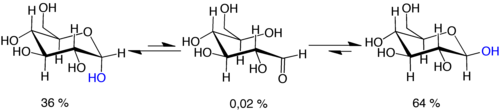
In α-D-glucopyranose, the hydroxy group at the anomeric center is in the axial position, whereas in β-D-glucopyranose, it occupies the equatorial position.

Biochemical Role and Metabolism
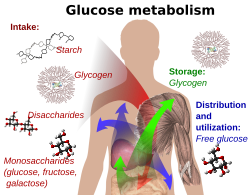
Glucose is the central fuel for the body. It is absorbed from the intestines in various forms, including free monosaccharides and digested polysaccharides like starch and glycogen.
Energy Production and Degradation
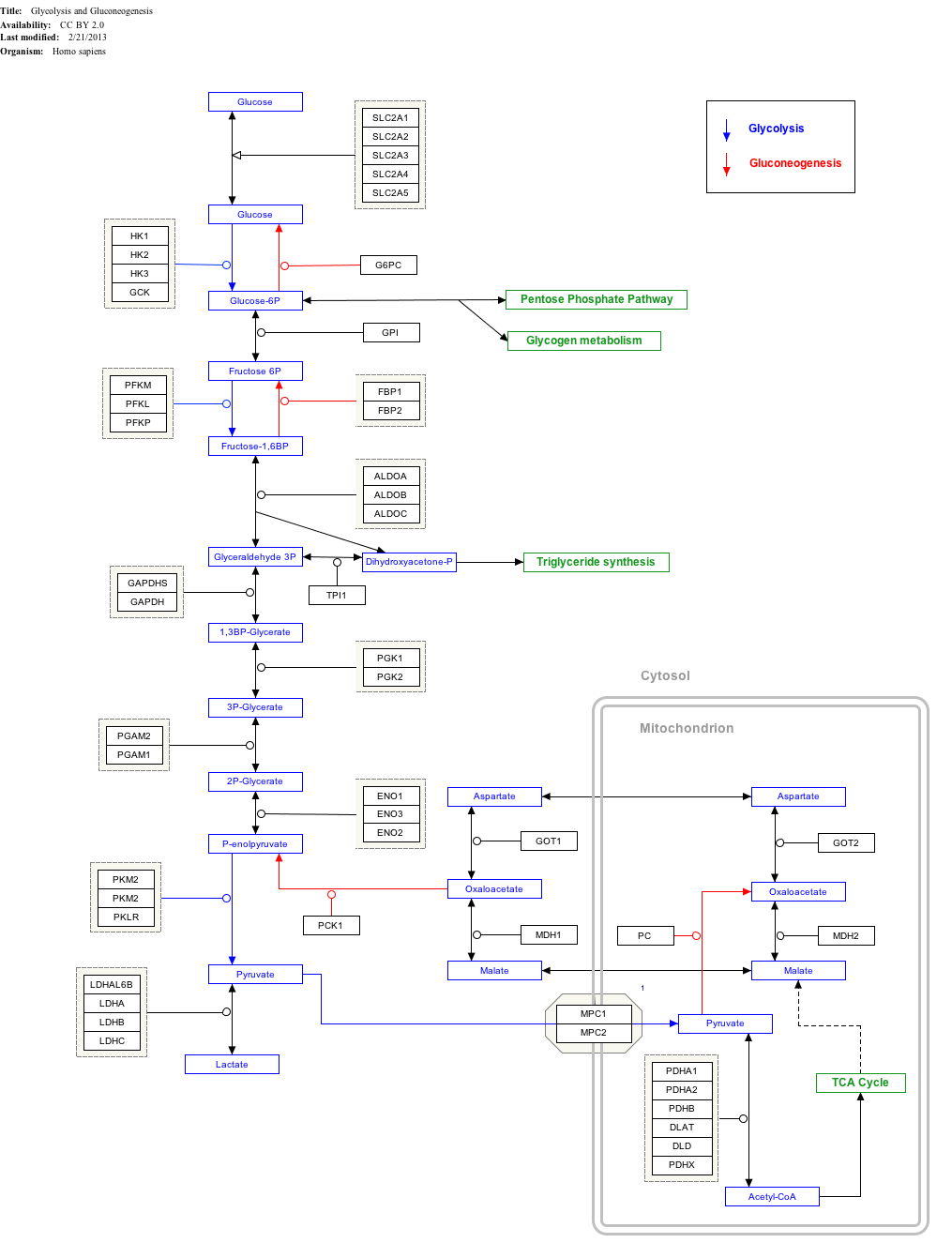
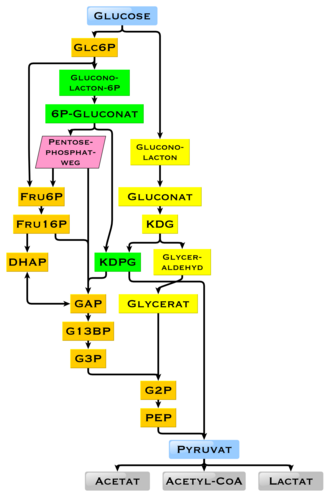
The primary pathway for glucose degradation is glycolysis, where glucose is broken down to produce energy (ATP). Conversely, gluconeogenesis is the metabolic process of synthesizing glucose from non-carbohydrate precursors. Other pathways, such as the Entner-Doudoroff pathway, are utilized by certain microorganisms for glucose oxidation.
Storage and Regulation
When glucose levels in the blood are high, the body stores the excess in the liver and muscle tissues as glycogen. This stored energy can be released back into the bloodstream as free glucose when levels drop, ensuring a steady supply of energy for tissues.
Dietary Sources of Glucose
Glucose is found naturally in a wide variety of fruits, vegetables, and grains. While some foods contain high levels of free glucose, others provide it through the breakdown of sucrose or starch.
| Food Item | Total Sugars (%) | Free Glucose (%) | Sucrose (%) |
|---|---|---|---|
| Apple | 10.4 | 2.4 | 2.1 |
| Banana | 12.2 | 5.0 | 2.4 |
| Grapes | 15.5 | 7.2 | 0.2 |
| Red Beet | 6.8 | 6.5 | 1.0 |
| Sweet Potato | 4.2 | 1.0 | 2.5 |
| Sweet Corn | 6.2 | 3.4 | 0.9 |
![Relative sweetness of various sugars in comparison with sucrose[149]](/images/43/68/43681cd4e3012570790810a4fbad1916c8ff4cbe3ef6652b9639c9d9605543a3.webp)
Commercial and Medical Applications
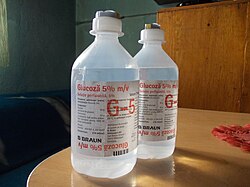
Due to its biological importance, glucose is produced on a massive industrial scale, often derived from starch. It is used extensively in the food industry as a sweetener and in medicine for treating hypoglycemia (low blood sugar) or as an intravenous infusion for hydration and energy.

Frequently Asked Questions
What is the difference between glucose and dextrose?
Chemically, glucose and dextrose are the same molecule. "Dextrose" is the term often used in commercial and medical contexts to refer to D-glucose, the specific isomer found in nature.
What is mutarotation?
Mutarotation is the change in optical rotation that occurs when an anomer of glucose (either α or β) dissolves in water and spontaneously converts into an equilibrium mixture of both forms via an open-chain intermediate.
How does the body store glucose?
The body converts excess glucose into a complex polymer called glycogen, which is stored primarily in the liver and skeletal muscles for later use.
What are the primary pathways for glucose breakdown?
The most common pathway is glycolysis, which converts glucose into pyruvate to generate energy. In some bacteria, the Entner-Doudoroff pathway is used as an alternative for glucose degradation.
Why is glucose important for the brain?
Glucose is the primary metabolic fuel for the brain, providing the necessary energy to maintain neuronal function and cognitive processes.