Luis Federico Leloir: The Architect of Carbohydrate Metabolism
Luis Federico Leloir was a pioneering Argentine physician and biochemist whose work fundamentally changed our understanding of how the human body processes energy. By uncovering the metabolic pathways through which carbohydrates are synthesized and converted into energy, Leloir provided the scientific community with the keys to understanding complex biological processes and treating genetic disorders.
His journey from a modest laboratory in Buenos Aires to the podium of the Nobel Prize is a testament to scientific perseverance, proving that world-class research can flourish even in the face of political strife and limited financial resources.
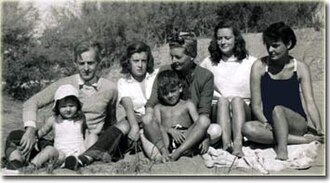
Key Facts
- Nobel Prize: Awarded the 1970 Nobel Prize in Chemistry.
- Major Discovery: Identified sugar nucleotides and the metabolic pathway for converting galactose to glucose.
- Medical Impact: His research led to the diagnosis and treatment of galactosemia, a congenital disorder.
- Institution: Directed the Fundación Instituto Campomar (now Fundación Instituto Leloir) from 1947 until 1987.
- Legacy: Demonstrated that high-level scientific research is possible in developing nations.
Early Life and Academic Foundations
Born in Paris, France, on September 6, 1906, Luis Leloir moved to Argentina in 1908. He grew up on his family's extensive property, El Tuyú, along the Argentine coastline. Interestingly, during the 1920s, Leloir is credited with inventing salsa golf (a mixture of ketchup and mayonnaise), a culinary curiosity he later joked could have funded his research laboratories.
Leloir's academic path was not without struggle. While pursuing his doctorate at the University of Buenos Aires, he failed his anatomy exam three times before finally graduating in 1932. After a brief period in clinical residency, he realized that the therapeutic tools of the time—such as antibiotics—were still largely unknown, prompting him to shift his focus toward laboratory research.
Mentorship and International Training
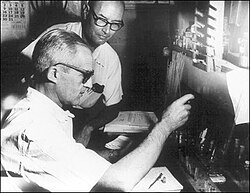
Leloir's career was profoundly shaped by Bernardo Houssay, a future Nobel laureate who guided him toward the study of suprarenal glands and carbohydrate metabolism. Seeking to fill gaps in his knowledge of physics and chemistry, Leloir traveled to the University of Cambridge in 1936 to study under Sir Frederick Gowland Hopkins. It was here that he began specializing in enzymes (biological catalysts that speed up chemical reactions), specifically focusing on succinic dehydrogenase.
Political instability in Argentina later forced Leloir into exile in the United States. Between 1943 and 1945, he worked at Washington University in St. Louis with Carl and Gerty Cori, and later at Columbia University with David E. Green. These experiences instilled in him the initiative to establish his own independent research center upon his return to Argentina.
The Fundación Instituto Campomar
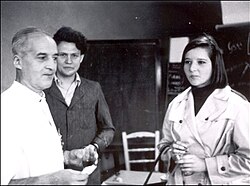
In 1947, Leloir became the director of the Fundación Instituto Campomar, a private research group funded by Jaime Campomar. The institute began in humble surroundings—just five rooms and a bathroom—and operated with extremely limited budgets. To overcome the lack of expensive equipment, Leloir and his colleague J. M. Muñoz improvised; for example, they used a tire stuffed with salt and ice as a makeshift refrigerated centrifuge to separate cell contents.
The Discovery of Sugar Nucleotides
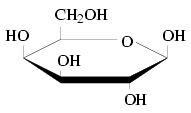
In 1948, Leloir and his team identified sugar nucleotides, which are essential molecules in the metabolism of carbohydrates. This discovery catapulted the institute to international fame. His team eventually elucidated the primary mechanisms of galactose metabolism, a sequence of reactions now known as the Leloir pathway.
This research was critical for understanding galactosemia, a genetic disorder where the body lacks the enzyme Galactose-1-phosphate uridylyltransferase. Without this enzyme, patients cannot convert unusable galactose into usable glucose, leading to severe health complications.
The Nobel Prize and Later Years
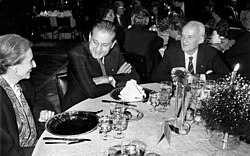
On December 2, 1970, Luis Leloir was awarded the Nobel Prize in Chemistry. He was only the third Argentine to receive a Nobel Prize in any field. In a display of his characteristic humility, he spent the $80,000 prize money entirely on further research. He and his colleagues famously celebrated the win by drinking champagne from test tubes.
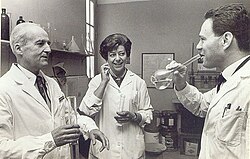
Leloir remained a dedicated teacher at the University of Buenos Aires and a founding member of the World Academy of Sciences. He was known as a "monk in science," arriving at the lab daily in worn-out gray overalls and working from the same straw seat for decades.
Summary of Career and Achievements
| Category | Details |
|---|---|
| Primary Field | Biochemistry |
| Key Discovery | Metabolic pathways of carbohydrates / Sugar nucleotides |
| Major Award | Nobel Prize in Chemistry (1970) |
| Key Institution | Fundación Instituto Leloir (formerly Campomar) |
| Medical Contribution | Understanding and treating Galactosemia |
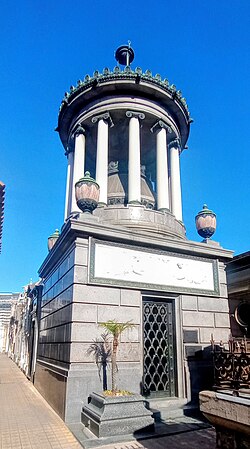
Leloir passed away from a heart attack on December 2, 1987, and is buried in La Recoleta Cemetery in Buenos Aires.
Frequently Asked Questions
What is the Leloir pathway?
The Leloir pathway is the metabolic sequence of chemical reactions that allows the body to convert galactose (a sugar found in milk) into glucose, which can then be used for energy.
How did Leloir's work help treat galactosemia?
Leloir discovered that people with galactosemia lack the specific enzyme (Galactose-1-phosphate uridylyltransferase) needed to process galactose. This discovery allowed doctors to diagnose the condition and manage it through dietary restrictions.
What were sugar nucleotides?
Sugar nucleotides are activated forms of sugars that serve as the fundamental building blocks for the synthesis of more complex carbohydrates in the body.
How did Leloir handle the lack of funding at his institute?
Leloir was known for his frugality and ingenuity, often creating homemade laboratory equipment. He once used a tire filled with ice and salt as a centrifuge and used waterproof cardboard to protect his library from rain leaks.
What is the current status of the Fundación Instituto Campomar?
The institute was renamed the Fundación Instituto Leloir. It has grown into a large facility conducting advanced research into neurodegenerative conditions, including Alzheimer's disease, Parkinson's disease, and multiple sclerosis.