Giardiasis
Giardiasis, often colloquially referred to as "beaver fever," is a gastrointestinal infection caused by the microscopic parasite Giardia duodenalis. This infection affects the intestines, leading to digestive distress and nutrient malabsorption. While it can occur globally, its prevalence varies significantly based on regional sanitation and water quality.
The infection typically manifests 1 to 3 weeks after a person is exposed to the parasite. Because its symptoms often mimic other gastrointestinal issues, such as Irritable Bowel Syndrome (IBS), accurate diagnosis is essential for effective treatment.
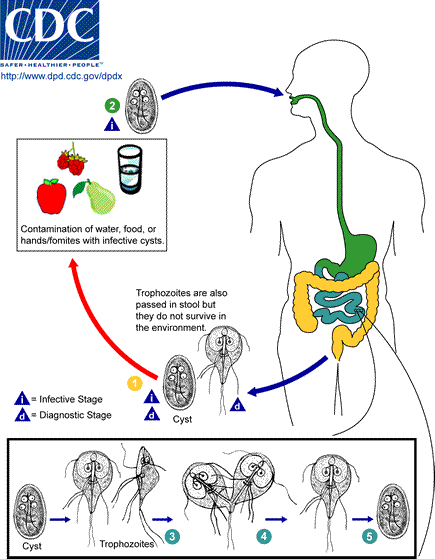
Key Facts
- Cause: The protozoan parasite Giardia duodenalis.
- Primary Transmission: Contaminated food or water.
- Common Symptoms: Diarrhea, abdominal pain, nausea, and weight loss.
- Diagnosis: Primarily through stool testing.
- Treatment: Antiprotozoal medications such as tinidazole and metronidazole.
- Global Prevalence: Affects up to 7% of people in the developed world and up to 30% in the developing world.
Causes and Transmission
Giardiasis is caused by Giardia duodenalis, a parasite that exists in two forms: the hardy cyst, which survives outside the host in the environment, and the trophozoite, the active form that colonizes the small intestine.
The parasite is spread primarily through the fecal-oral route. This occurs when a person consumes food or water contaminated with Giardia cysts. Common sources of infection include:
- Drinking untreated water from lakes, rivers, or springs (common among backpackers and campers).
- Using household water from shallow wells that may be contaminated.
- Close contact with infected individuals, particularly in childcare settings.
- Contact with feces during sexual activity.
- Exposure to infected animals or environments contaminated with animal feces.
Signs and Symptoms
Symptoms usually appear within 1 to 3 weeks of exposure. The most prominent signs include:
- Diarrhea: Often greasy and foul-smelling.
- Abdominal Pain: Cramping and bloating.
- Nausea: General stomach upset.
- Weight Loss: Resulting from malabsorption of nutrients.
In some cases, the infection may be detected incidentally during medical procedures. For example, a duodenal biopsy (a tissue sample from the first part of the small intestine) may reveal the presence of Giardia organisms.
![A duodenal biopsy may incidentally detect Giardia organisms, as in this H&E stained sample.[41]](/images/7f/8d/7f8d5291857977837bee69706fabf033743b25d9d616440ecb932f4bb19ed688.png)
Risk Factors
Certain individuals and groups are at a higher risk of contracting giardiasis:
- Travelers: Those visiting areas with poor sanitation.
- Outdoor Enthusiasts: Campers and backpackers who drink untreated surface water.
- Immunocompromised Individuals: People with weakened immune systems or conditions like hypogammaglobulinemia (a deficiency in antibody proteins).
- Caregivers: Those working in childcare settings where fecal-oral transmission is more common.
Diagnosis and Treatment
The primary method for diagnosing giardiasis is stool testing, which looks for the presence of cysts or parasite antigens. Because the symptoms overlap with other conditions, clinicians use these tests to differentiate giardiasis from Irritable Bowel Syndrome.
Treatment involves the use of antiprotozoal medications designed to eliminate the parasite from the digestive tract. The most commonly prescribed medications include:
- Tinidazole
- Metronidazole
Prevention and Epidemiology
Prevention focuses on improving sanitation and ensuring water safety. Key preventative measures include boiling or filtering water from unknown sources and practicing rigorous hand hygiene.
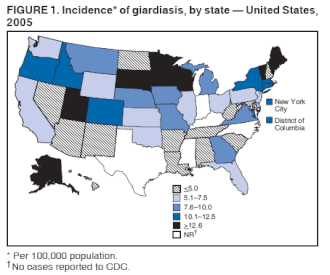
The epidemiology of giardiasis shows a stark contrast between different economic regions. In the developed world, the frequency of infection is relatively low, affecting up to 7% of the population. In contrast, in the developing world, where sanitation infrastructure may be lacking, the rate can climb as high as 30%.
| Feature | Details |
|---|---|
| Causative Agent | Giardia duodenalis |
| Incubation Period | 1 to 3 weeks |
| Primary Symptoms | Diarrhea, abdominal pain, weight loss, nausea |
| Diagnostic Tool | Stool testing |
| First-line Treatment | Tinidazole, Metronidazole |
| Prevention | Improved sanitation, water treatment |
Frequently Asked Questions
What is "beaver fever"?
"Beaver fever" is a common nickname for giardiasis, a parasitic infection of the small intestine caused by Giardia duodenalis, often contracted from drinking contaminated wilderness water.
How is giardiasis diagnosed?
Giardiasis is typically diagnosed through stool testing to detect the parasite or its antigens. In some clinical cases, it may be found incidentally via a duodenal biopsy.
Can giardiasis be prevented?
Yes. Prevention includes drinking treated or bottled water, avoiding untreated water from lakes and streams, and maintaining good hand hygiene, especially in childcare settings.
What medications are used to treat Giardia?
Doctors typically prescribe antiprotozoal medications, with tinidazole and metronidazole being the most common choices for clearing the infection.
Who is most at risk for this infection?
High-risk groups include backpackers, travelers in areas with poor sanitation, people in childcare settings, and individuals with weakened immune systems or hypogammaglobulinemia.