Germanisation: The History of Cultural and Linguistic Assimilation
Germanisation refers to the spread of the German language, people, and culture. While in linguistics it can simply describe the adoption of German loanwords into other languages, historically it has been a tool of state policy. During the 19th and 20th centuries, Germanisation became a central pillar of conservative thought and ethnic nationalism, often manifesting as linguistic imperialism—the forced imposition of a dominant language over minority groups to erase their native traditions and identities.
From the Teutonic Order to the German Empire and the Third Reich, various regimes employed these policies to consolidate power and expand influence. These efforts ranged from discouraging the use of native tongues in schools to the violent deportation of entire populations.
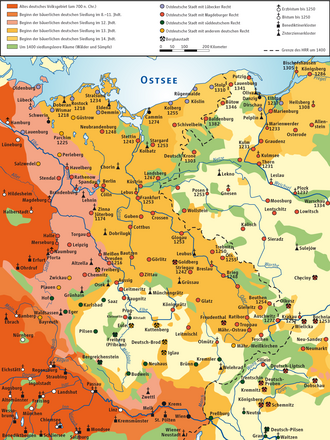
Key Facts
- Definition: The process of spreading German language and culture, often through state-mandated assimilation.
- Methods: Prohibiting native languages, altering geographic names, and encouraging German immigration.
- Nazi Targets: The Third Reich aimed to Germanise up to 50% of Czechs, 35% of Ukrainians, and 25% of Belarusians.
- Extreme Measures: Under Generalplan Ost, 80-85% of Poles were slated for deportation to Siberia.
- Child Abductions: Between 50,000 and 200,000 children were kidnapped from Polish families for forced assimilation.
Early and Modern Germanisation
The drive toward Germanisation was not uniform, varying significantly between the Prussian and Austrian approaches. In the Polish territories, policies shifted over time. Between 1815 and 1830, there was a brief easing of pressure. However, by 1825, the appointment of August Jacob to the Provincial Educational Collegium in Poznan signaled a return to aggressive assimilation. Polish teachers were removed, and German educational programs were introduced to create loyal Prussian citizens.
Similar patterns emerged in Lithuania Minor. While ethnic Lithuanians were the majority in parts of East Prussia during the 15th and 16th centuries, their population declined in the 18th century due to plague and immigration from Germany, specifically from Salzburg. By the 19th century, Germanisation policies tightened further, though Lithuanian majorities persisted in some regions until the early 20th century.
![Polish names of Silesian cities from a Prussian official document published in Berlin in 1750 during the Silesian Wars[14]](/images/c2/e8/c2e8ebda01036f33d207701143df3e1a2788e64137abfbe21b1459010d8e760a.jpg)
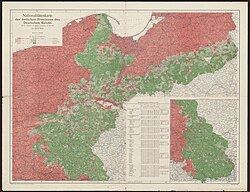
Germanisation Under the Third Reich
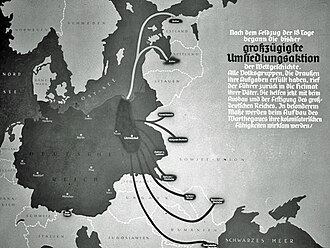
Under Nazi rule, Germanisation evolved from cultural pressure into a racialized program of selection and expulsion. The Generalplan Ost (General Plan East) served as the blueprint for the colonization of Eastern Europe. Nazi officials, including Gauleiters Albert Forster and Arthur Greiser, estimated that only a small percentage of the Polish population possessed "Germanic blood" and were suitable for assimilation.
Selection and Deportation
The Nazi regime categorized populations by their perceived "racial value." Those deemed unsuitable for Germanisation were to be deported to Western Siberia. Contrary to some beliefs, the immediate goal for these deportees was not extermination but resettlement in Reichskommissariats (administrative districts), where they would be kept separated as "subhumans." However, the plan for the Polish nation was more severe: the regime aimed to destroy the Polish nation entirely within 10 to 20 years to make room for German colonists.
The Case of Yugoslavia and Slovenia
Following the 1941 invasion of Yugoslavia, Nazi Germany occupied Slovene territories. Despite some officials viewing Slovenes as racially salvageable, authorities in Carinthia and Styria launched a brutal campaign to erase the Slovene identity. Public use of the Slovene language was banned, and geographic names were changed to German equivalents.
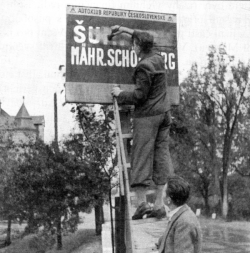
Professional and intellectual leaders, including clergy, were expelled. Approximately 80,000 Slovenes were forcibly deported to Eastern Germany for forced labor or potential Germanisation. Additionally, about 150,000 Slovenes were conscripted into German military and paramilitary forces, with nearly a quarter perishing, primarily on the Eastern Front.
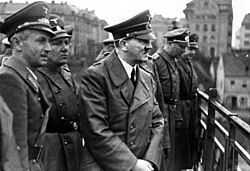
The Kidnapping of Children
One of the most harrowing aspects of Nazi Germanisation was the abduction of children. In occupied Poland, it is estimated that 50,000 to 200,000 children were taken from their parents if they possessed "Aryan" features. These children were held in facilities such as the Kinder-KZ (Children's Concentration Camp). Those determined to be "unfit" for Germanisation—at least 10,000 children—were murdered in concentration camps. Only 10–15% of these children ever returned to their families.
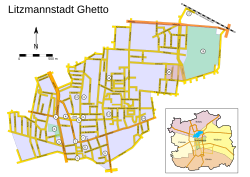
Legacy and Impact
The systematic oppression of cultures in regions like Lusatia, Bohemia, Moravia, Silesia, and Slovenia triggered a powerful counter-reaction: the rise of local nationalisms in the late 18th and 19th centuries. In some cases, the cultural dominance of German was so absolute that academic work in native languages became nearly impossible. For example, Josef Dobrovský published the first modern Czech grammar in German in 1809 because Czech was not used in scholarship at the time.
| Nationality | Estimated % for Germanisation | Fate of "Unsuitable" Population |
|---|---|---|
| Czechs | Up to 50% | Deportation to Western Siberia |
| Ukrainians | 35% | Deportation to Western Siberia |
| Belarusians | 25% | Deportation to Western Siberia |
| Poles | 10-15% | 80-85% Deportation / National Destruction |
Frequently Asked Questions
What is the difference between linguistic Germanisation and political Germanisation?
Linguistic Germanisation is the natural or incidental adoption of German words into another language. Political Germanisation is a deliberate state policy designed to force a population to adopt German language and culture, often through coercion or law.
What was the goal of Generalplan Ost?
Generalplan Ost was a Nazi plan for the colonization of Eastern Europe. It involved the Germanisation of a small percentage of the population deemed racially valuable and the deportation or elimination of the majority of Slavs to create "Lebensraum" (living space) for German settlers.
How did the Nazi regime handle children during Germanisation?
Children with "Aryan" features were kidnapped from their families and placed in special camps or with German families to be raised as Germans. Those who did not meet racial criteria were often sent to concentration camps and murdered.
How did Germanisation affect the Slovene people?
In occupied Yugoslavia, the Nazi regime banned the Slovene language, changed place names, and expelled the intelligentsia. Thousands were deported to Germany for forced labor, and many were conscripted into the German military.
What was the long-term effect of these policies on Eastern Europe?
While these policies caused immense suffering and cultural loss, they often backfired by fueling the growth of national identity and resistance movements among the oppressed groups, leading to stronger nationalisms in the 19th and 20th centuries.