Baltic States Under Nazi German Occupation (1941–1944)
From 1941 to 1944, Estonia, Latvia, and Lithuania were under the military occupation of Nazi Germany. This period began with a complex emotional landscape: having suffered under Soviet annexation and mass deportations, many Baltic people initially viewed the arriving German forces as liberators. However, these hopes for restored independence were quickly extinguished as the Third Reich implemented a brutal regime of racial persecution, colonization, and forced labor.
The occupation was characterized by the transition from military conquest to a colonial administration, where the native populations were viewed as obstacles to German expansion. This era left a permanent scar on the region, marked by the systematic extermination of Jewish and Gypsy communities and the suppression of national identities.
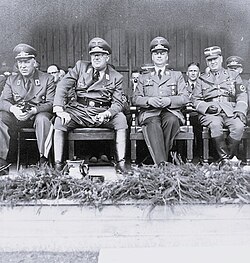
Key Facts
- Duration: The occupation lasted from June 1941 until 1944.
- Administration: Most of the region was governed as the Reichskommissariat Ostland, a colonial entity led by Reichskommissar Hinrich Lohse.
- Generalplan Ost: The Nazi master plan intended to deport two-thirds of the native population to make room for German settlers.
- The Holocaust: Mobile death squads known as Einsatzgruppen carried out mass killings of Jews and Gypsies across all three states.
- Resistance: Local resistance movements emerged, ranging from pro-independence nationalist councils to Soviet partisan units.
The Path to Occupation
The geopolitical fate of the Baltic states was initially decided by the 1939 German–Soviet Pact, which placed the region under the Soviet sphere of influence. Before the official invasion, Nazi Germany evacuated tens of thousands of Baltic Germans—13,700 from Estonia and 52,583 from Latvia—resettling them in Polish territories. Following the illegal Soviet annexation of the states in 1940, the German invasion known as Operation Barbarossa began on June 22, 1941.
Because the Soviets had recently conducted mass deportations, the German advance was initially welcomed. In Lithuania, a revolt broke out immediately, and a provisional government was established. Similar attempts to restore national sovereignty occurred in Riga and Tallinn. However, these political aspirations vanished as Germany established the Reichskommissariat Ostland, treating the territories as colonies and rejecting any future Baltic independence.
Racial Policy and Generalplan Ost
The Nazi regime viewed the Baltic peoples as a "dying race" to be replaced by "more dynamic" Germans. This ideology was codified in Generalplan Ost, a colonization plan that envisioned the wholesale deportation of two-thirds of the native population. The remaining third were to be either exterminated, used as slave labor, or Germanized if they were deemed sufficiently "Aryan." Some ideologists even proposed renaming Estonia as "Peipusland" and Latvia as "Dünaland."
While the general population faced future deportation, the immediate focus of Nazi terror was the Holocaust. The Einsatzgruppen (mobile killing squads) initiated immediate anti-Jewish persecutions upon arrival, systematically wiping out Jewish communities across the region.
National Experiences of Occupation
Estonia
The Wehrmacht reached Estonia in July 1941. While initially seen as liberators, the Germans soon began pillaging the country for the war effort. Approximately 70,000 Estonians were eventually recruited into German armed forces, including the Waffen-SS, though many joined only in 1944 to defend their land against the returning Red Army. Some Estonians also volunteered for the Finnish Infantry Regiment 200 (the soomepoisid) to fight the Soviets.
Latvia
By July 10, 1941, all of Latvia was occupied and designated as the Generalbezirk Lettland. The occupation was marked by extreme brutality; anyone disobedient or suspected of cooperating with Soviets was killed or imprisoned. The Holocaust in Latvia was devastating, with mass killings occurring in Rumbula. These crimes were perpetrated by Einsatzgruppe A, the Wehrmacht, and local collaborators, including the Sonderkommando Arajs, which killed roughly 26,000 Jews.
In total, approximately 90,000 people perished in Latvia during the occupation: 70,000 Jews, 18,000 Latvians (mostly political dissidents), and 2,000 Gypsies.
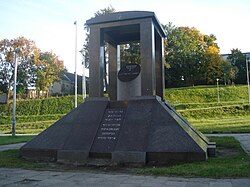
Lithuania
The occupation of Lithuania lasted from June 1941 until January 1945. Like its neighbors, Lithuania initially attempted to use the German arrival to re-establish independence through a Provisional Government. However, these efforts were ignored by the Nazi administration, which prioritized the exploitation of the region and the elimination of the Jewish population.
Resistance and the Final Years
As the tide of the war turned against Germany, Baltic nationalists attempted to navigate a narrow path toward independence. They formed underground bodies—the Central Council of Latvia, the Supreme Committee for the Liberation of Lithuania, and the National Committee of the Estonian Republic—hoping that by fighting the Soviets, they could attract Western support for their sovereignty.
| Country | Administrative Unit | Key Resistance/Military Body | Primary Nazi Goal |
|---|---|---|---|
| Estonia | Reichskommissariat Ostland | National Committee of the Estonian Republic | Colonization & Resource Extraction |
| Latvia | Generalbezirk Lettland | Central Council of Latvia | Racial Purification & Colonization |
| Lithuania | Reichskommissariat Ostland | Provisional Government / Supreme Committee | Racial Purification & Colonization |
Frequently Asked Questions
Why did some Baltic people initially welcome the Nazis?
Many Estonians, Latvians, and Lithuanians viewed the Germans as liberators because they had just experienced brutal Soviet occupation, including mass deportations and "sovietization" efforts.
What was the Reichskommissariat Ostland?
It was the civil administration established by Nazi Germany to govern the occupied Baltic states and parts of Belarus, functioning essentially as a colony with little to no role for local populations in governance.
What was Generalplan Ost?
Generalplan Ost was the Nazi master plan for the east, which called for the deportation of two-thirds of the native Baltic populations to make room for German settlers, while the remainder were to be exterminated, enslaved, or Germanized.
Who were the Einsatzgruppen?
The Einsatzgruppen were mobile death squads deployed by Nazi Germany to carry out mass killings, primarily targeting Jews, Gypsies, and political commissars behind the front lines.
Did the Baltic states have resistance movements?
Yes. Resistance was split between pro-independence nationalist groups (like the Central Council of Latvia) and Soviet partisan units coordinated from Moscow.