Georges Cuvier and the Règne Animal: Redefining the Animal Kingdom
In the early 19th century, the study of life underwent a seismic shift thanks to the work of Georges Cuvier (1769–1832). A towering figure in French science, Cuvier transitioned from a student of the Enlightenment's naturalists to a professor at the Musée National d'Histoire Naturelle in Paris. He is credited with creating the discipline of vertebrate palaeontology—the study of fossilized vertebrates—and establishing the comparative method of anatomy.
Cuvier's most enduring contribution was his monumental work, Le Règne Animal (The Animal Kingdom). First published in 1816, this text served as a comprehensive synthesis of his research into both living and fossil animals, challenging the prevailing notions of the time and providing a structured framework for zoology.
Key Facts
- Author: Georges Cuvier, with assistance from Pierre André Latreille on insects.
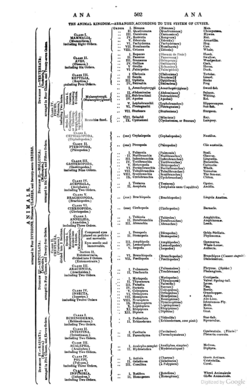
- Core Concept: The division of the animal kingdom into four embranchements (branches) based on body plans.
- Major Achievement: Demonstrated that animal extinction was a scientific fact.
- Publication History: First edition in 1816 (4 vols), second in 1829–1830 (5 vols), and a third "disciples" edition (1836–1849).
- Influence: His work was a key reference for Charles Darwin during the voyage of the HMS Beagle.
The Evolution of Cuvier's Classification
Before the publication of Règne Animal, Cuvier sought to improve upon the systems of Linnaeus and Fabricius. He initially applied the natural classification methods of botanist Antoine-Laurent de Jussieu to zoology. In 1795, adopting a fixist perspective—the belief that species do not evolve—he divided invertebrates into six classes.
However, Cuvier eventually realized that a more fundamental division was necessary. He moved away from simple lists of characteristics toward a system based on the nervous system and overall body organization. This led to the creation of four distinct "branches" or embranchements:
- Vertebrates: Animals with a brain and spinal cord protected by a skeleton.
- Molluscs: Animals with organs linked by nerve fibers.
- Articulata: Animals with two longitudinal ventral nerve cords (including insects and annelid worms).
- Zoophytes: Animals with a diffuse, non-discernible nervous system (also known as Radiata).
This system broke the medieval concept of the "great chain of being," which suggested a continuous linear progression of life. It also placed Cuvier in direct intellectual conflict with Jean-Baptiste Lamarck and Étienne Geoffroy Saint-Hilaire, who argued for the possibility of species transformation and a more unified origin of life.
Detailed Structure of the Animal Kingdom
Cuvier's taxonomy was meticulously detailed, organizing animals into groups that closely mirror modern taxa. While the Vertebrates were divided into mammals, birds, reptiles, and fish, the Articulata combined what we now know as arthropods and annelids.
| Embranchement (Branch) | Key Characteristic | Example Groups |
|---|---|---|
| Vertebrates | Brain and spinal cord in skeleton | Mammals, Birds, Reptiles, Fish |
| Molluscs | Organs linked by nerve fibers | Cephalopods, Gastropods |
| Articulata | Ventral nerve cords | Crustaceans, Insects |
| Zoophytes | Diffuse nervous system | Cnidaria, Echinoderms |
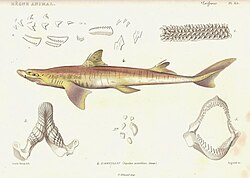
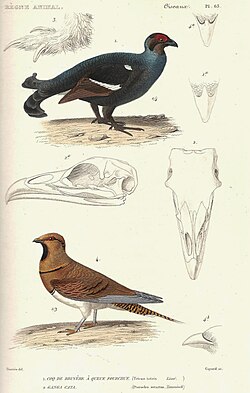
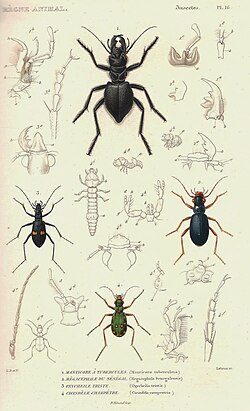
To complement the text, the entomologist Félix Édouard Guérin-Méneville published the Iconographie du Règne Animal between 1829 and 1844. This massive undertaking featured 448 plates illustrating approximately 6,200 animals, providing a visual record of Cuvier's taxonomic vision.
The Vertebrate Division
Cuvier's breakdown of vertebrates was highly influential. Mammals were categorized into groups such as Bimanes and Carnassiers, while birds were split into categories like Passereaux (passerines) and Palmipèdes (anseriformes). His work on fish was particularly revised in the second edition to reflect updated knowledge.
The Invertebrate Division
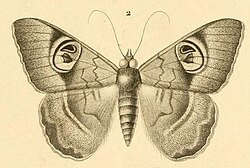
The study of invertebrates was a collaborative effort. While Cuvier handled the overall structure, his friend Pierre André Latreille provided the expertise for the section on insects. This included the classification of Coleoptera (beetles), Lepidoptera (butterflies and moths), and Hymenoptera (bees and wasps).
Reception and Legacy
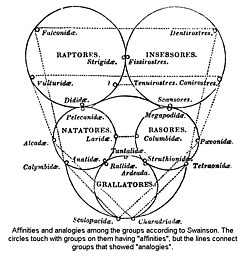
The reception of Règne Animal was mixed among contemporaries. "Quinarians" like William Sharp Macleay and William Swainson criticized Cuvier for a perceived lack of intuitive generalization. Others, such as the Foreign Review, praised the work as the best available outline of zoology while questioning if the vertebral column was too simple a basis for a primary division.
Despite these critiques, the work's impact was profound. Sir William Lawrence described it as an arrangement "nearly approaching to perfection." Even Charles Darwin, who fundamentally disagreed with Cuvier's fixism, acknowledged the importance of Cuvier's "conditions of existence" in On the Origin of Species, noting that these conditions were fully embraced by the principle of natural selection.
Frequently Asked Questions
What were the four "embranchements" defined by Cuvier?
Cuvier divided the animal kingdom into Vertebrates, Molluscs, Articulata (articulated animals), and Zoophytes (radiata), based on their nervous system organization.
Did Georges Cuvier believe in evolution?
No, Cuvier held a "fixist" perspective, denying the possibility of evolution and arguing that species remained constant over time.
Who assisted Cuvier with the section on insects?
The entomologist Pierre André Latreille assisted Cuvier with the research and writing of the insect section in Règne Animal.
How did Cuvier contribute to the study of fossils?
Cuvier essentially created the discipline of vertebrate palaeontology and used the comparative method to demonstrate that certain animals had become extinct.
What is the significance of the Iconographie du Règne Animal?
Published by Félix Édouard Guérin-Méneville, this work provided a vast set of accurate and elegant illustrations for approximately 6,200 animals mentioned in Cuvier's taxonomy.