George IV Coronation: The Most Extravagant Ceremony in British History
On 19 July 1821, London witnessed a spectacle of unprecedented luxury: the coronation of King George IV. Known for his flamboyant tastes and a desire to outshine the grandeur of Napoleon Bonaparte, George IV transformed the traditional crowning into the most expensive and lavish event in the history of the British monarchy.
The event was not without drama. Originally planned for 1820, the ceremony was delayed by a bitter legal battle involving the King's estranged wife, Queen Caroline. The resulting festivities were a blend of Romanticism, political tension, and staggering expense, marking the end of several centuries-old traditions.
Key Facts
- Date: 19 July 1821
- Location: Westminster Abbey and Westminster Hall, London
- Total Cost: £238,000 (over 20 times the cost of the 1761 coronation)
- Key Conflict: The exclusion of Queen Caroline from the ceremony
- Notable Firsts/Lasts: The final coronation banquet and the last time the King's Champion issued a challenge
The Road to the Throne: Regency and Rivalry
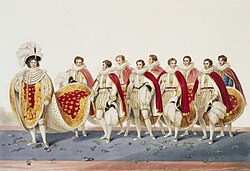
George IV had served as Prince Regent since 1811, acting on behalf of his father, King George III, who had been debilitated by illness. During this period, George developed a reputation for extravagance and a fascination with fashion. He viewed the coronation not just as a formal transition of power, but as a way to "eclipse Napoleon." To ensure this, he even sent a tailor to Paris to study the French emperor's coronation robes.
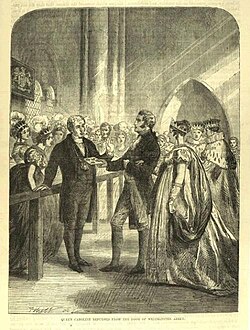
However, the transition to King was complicated by the return of Caroline of Brunswick. Despite the King's attempts to divorce her through a bill of pains and penalties—a legal mechanism intended to strip her of her titles based on alleged adultery—the bill failed. While Caroline remained Queen Consort in name, George IV ensured she was entirely excluded from the festivities.
Unprecedented Preparations and Costs
The financial scale of the 1821 coronation was staggering. Funded by £100,000 in government grants and 100 million French francs in war reparations from the Treaty of Paris (1815), the total expenditure reached £238,000. The budget was split across several lavish categories:
| Expense Category | Cost (£) |
|---|---|
| Jewels and Plate | 111,810 |
| Uniforms, Robes, and Costumes | 44,939 |
| Banquet | 25,184 |
| Westminster Abbey/Hall Furnishing | 16,819 |
| Total | 238,000 |
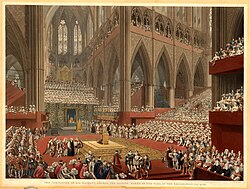
The King's personal attire alone cost over £24,000, featuring a 27-foot red velvet robe. To accommodate the massive guest list of 4,656 people, extensive scaffolding was erected in the abbey. Furthermore, the interior of Westminster Hall was cleared of wooden partitions to create a vast space for the banquet.
The Crown Jewels
George IV spared no expense in upgrading the regalia. St Edward's Crown was updated with hired jewels costing £375,000, and a new Coronation Crown was commissioned for over £50,000. He also introduced the George IV State Diadem, a crown-like hatband that cost £8,000.
The Exclusion of Queen Caroline
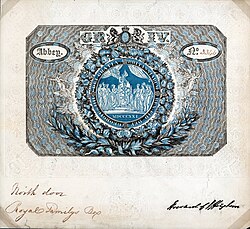
The most controversial moment of the event occurred on the morning of the coronation. Queen Caroline attempted to attend, arriving at Westminster Hall at 6 am. Despite the support of the crowds, she was denied entry by guards who demanded a ticket. Even after attempting to enter through a side door and the House of Lords, she was firmly turned away. The doorkeeper at the abbey's Poets' Corner refused her admission, leading to public shouts of "Shame!" Caroline passed away just two weeks later.
The Ceremony and Service
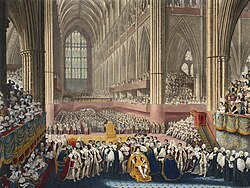
The proceedings began at 10 am with a grand procession from Westminster Hall to the abbey. This was the only portion of the event open to the public, featuring a 15-foot wide carpeted walkway and 700 participants, including the King's Royal Herbstrewer.
Inside the abbey, the service was led by the Archbishop of Canterbury. Due to the heat and the weight of his costume, George IV suffered significantly, later stating he would not endure the day's sufferings for another kingdom. A minor mishap occurred when the manuscript of the coronation oath was lost, forcing the King to simply sign his service card.
The Final Coronation Banquet
The festivities concluded with a massive feast in Westminster Hall, the last of its kind to be held for a coronation. The hall was illuminated by 2,000 candles, though the heat caused melting wax to drip onto the guests. The banquet featured 160 tureens of soup and over 3,000 cold dishes.
The event was marked by several awkward moments, including the Lord High Steward's difficulty dismounting his horse due to a prosthetic leg. However, the highlight was the appearance of the King's Champion, Henry Dymoke. Clad in full armor on a hired horse, he threw down his gauntlet three times in a traditional challenge—the final time this ritual was ever performed.
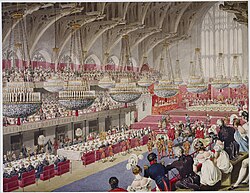
As the night ended, the scene devolved into chaos. Once the King departed, spectators from the galleries rushed the floor, stealing cutlery, glasses, and silver platters. Armed soldiers were required to prevent the kitchens from being ransacked.
Frequently Asked Questions
Why was the coronation of George IV delayed?
The ceremony was postponed from August 1820 to July 1821 due to parliamentary proceedings involving the King's estranged wife, Queen Caroline, as the government attempted to strip her of her titles and divorce her.
How much did the coronation cost in total?
The total cost was £238,000, making it the most expensive coronation in British history and more than twenty times the cost of the previous one in 1761.
What happened to Queen Caroline on the day of the event?
Queen Caroline attempted to attend the ceremony but was denied entry at both Westminster Hall and Westminster Abbey by officials who insisted she produce a ticket, despite her status as Queen.
What was the significance of the King's Champion?
The King's Champion was a hereditary role held by the Dymoke family. At George IV's banquet, Henry Dymoke performed the traditional challenge of throwing down his gauntlet for the final time in history.
Where did the funding for the coronation come from?
The funding consisted of £100,000 from government funds and a significant portion of the 100 million French francs paid as war reparations following the Treaty of Paris in 1815.