Geometry Dash Gameplay and Community Content
Geometry Dash is a high-energy, side-scrolling platformer that challenges players to navigate complex levels using precision and timing. By controlling a customizable icon, players must reach the end of each stage while avoiding obstacles. The game blends rhythmic music with challenging mechanics, creating an experience where audio and visual cues are essential for success.
Core Gameplay Mechanics
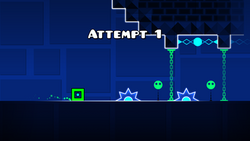
In classic gameplay, the camera scrolls automatically, requiring the player to use a single button to jump or interact with the environment. If the icon collides with an obstacle, the level restarts immediately from the beginning. To assist with learning difficult sections, a practice mode allows players to place checkpoints for quick restarts, although this mode does not award certain collectibles.
The game also features platformer levels, which differ from the classic mode by allowing players to move both left and right. These levels include preset checkpoints that are accessible without entering practice mode.
Movement and Game Modes
Various elements within a level can alter the icon's behavior and movement:
- Jump Orbs: Provide extra height while the player is mid-air.
- Portals: These can teleport the player, flip gravity, or change the game mode entirely.
- Game Modes: The default Cube mode focuses on jumping. The Ball mode allows players to switch gravity, while the Ship mode enables flight. The Dual mode duplicates the icon, requiring the player to control both simultaneously or individually in Two-Player mode.
Additionally, certain elements can modify the player's size or movement speed to increase the difficulty.
Level Structure and Progression
Music is central to the Geometry Dash experience. Each level is paired with a song, and the gameplay is often synchronized with the rhythm. The game includes 26 developer-made levels, including four platformer levels found in a dedicated section called "The Tower".
Levels are categorized into six difficulty ratings: Easy, Normal, Hard, Harder, Insane, and Demon. To add an extra layer of challenge, each level contains three secret coins hidden along alternate paths or behind specific tasks. Players must collect a specific number of these coins to unlock the ability to play demon levels.
| Level Type | Primary Reward | Special Collectibles |
|---|---|---|
| Classic Levels | Stars | Secret Coins |
| Platformer Levels | Moons | Secret Coins |
| User-Generated | Various (if featured) | User (Silver) Coins |
Currencies and Customization
Players can collect various currencies to customize their experience. Mana orbs are awarded upon level completion; collecting 500 mana orbs grants a Demon key. These keys unlock chests in the Treasure Room, providing rewards such as diamonds, more mana orbs, and icon skins. Daily chests also provide diamonds, mana orbs, and Demon keys.
Mana orbs and diamonds are spent in shops for cosmetics. Additionally, players can unlock Vaults by collecting specific amounts of items, where entering secret codes rewards further icon customizations.
User-Generated Content and the Community
One of the most powerful features of Geometry Dash is its level editor, which has enabled players to create over a hundred million online levels. These levels can use music from the base game, selected artists, the British record label NoCopyrightSounds, or custom tracks imported from Newgrounds.
The community organizes high-quality user levels into collections such as Gauntlets, Map Packs, Daily Levels, Weekly Demons, and Event Levels, all of which offer additional currency. User levels follow the standard difficulty ratings, with an additional "Auto" rating for levels that require no input. User-made demon levels are further subdivided into five tiers: Easy Demon, Medium Demon, Hard Demon, Insane Demon, and Extreme Demon.
The creativity of the community extends beyond simple platforming; some players have used the editor to recreate entire games, including Celeste, Five Nights at Freddy's, and Super Mario Kart.
The Demonlist
A dedicated segment of the community focuses on extreme difficulty. They maintain the Demonlist, a curated ranking of the 150 hardest demon levels in the game. To ensure fairness, moderators inspect the verification and completion of these levels to prevent illegitimate claims.
Key Facts
- Developer Content: 26 official levels, including 4 platformer levels in "The Tower".
- Difficulty Tiers: Six main ratings, with five specialized sub-ratings for user-made Demon levels.
- Currencies: Stars (classic), Moons (platformer), Mana Orbs, Diamonds, and Demon Keys.
- Community Scale: Over 100 million user-created levels available online.
- The Demonlist: A community-run leaderboard tracking the 150 most difficult levels.
Frequently Asked Questions
What is the difference between classic and platformer levels?
Classic levels use an auto-scrolling camera and a single-button control scheme, while platformer levels allow the player to move freely left and right and provide preset checkpoints.
How do I unlock Demon levels?
Players must obtain a specific number of secret coins from other levels before they are permitted to play the demon levels.
What are Demon Keys used for?
Demon Keys are used to unlock chests in the Treasure Room, which reward the player with icon skins, diamonds, and mana orbs.
Can I use my own music in user-created levels?
Yes, players can import custom music from Newgrounds, use music from 10 selected artists, or use tracks from NoCopyrightSounds.
What is the purpose of the Demonlist?
The Demonlist is a community-maintained ranking of the 150 hardest demon levels, with moderators verifying completions to ensure they are legitimate.